Trump says Iran shot down U.S. Apache helicopter near Strait of Hormuz
Trump blamed Iranian fire for a downed Apache near Hormuz, but CENTCOM said both crew members were rescued and the cause is still under investigation.

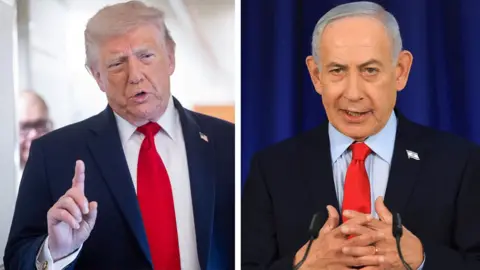
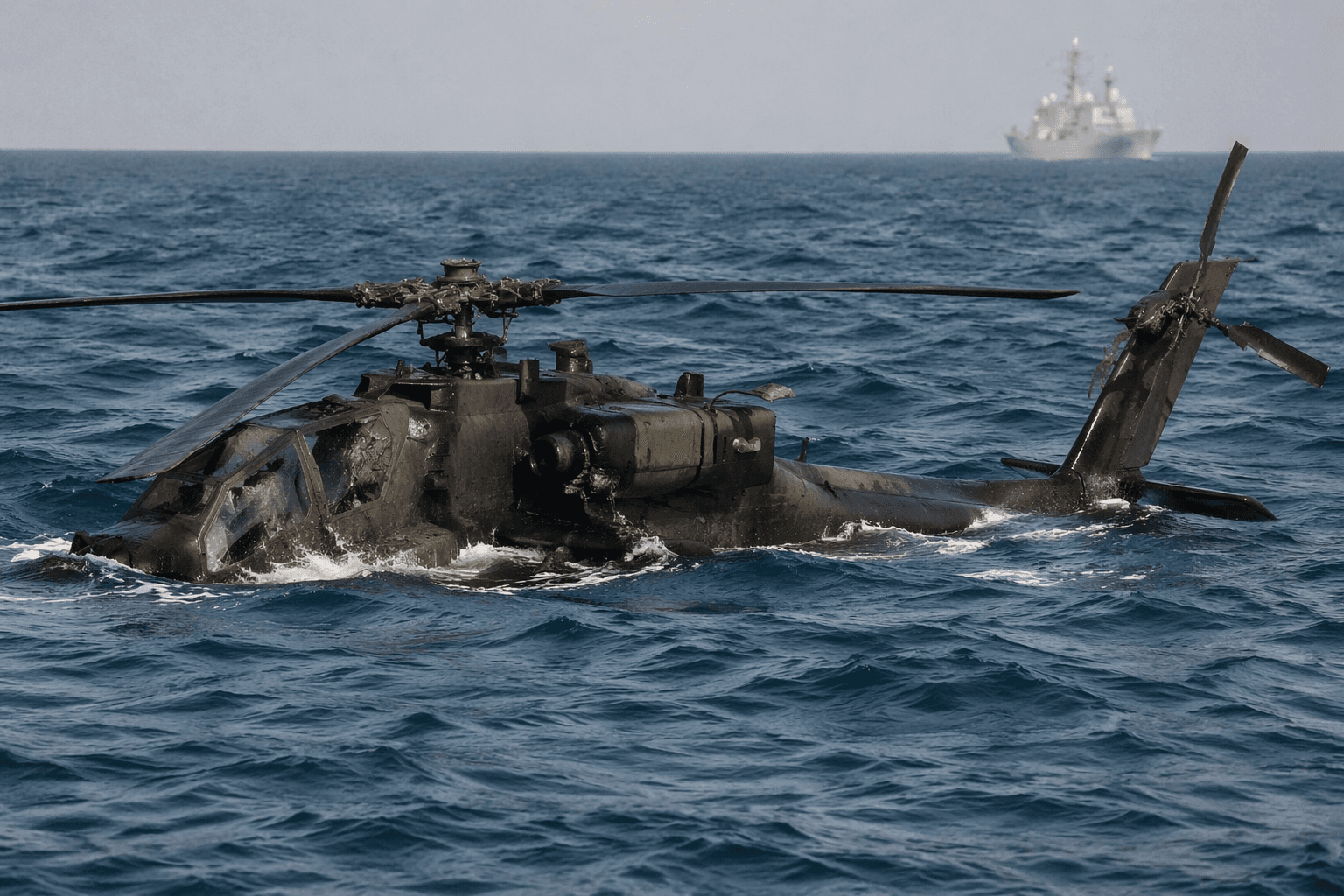
Donald Trump said Iranian forces shot down a U.S. Apache helicopter over the Strait of Hormuz, raising the stakes in a waterway that carries a major share of the world’s oil. U.S. Central Command later said the two U.S. Army crew members survived after their AH-64 went down near the coast of Oman and were rescued within about two hours, with the cause still under investigation.
The rescue put an immediate factual check on the most explosive part of Trump’s claim. CENTCOM said the soldiers were in stable condition after the incident on Monday evening, June 8, and that the recovery was led by U.S. Naval Forces Central Command and the 82nd Airborne Division, with support from other U.S. units. Multiple reports said the extraction used an unmanned surface vessel, or sea drone, in what would be a first for U.S. forces.
Even so, the political and military implications were immediate. Trump said the United States “must, of necessity, respond to this attack,” while there was no immediate comment from Tehran. It remains unclear whether the helicopter was struck by Iranian fire or suffered a mechanical failure, and that uncertainty leaves Washington with a fast-moving decision point: wait for the investigation to harden into evidence, or respond to what Trump has already framed as an act of war.
The location matters as much as the aircraft. The Strait of Hormuz is the primary export route for oil from Saudi Arabia, the United Arab Emirates, Kuwait, Qatar, Iraq, Bahrain and Iran, and a prolonged disruption could threaten much of the world’s spare production capacity. China, India and Japan are among the largest importers of oil moving through the passage, which links the Persian Gulf to the Gulf of Oman and the wider open sea.
That makes the incident more than a one-off military mishap. It comes amid a broader Iran war and a period of heightened regional tension, when a single exchange could spill into attacks on shipping, U.S. forces in the region or energy infrastructure across the Gulf. It also lands at a moment when Trump has been suggesting publicly that a deal with Iran could still be reached soon, leaving Washington to balance deterrence with the possibility of diplomacy. If the helicopter was shot down, retaliation options widen quickly; if it was not, the pressure shifts toward proof, credibility and the risk of miscalculation in the world’s most dangerous maritime chokepoint.
This article was produced by Prism’s automated news system from verified source data, official records, and press releases, then run through automated quality and moderation checks before publishing. The system is built and supervised by the people who set the standards it runs under. Read our full AI policy.
Know something we missed? Have a correction or additional information?
Submit a Tip