Trump showcases ballroom project, calls it security shield and gift
Trump turned a White House construction tour into a show of power, calling the ballroom a “shield” and tying it to a sprawling security push.

While wars, markets and other national pressures demanded attention, Donald Trump spent Tuesday showing reporters the White House ballroom site, recasting a decorative project as both a security asset and a legacy piece. He called the structure a “shield” and said it would be the “safest building ever built, in my opinion,” as he walked the construction area and described a project that says as much about his governing style as it does about architecture.
The White House first announced ballroom construction on July 31, 2025, saying the new White House State Ballroom would add about 90,000 square feet, seat 650 people and replace the East Wing site. The East Room now seats about 200. The administration said Trump and other donors would pay for the roughly $200 million project, which was designed to expand the White House’s capacity for major events while changing one of its most familiar and politically loaded spaces.
The site carries its own history. The East Wing was originally built in 1902 and later grew with a second story in 1942. Trump has since revised the design, removing a large staircase on the south side and adding an uncovered porch on the west side. White House officials said he had met with staff from the National Park Service, the White House Military Office and the U.S. Secret Service on design and planning.
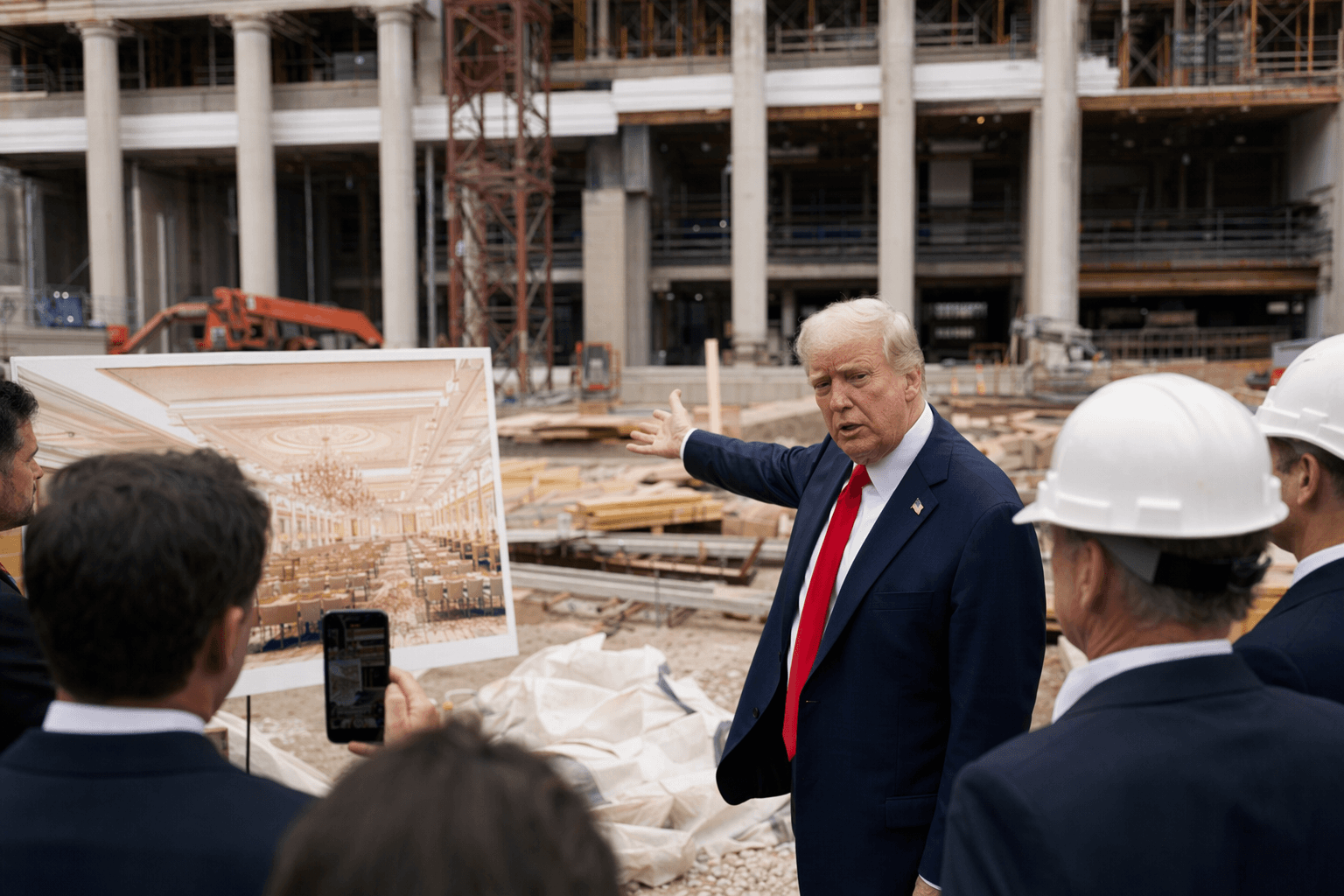
Trump used Tuesday’s tour to push the security argument even further. He said the underground complex would be six stories deep and include a military hospital, research facilities and meeting rooms. He also said the roof would have “massive drone capacity” or a “drone port,” along with thick glass and steel protection. The message was clear: the ballroom is meant to be seen not just as a reception hall, but as part of a fortified presidency.
The project has also become a political fight. In April 2026, the National Capital Planning Commission gave final approval after a federal judge had ordered a halt unless Congress authorized what would be the biggest structural change to the White House in more than 70 years. The White House said public comments to the planning commission and the U.S. Commission of Fine Arts were overwhelmingly opposed.
The security debate has widened beyond the ballroom itself. By mid-May, Senate Republicans were balking at a proposed $1 billion request tied to White House security upgrades. Sean Curran briefed lawmakers on a plan that included $220 million for hardening, $180 million for a visitor security screening facility, $175 million for Secret Service training, $175 million for protectee enhancements, $150 million for evolving threats and technology, and $100 million for events of national significance. Trump’s ballroom tour put those numbers in a more personal frame, treating the project as both a gift and a statement about how he wants to be remembered.
This article was produced by Prism’s automated news system from verified source data, official records, and press releases, then run through automated quality and moderation checks before publishing. The system is built and supervised by the people who set the standards it runs under. Read our full AI policy.
Did this article answer your question?

