Trump tells Cuba to make a deal, vows no more oil or money
Trump told Cuba to "make a deal" with the United States or face a cutoff of Venezuelan oil and funds, intensifying regional pressure after the capture of Nicolás Maduro.
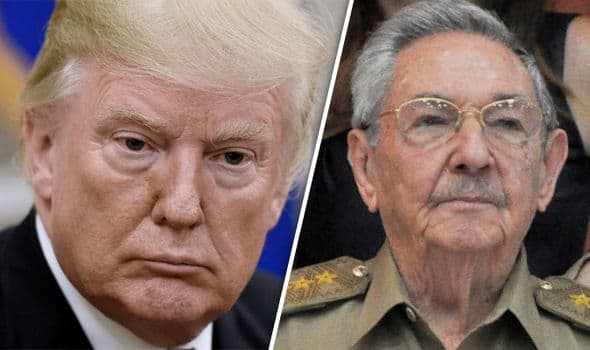
President Donald Trump used his Truth Social platform to warn Cuba to "make a deal" with Washington "before it is too late" and declared bluntly, "THERE WILL BE NO MORE OIL OR MONEY GOING TO CUBA, ZERO!" The post accused Havana of having "lived, for many years, on large amounts of OIL and MONEY from Venezuela" in exchange for providing "security services" to Venezuelan leaders.
The warning came in the wake of a U.S. military operation in early January that captured Venezuelan President Nicolás Maduro and was followed by a strict U.S. oil blockade on Venezuela. Shipping data show no Venezuelan cargoes have departed for Cuba since the operation and the blockade took effect. Historically, Venezuela had supplied roughly 35,000 barrels per day of oil to Cuba, a long-standing pipeline of fuel and finance that has underpinned Havana's transport, power, and refined-fuel needs.
Trump's post also asserted that "Most of those Cubans are DEAD from last week's USA attack," a claim the Cuban government has repeated, saying 32 Cuban nationals were killed in the operation. Havana's figures have not been independently verified, and the casualty count is a central point for outside investigators and international monitors to confirm.
Cuban officials rejected the U.S. accusations and Trump’s ultimatum. Foreign Minister Bruno Rodríguez Parrilla wrote on X that "Cuba has neither received nor ever received monetary or material compensation for the security services it has provided to any country," adding that "Unlike the US, we do not have a government that lends itself to mercenarism, blackmail, or military coercion against other States." President Miguel Díaz-Canel said on social media that "Cuba is a free, independent, and sovereign nation. Nobody dictates what we do," and vowed his government remained "ready to defend the homeland to the last drop of blood."

The exchange marks a sharp escalation in rhetoric between Washington and Havana, and it underscores the geopolitical ripple effects of the Maduro operation. U.S. officials have signaled a broader effort to isolate regional partners of the Maduro government, and Secretary of State Marco Rubio added to the pressure by saying Cuban leaders "should be worried" and that "they're in a lot of trouble."
Economically, the interruption of Venezuelan oil shipments poses an immediate shock risk for Cuba. The island nation has relied on subsidized or discounted crude from Venezuela for decades; a sudden loss of roughly 35,000 barrels per day would strain fuel supplies, constrain electricity generation and transport, and complicate already tight fiscal balances. Havana has not outlined a contingency plan, and U.S. officials have not detailed the legal or operational mechanisms that would prevent future transfers of Venezuelan oil or funds to Cuba.
Analysts say key open questions remain: independent confirmation of the Cuban casualty figures, granular verification of shipping and customs movements, and clarity from Washington on what a "deal" with Cuba would entail. For now, the confrontation sets up a period of heightened diplomatic tension across the region, with potential economic spillovers for energy markets and for countries tied to Caracas and Havana.
This article was produced by Prism’s automated news system from verified source data, official records, and press releases, then run through automated quality and moderation checks before publishing. The system is built and supervised by the people who set the standards it runs under. Read our full AI policy.
Did this article answer your question?