Trump Urges Oil-Dependent Nations to Protect Strait of Hormuz
Trump told oil-dependent nations to "grab" the Strait of Hormuz themselves, offering a blunt choice: buy American crude or muster the courage to seize the route from Iran.
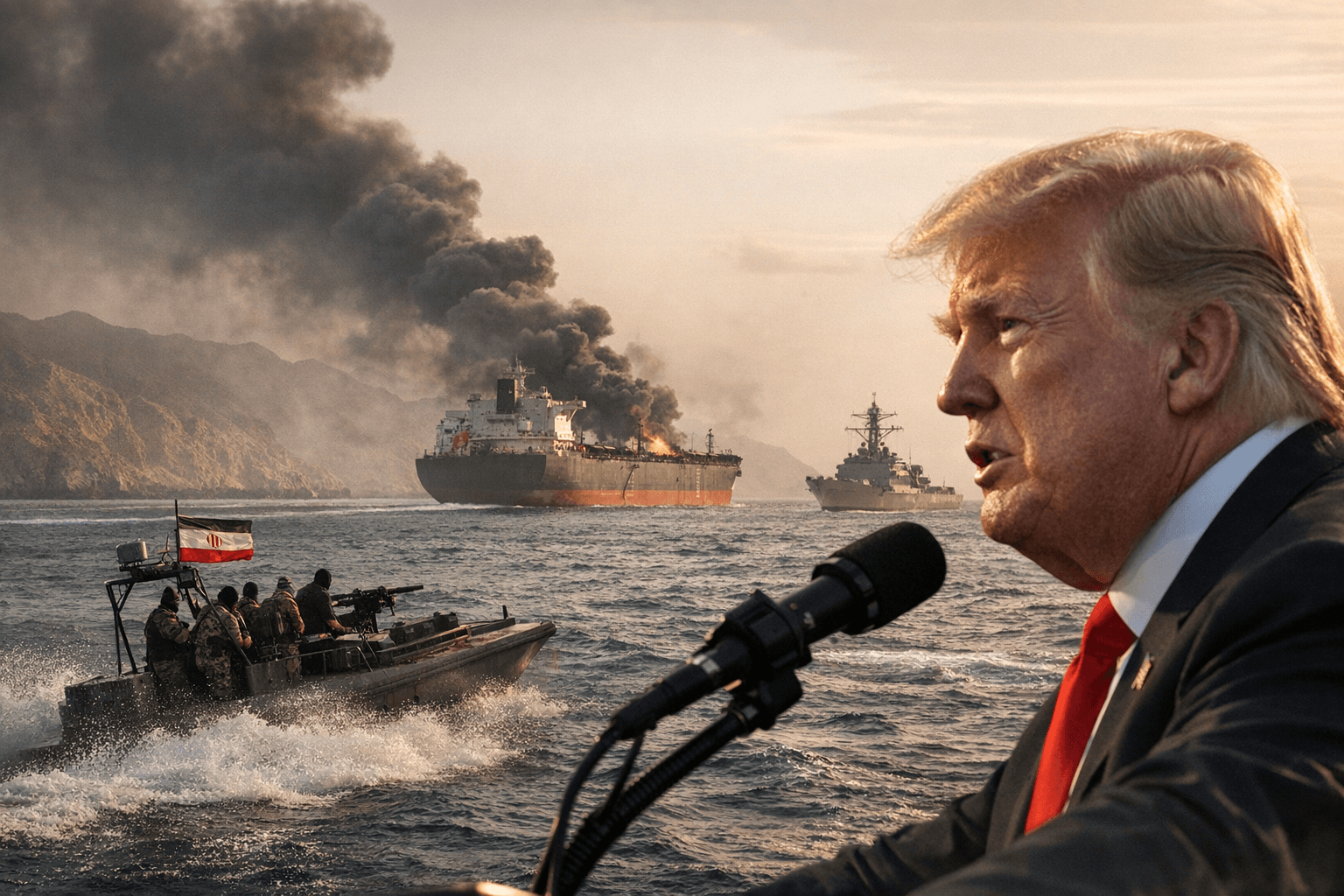
President Donald Trump issued a sharp ultimatum to nations dependent on Gulf oil, calling on them to take the military and logistical lead in reopening the Strait of Hormuz rather than relying on the United States to do it for them.
Speaking in his first address to the nation since ordering airstrikes against Iran, Trump declared that the U.S. imports "almost no oil" through the strait and has no intention of depending on it. "The countries of the world that do receive oil through the Hormuz Strait must take care of that passage. They must cherish it. They must grab it and cherish it. They can do it easily," Trump said, framing the demand as a matter of self-interest for energy-importing nations rather than collective security.
The Strait of Hormuz carries around 20 percent of the world's oil consumption, according to the International Energy Agency, with the vast majority of the crude ending up in Asia, which is heavily reliant on oil and gas imports from the Gulf states. Iran's effective blockade of the waterway since the start of the conflict has sent energy costs surging globally. The average price of gasoline in the U.S. passed $4, the first time that threshold had been crossed since 2022, even as Trump insisted domestic supply was ample.
For nations unwilling to act, Trump presented two options. "Number one, buy oil from the United States of America… and number two, build up some delayed courage… go to the Strait and just take it, protect it, use it for yourselves," he said. He singled out the United Kingdom specifically, noting that countries struggling to obtain jet fuel had refused to participate in what he called the "decapitation of Iran." Trump added that he would be "helpful," but insisted that those nations "should take the lead in protecting the oil that they so desperately depend on."
The remarks came amid signals that Washington may not keep its forces anchored in the strait indefinitely. In a phone call with CBS News, Trump said "At some point I will [pull assets], not quite yet, but countries have to come in and take care of it. Iran has been decimated, but they're going to have to come in and do their own work." The Wall Street Journal had previously reported that Trump told aides he would be willing to end the U.S. military operation in Iran even if the strait remains closed.
Secretary of State Marco Rubio echoed the pressure campaign, saying "countries in Asia and all over the world have a lot at stake and should contribute greatly" to any effort to reopen the waterway. Rubio told reporters that military escorts for tankers would not take place immediately but could become a "post-conflict necessity."
Allied responses remained cautious. France said it would be willing to join an international naval mission to protect shipping through the strait, but only after fighting stops. British Prime Minister Keir Starmer acknowledged the strait must be reopened to "ensure stability in the market" but called it "not a simple task," saying his government was working with European partners on a "viable collective plan."
Trump also claimed that the strait would reopen as soon as the war ends and that "the gas prices will rapidly come back down," an assertion that economists and analysts have disputed, citing damaged energy infrastructure and lengthy supply disruptions that are unlikely to resolve quickly regardless of how the conflict concludes.
This article was produced by Prism’s automated news system from verified source data, official records, and press releases, then run through automated quality and moderation checks before publishing. The system is built and supervised by the people who set the standards it runs under. Read our full AI policy.
Did this article answer your question?