Trump Waives Summer Gasoline Rules to Lower Fuel Prices at Pump
The EPA waived summer gasoline rules from May 1–20 to allow E15 sales nationwide, as gas hits $3.98 a gallon amid the Iran war.

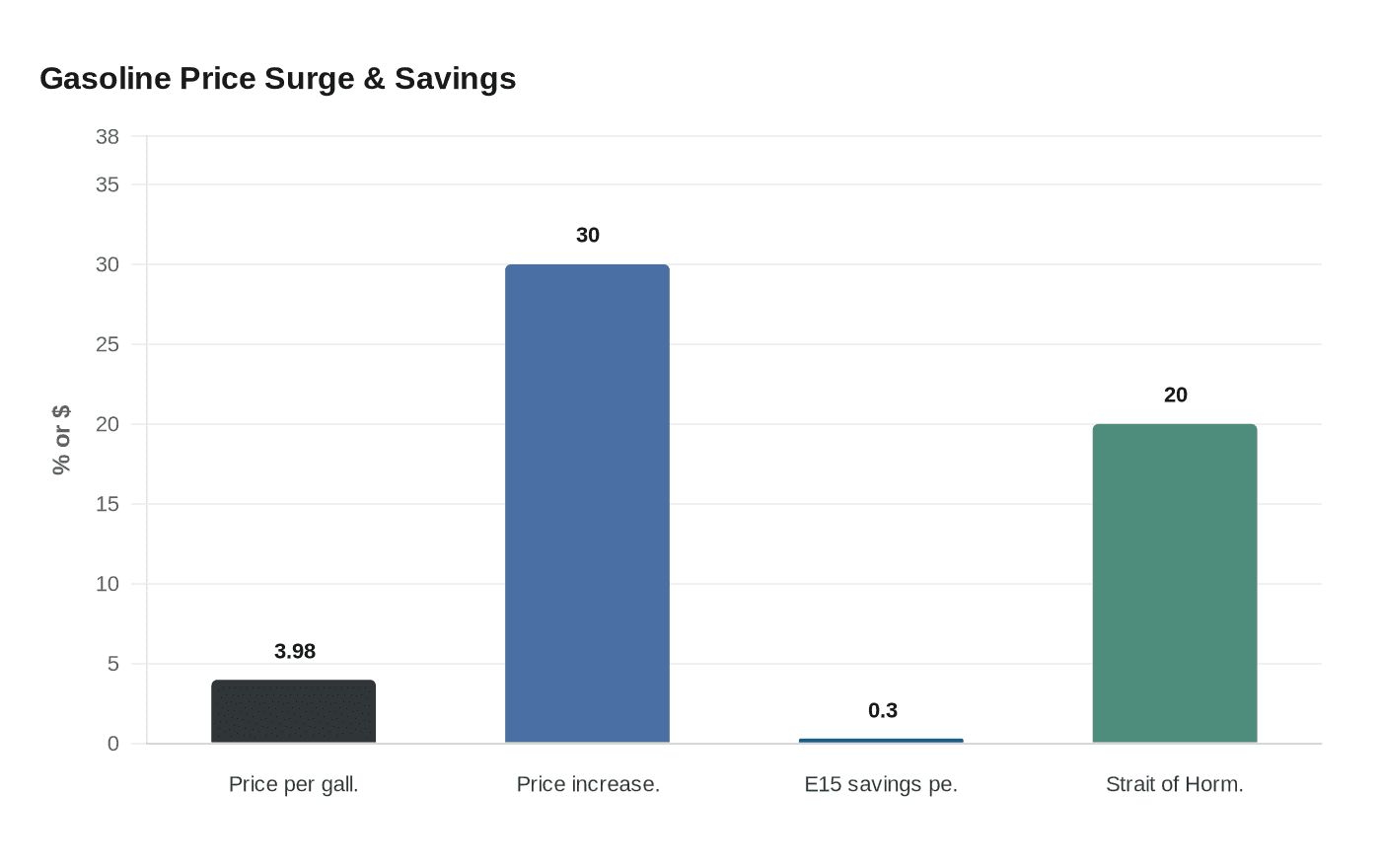
The Trump administration on Wednesday temporarily waived regulations on the types of gasoline sold during the summer in an effort to ease surging fuel prices during the Iran war. The move came as gasoline prices surged more than 30% to $3.98 per gallon since the U.S. war against Iran started, due to the ensuing massive oil supply disruption, according to data from travel association AAA.
EPA Administrator Lee Zeldin, in consultation with the Department of Energy and in accordance with the Clean Air Act, issued a temporary emergency fuel waiver to allow nationwide sales of E15 and E10 gasoline ethanol. Zeldin announced the decision at S&P Global's CERAWeek conference in Houston, Texas, saying the "EPA waivers will work to prevent disruption in America's fuel supply by keeping E15 and E10 on the market and giving Americans more fuel options."
The waivers take effect May 1, 2026, and initially remain in place through May 20, 2026 — a 20-day window that is the maximum number of days allowed under the Clean Air Act. Zeldin said the agency "will be ready to extend the emergency fuel waivers as ongoing issues continue to present the need for action."
E15, which blends gasoline with 15% ethanol, is normally off-limits to much of the country for the bulk of the summer driving season. The sale of E15 is restricted in about half the U.S. from June through September due to regulations designed to reduce air pollution. Without the action, E15 gasoline could not be used by roughly half of the country this summer. The EPA also waived federal enforcement of all state "boutique" fuel requirements for gasoline, allowing the production and distribution of gasoline with 9 to 15 percent ethanol content at a single common Reid Vapor Pressure standard of 10 psi across the nation.
The decision to issue an E15 summer waiver will ensure that consumers maintain access to a fuel that saves drivers up to 30 cents per gallon, according to Growth Energy, the nation's largest biofuel trade association. "If ever there were justifiable conditions to merit an emergency waiver for E15, it would be now as fuel prices have skyrocketed from war with Iran and a historical oil market disruption in the Strait of Hormuz," said Brian Jennings, CEO of the American Coalition for Ethanol.
The backdrop driving the action is a global energy shock. The Strait of Hormuz, a narrow waterway between Iran and Oman, has been effectively closed for 19 days, choking off 20% of the world's oil supply. Prices at the pump are the highest levels since 2022, when Russia's invasion of Ukraine shook global energy markets.
The waiver also carries clear political dimensions. The move repeats a strategy Trump used in 2025, and one previously employed for three years under former President Joe Biden, to broaden the availability of E15 gasoline in summertime, and it comes as the Trump administration is taking steps to help ease energy costs for consumers amid the Iran war. The announcement is a significant win for ethanol lobbyists and a bipartisan group of lawmakers, mostly from Midwestern states, who have long unsuccessfully pushed for E15 to be sold year-round. Corn farmers, biofuel producers and rural voters, who have pushed for changes allowing year-round E15 sales, number prominently among the political constituencies who benefit.
The Trump administration has taken other steps to try to tame prices by boosting supply, including ordering the release of 173 million barrels of oil from the Strategic Petroleum Reserve, waiving the Jones Act to allow foreign ships to move fuel between U.S. ports, and lifting Russian oil sanctions.
The EPA issued the waiver notice to allow fuel industry stakeholders adequate time to transition the fuel distribution system before the May 1 effective date. The EPA said it will monitor fuel supplies and is prepared to extend the emergency fuel waivers "as long as the fuel supply circumstances warrant such action.
This article was produced by Prism’s automated news system from verified source data, official records, and press releases, then run through automated quality and moderation checks before publishing. The system is built and supervised by the people who set the standards it runs under. Read our full AI policy.
Did this article answer your question?

