Trump White House Sends Congress Its "One Rulebook" AI Blueprint
The White House released a national AI framework aimed at replacing a growing patchwork of state laws, sparking immediate praise and sharp Democratic criticism.
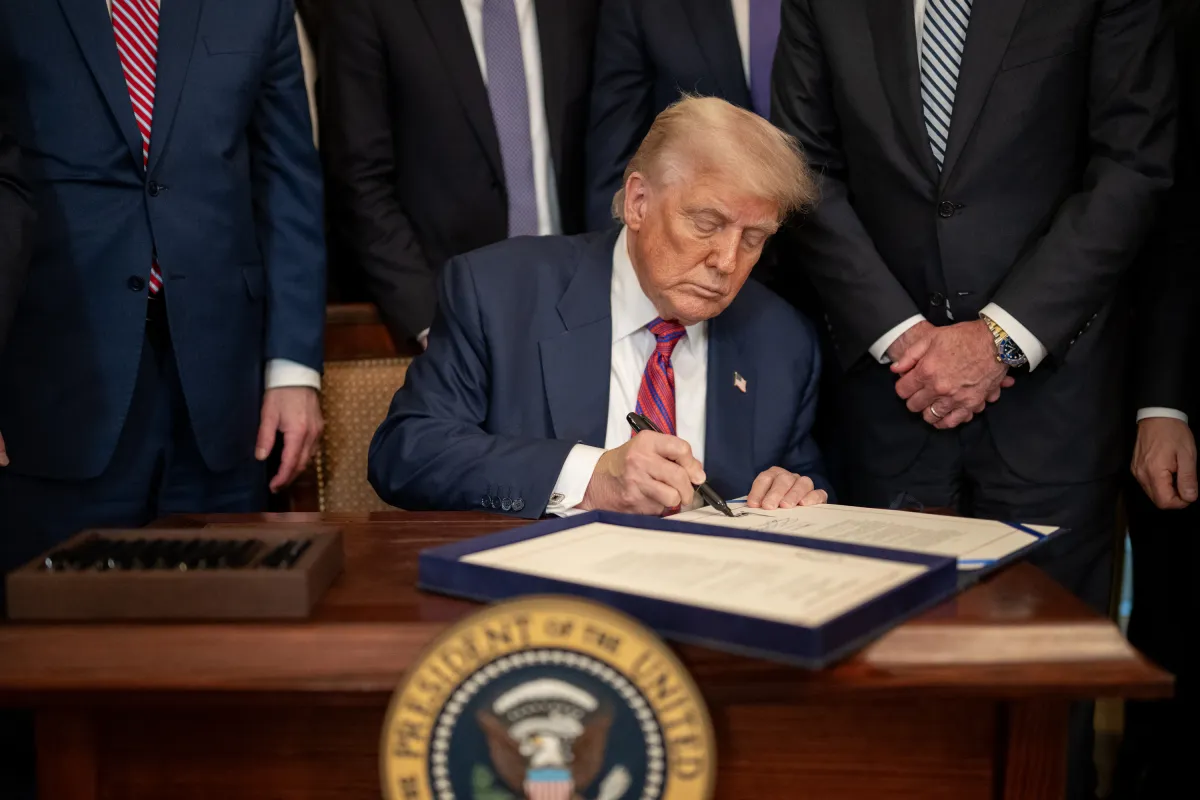
The Trump administration handed Congress a sweeping national framework for artificial intelligence regulation Friday, pressing lawmakers to replace a fragmented landscape of state laws with a single federal standard before the year is out.
David Sacks, the White House AI and crypto czar, framed the release as the fulfillment of a presidential directive. "In December, President Trump signed an Executive Order tasking us with the development of a national framework for AI, what he called 'One Rulebook,'" Sacks said. "This was in response to a growing patchwork of 50 different state regulatory regimes that threaten to stifle innovation and jeopardize America's lead in the AI race."
The framework, described by CNBC as a six-pronged outline, covers child safety rules, limits on AI developer liability, intellectual property protections, guardrails against AI-enabled censorship of political speech, streamlined data-center permitting, and augmented legal tools to combat AI-enabled scams.
Michael Kratsios, Assistant to the President for Science and Technology and director of the Office of Science and Technology Policy, cast the proposal in maximalist terms. "The White House's national AI legislative framework will unleash American ingenuity to win the global AI race, delivering breakthroughs that create jobs, lower costs, and improve lives for Americans across the country," he said. "At the same time, it tackles real concerns head-on: protecting our children online, shielding families from higher energy costs, respecting creators' rights, and supporting American workers."
The preemption question sits at the center of the framework's most contentious provisions. The White House is urging Congress to "preempt state AI laws that impose undue burdens to ensure a minimally burdensome national standard consistent with these recommendations, not fifty discordant ones." Kratsios put it bluntly: "We need one national policy, not a 50-state patchwork of laws."
The framework includes explicit carveouts, stating the national standard should not displace traditional state police powers or existing state laws protecting children, preventing fraud, or safeguarding consumers. State zoning authority over the placement of AI infrastructure would also remain intact.
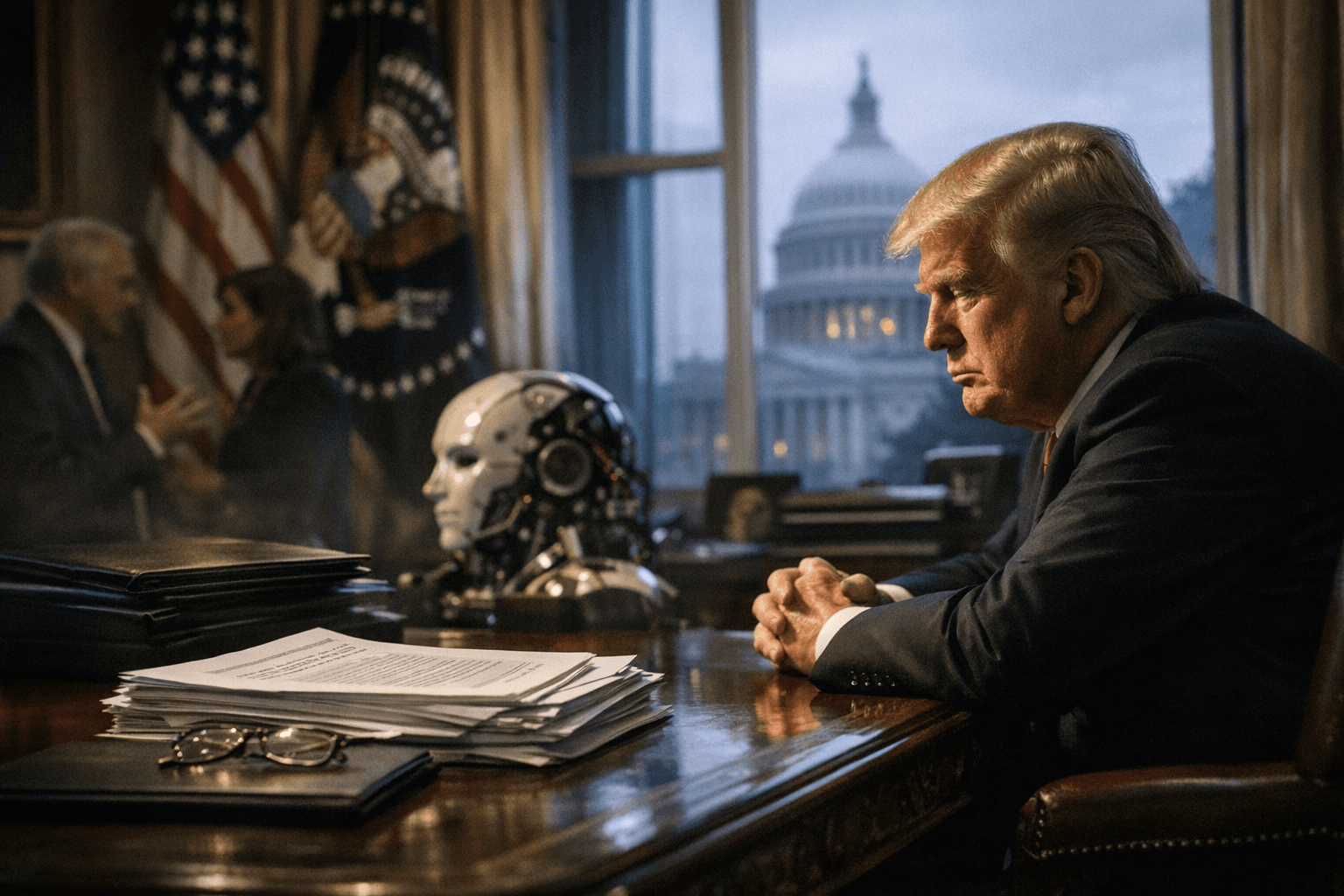
On liability, the framework opposes what it calls "open-ended liability" for AI developers, warning that uncapped legal exposure "could give rise to excessive litigation" particularly around child-safety claims. It also limits states' ability to penalize developers for harms caused by a third party's unlawful use of their models.
The partisan divide over the framework crystallized quickly. Senator Richard Blumenthal of Connecticut dismissed it on X as "pathetic and a non-starter, a wish list for Meta and OpenAI with little to protect families worried about how AI will impact their livelihoods and safety." Senator Dan Sullivan of Arkansas offered the opposite verdict, calling the release "a critical and commonsense step forward" that gives Congress "a clear roadmap to capitalize on AI's potential."
The administration wants Congress to convert the framework into legislation "this year," though the timeline is optimistic. Many AI policy analysts believe a bill this complex is unlikely to clear Congress before November's midterm elections.
The framework's release also carries immediate stakes for data infrastructure. It calls on Congress to streamline permitting for AI data centers, including allowing on-site power generation, a provision aimed at containing energy costs as the AI buildout accelerates demand on the national grid.
This article was produced by Prism’s automated news system from verified source data, official records, and press releases, then run through automated quality and moderation checks before publishing. The system is built and supervised by the people who set the standards it runs under. Read our full AI policy.
Did this article answer your question?