Trump’s approval sinks to new lows amid economic, Iran concerns
Trump’s approval remained stuck at 35% to 37% in June, with independents souring and Iran and economic worries dragging the numbers down.
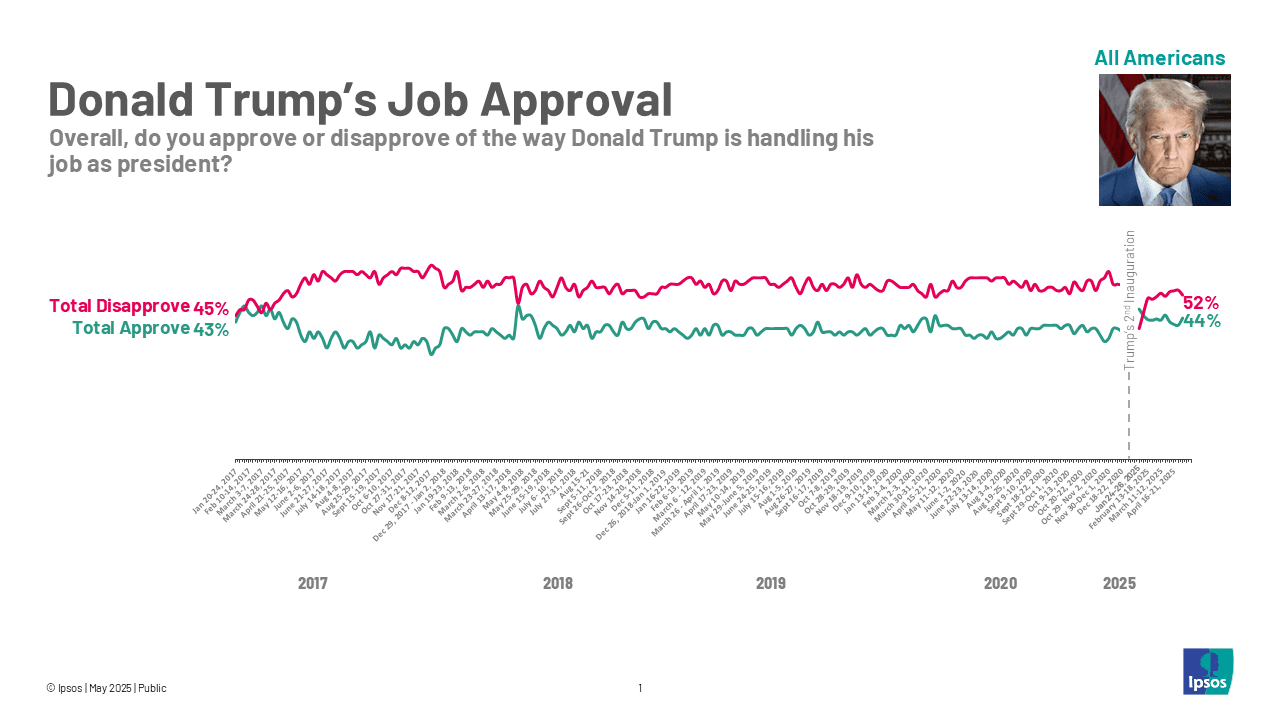
Trump’s approval rating sat at 37% in the latest AP-NORC survey, while Reuters/Ipsos measured him at 35% in a June 3-8 poll and 36% in a follow-up published June 15. The numbers offered little evidence of the kind of broad rebound that often shows up in political chatter before it reaches the public at large.
The June polling left Trump underwater across multiple national surveys, and the weakness was not confined to a single outlier. Gallup said his job approval fell to 36% in late November 2025, a new low for his second term, after earlier sliding to 37% in July 2025. Gallup’s historical benchmark puts Trump’s all-time low at 34%, reached at the end of his first term after the Jan. 6, 2021 attack on the Capitol.

The most stable part of Trump’s coalition has remained Republicans, while independents have driven much of the decline. Gallup said Trump’s approval among independents fell to 29% in July 2025 and then to 25% in November 2025, even as Republican approval held at 84% in November and had generally remained near 90%. Democrats stayed in the low single digits, underscoring how little movement his numbers have seen outside the party base.
The June polling also pointed to the specific issues putting pressure on Trump. AP-NORC found that just 34% approved of his handling of Iran in mid-June 2026, and Reuters/Ipsos and AP-NORC both reported widespread skepticism about the costs and outcome of the conflict. Economic anxiety remained part of the picture as well, with Reuters/Ipsos polling Trump’s handling of the cost of living in the same June survey window.

Pew Research Center’s May 2026 analysis added another sign of erosion, finding that fewer Americans viewed Trump’s personal traits and his handling of issues positively. Taken together, the surveys showed a president still locked into a hard partisan split, but with the broader electorate offering no sign of the durable lift that online enthusiasm, isolated wins, or favorable commentary sometimes suggest.
This article was produced by Prism’s automated news system from verified source data, official records, and press releases, then run through automated quality and moderation checks before publishing. The system is built and supervised by the people who set the standards it runs under. Read our full AI policy.
Did this article answer your question?

