Trump's Golden Dome missile shield could cost $1.2 trillion
Trump’s missile shield has been sold as futuristic deterrence, but one CBO estimate puts a plausible version at $1.2 trillion over 20 years.

Donald Trump’s Golden Dome has been marketed as a continental shield of satellites, sensors and interceptors, but the price now attached to one plausible version exposes how unfinished the idea still is. The Congressional Budget Office estimated that a notional system consistent with the project’s goals could cost about $1.2 trillion in 2026 dollars over 20 years, with acquisition costs alone just over $1 trillion.
Trump launched the effort on January 27, 2025, in an executive order originally titled The Iron Dome for America. The White House said the Pentagon should develop a next-generation missile defense shield against ballistic, hypersonic, advanced cruise missiles and other next-generation aerial attacks. Trump later set a public target of having it fully operational before the end of his presidency in January 2029, a timeline that only sharpened the gap between the marketing and the engineering.

The CBO’s May 12, 2026 estimate was not a price for a finished program. The Pentagon has not released an objective architecture, so the budget office modeled one approach with four interceptor layers: a space-based layer, two wide-area surface layers and a regional sector layer, plus sensors, communications and battle-management systems. The space-based interceptor layer would be the most expensive piece, accounting for about 70% of acquisition costs and 60% of total costs. In other words, the most futuristic part of the plan is also the one carrying the biggest fiscal and technical burden.

Congress has already begun treating Golden Dome as a major budget fight. The Congressional Research Service said lawmakers formed Senate and House Golden Dome caucuses in 2025, and the 2025 reconciliation law provided about $24.4 billion for integrated air and missile defense, money tied to the broader debate over the project. Even that figure looks modest beside a program that could run into the trillions.
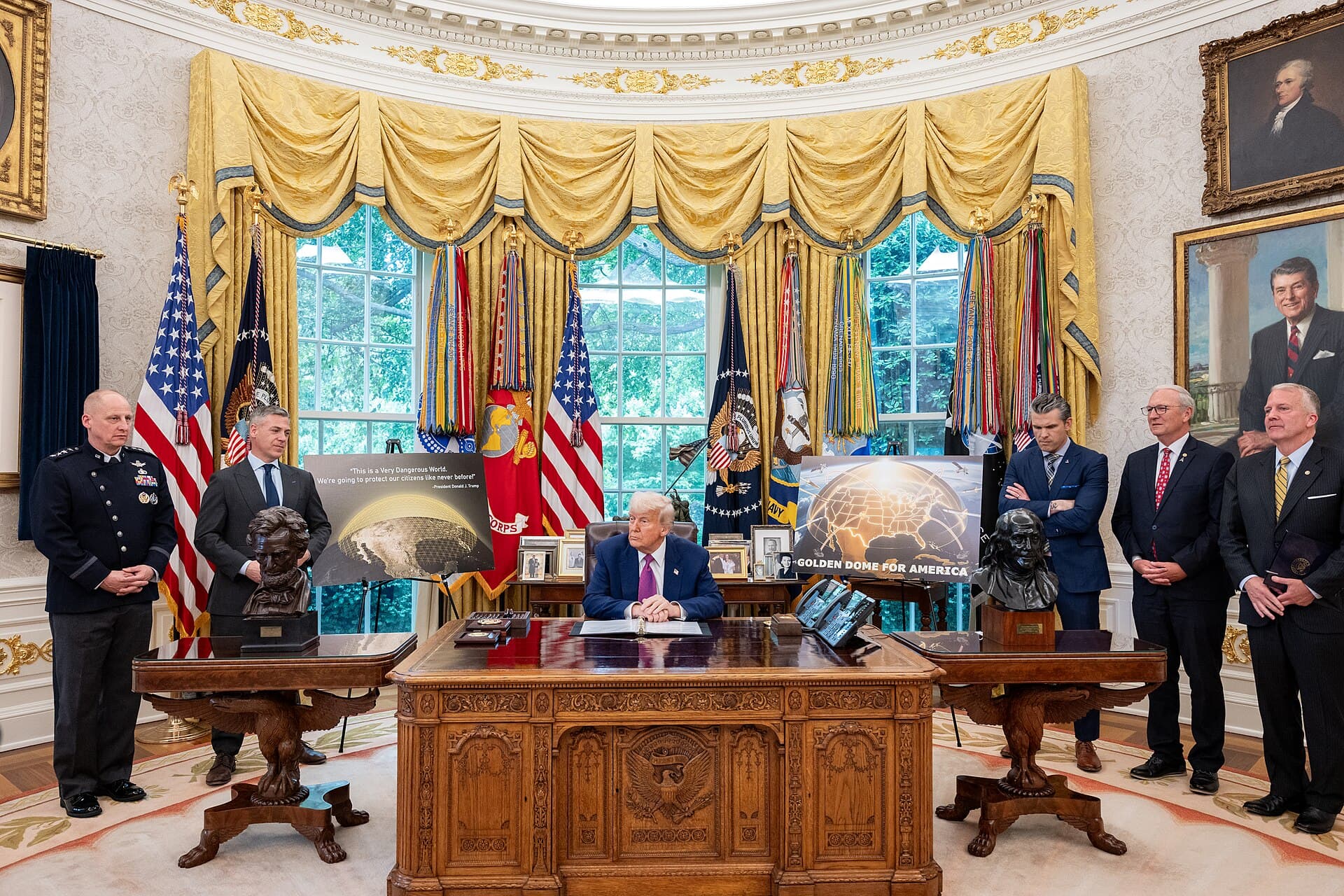
The strategic argument is just as unsettled. Gen. Michael A. Guetlein, who was named director of Golden Dome for America in 2025, testified before the House Armed Services Committee on April 15, 2026, that the threat environment has changed and that homeland missile threats are “real,” “complex,” and “growing.” He said adversaries are building faster, more maneuverable and more numerous missiles. The Congressional Research Service noted that Russia and China have said Golden Dome is meant to undermine their ability to retaliate, which is why the plan is being judged not only as a procurement question but as a nuclear-stability issue. The same research also places it in a longer history, from the 1972 ABM Treaty to Ronald Reagan’s 1983 Strategic Defense Initiative, a reminder that the United States has chased space-based missile defense before, and always run into the same questions of cost, feasibility and escalation.
This article was produced by Prism’s automated news system from verified source data, official records, and press releases, then run through automated quality and moderation checks before publishing. The system is built and supervised by the people who set the standards it runs under. Read our full AI policy.
Know something we missed? Have a correction or additional information?
Submit a Tip

