Trump’s grip on Republicans could complicate midterm House fight
Trump keeps winning GOP primaries, but his hold could still cost Republicans swing seats as House members split from him to survive November.

Donald Trump is showing he can still decide Republican primaries, but that power is not the same thing as a winning midterm strategy. His endorsement of Ken Paxton helped push the Texas attorney general past Sen. John Cornyn in a runoff, a fresh sign that Trump can still bend the party to his will even as Republicans head into a tougher general election fight.
That split is at the center of the GOP problem. Republicans have spent the spring banking MAGA primary victories and redistricting gains, but the party has stumbled into June with a broader electorate that has soured on Trump’s second term and the economy. In the House, where Mike Johnson is trying to keep a narrowly divided conference together while pushing a third party-line spending bill and other priorities, vulnerable Republicans are increasingly weighing their own survival over loyalty to Trump’s message.

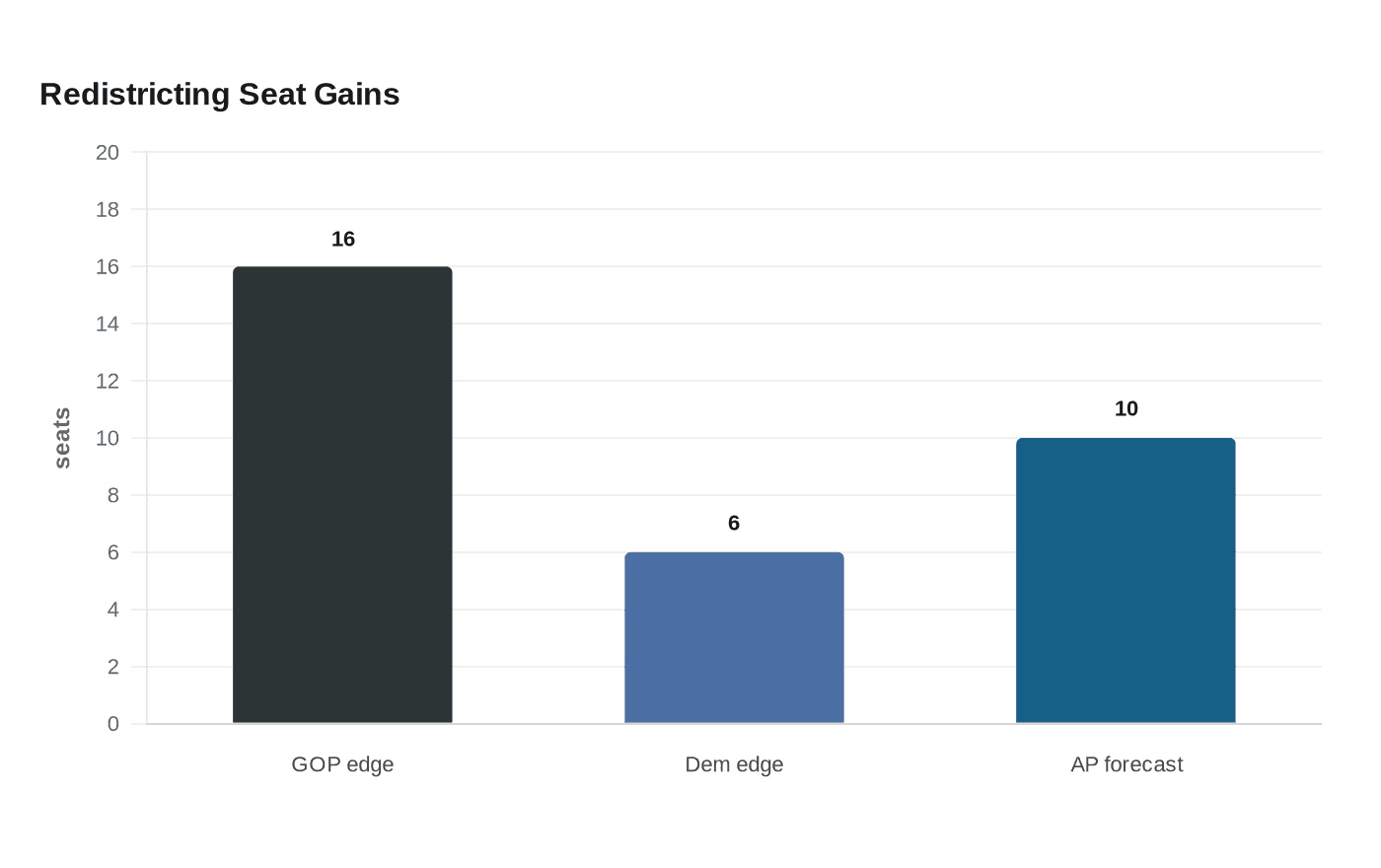
The structural map also favors Republicans, at least on paper. Ten states now have new congressional maps in place for the 2026 elections, and Republicans have increased their edge in House races by a total of 16 seats through redistricting, while Democrats have an advantage in six newly redrawn districts. The Associated Press has said Republicans could net about 10 additional U.S. House seats if the districts perform as intended. Nearly 145 million people, about two of every five Americans, live in states with new congressional lines for this election.
Even so, the redistricting war has not broken cleanly for either party. Tennessee approved a new map that dismantled a majority-Black district centered in Memphis, and Alabama’s new map was allowed to take effect after the U.S. Supreme Court acted on June 2, 2026. South Carolina’s state Senate rejected a map that would have affected Rep. Jim Clyburn’s district, while Virginia’s Supreme Court blocked a gerrymandered map that could have netted Democrats up to four House seats. Party leaders also failed to push preferred changes through Kansas, Illinois, Indiana, South Carolina, Maryland and New York.
That uneven terrain leaves Republicans trying to reconcile two different political realities. Trump can still boost candidates in primaries, but general elections reward discipline, local credibility and a message that reaches beyond the base. That is why vulnerable Republicans in battleground districts are becoming more willing to buck Trump and GOP leaders, especially as trade turmoil and U.S. involvement in Iran add new risks to the party’s national brand.
The arithmetic remains harsh for the GOP. Democrats need to flip only three Republican-held seats from 2024 to win the House, and the president’s party has lost House seats in every midterm election for the past two decades. Trump may still dominate Republican politics, but the midterm test is whether that dominance can be turned into a broad enough coalition to hold the chamber.
This article was produced by Prism’s automated news system from verified source data, official records, and press releases, then run through automated quality and moderation checks before publishing. The system is built and supervised by the people who set the standards it runs under. Read our full AI policy.
Did this article answer your question?

