Trump's Signature Set to Appear on All New U.S. Paper Currency
For the first time in history, a sitting president's signature is headed to every new U.S. dollar bill, ending a treasury tradition more than 100 years old.
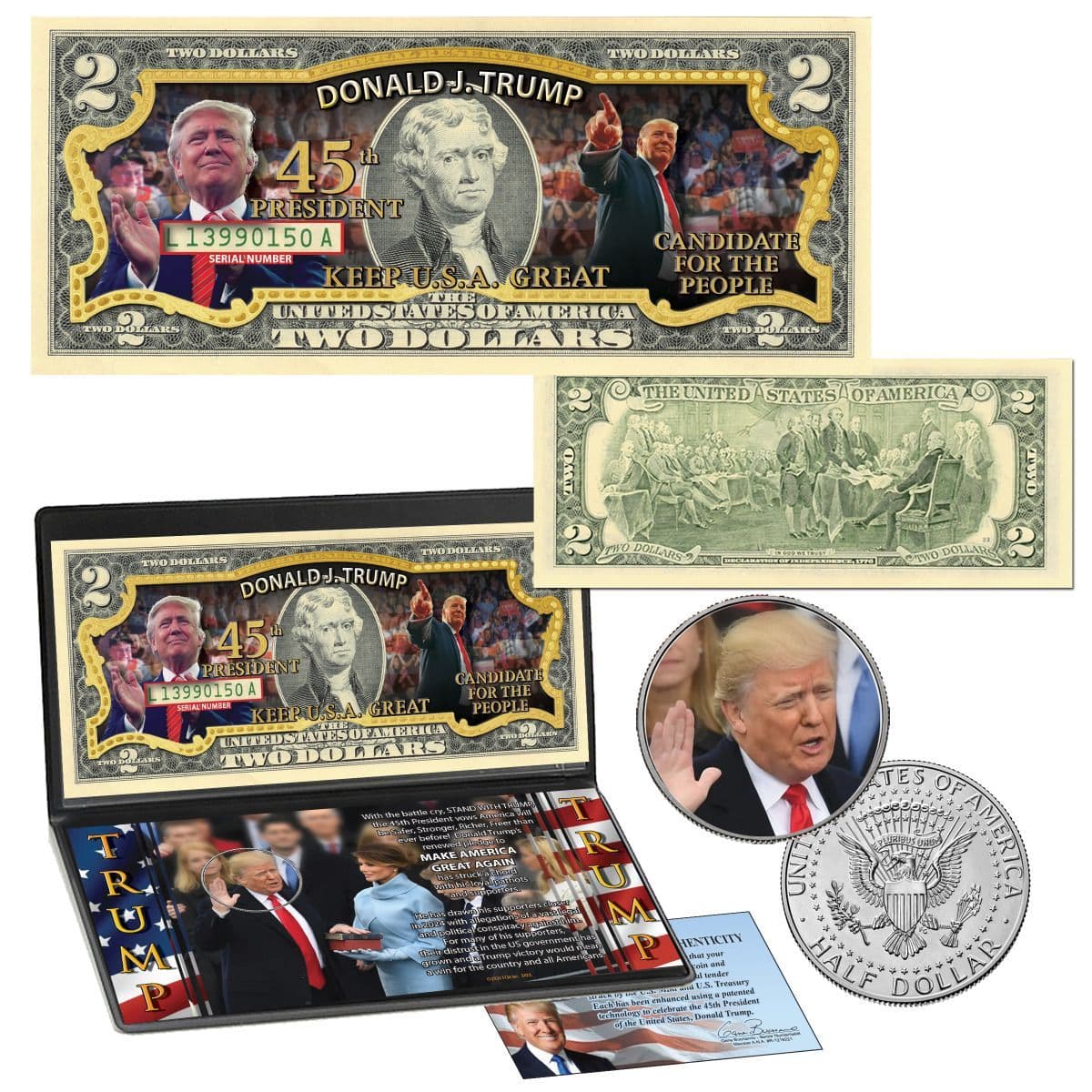
The U.S. treasurer's name has ridden quietly on American paper currency for more than a century, passing through a million wallets without ceremony. It appeared on $1 bills and $100s alike, a bureaucratic constant most Americans never thought to notice. That changes this summer, replaced by a name that has already stamped itself on federal building facades, a Navy battleship class and the marquee of the Kennedy Center: Donald J. Trump's.
The Treasury Department announced Thursday that all new U.S. paper currency will carry President Trump's signature, a first for any sitting president in the nation's history. Treasury Secretary Scott Bessent's signature will also appear on the bills, while the U.S. treasurer's name, present on currency since the 19th century, is expected to be removed to accommodate both. Beyond the signature addition, the overall designs of the bills will not otherwise change; existing imagery, color schemes and security features remain intact.
The rollout is specific: the Bureau of Engraving and Printing will produce the first $100 bills bearing the new signatures in June, with other denominations to follow. The authority to make that call belongs entirely to the Treasury Department. Congress first authorized the Treasury Secretary to design and print paper currency in 1862, when the United States issued the first "greenbacks" to finance the Civil War, and that power has remained with the department ever since. Michael Bordo, director of the Center for Monetary and Financial History at Rutgers University, said the move will bring political pushback, "but I do not know if he has crossed any legal red lines" since the Treasury Secretary may have the authority to determine who signs the currency.
Bessent offered no ambiguity about the rationale. "There is no more powerful way to recognize the historic achievements of our great country and President Donald J. Trump than U.S. dollar bills bearing his name, and it is only appropriate that this historic currency be issued at the Semiquincentennial," he said in the Treasury's announcement. He added that "under President Trump's leadership, we are on a path toward unprecedented economic growth, lasting dollar dominance, and fiscal strength and stability." The dollar's recent trajectory complicates that framing: in 2025, the first year of Trump's second term, the currency recorded its steepest annual drop in 50 years.
Democratic criticism arrived fast. Representative Shontel Brown posted on social media that the Treasury plan is "gross and un-American," and Democrats in Congress introduced legislation that would prohibit any living or sitting president from being depicted on U.S. currency.

The announcement lands as cash itself becomes an increasingly marginal fact of American life. According to the Federal Reserve, cash now accounts for just 14 percent of all U.S. payments, with the average American making roughly seven cash transactions per month out of approximately 48 total. The bills that remain in circulation carry outsized symbolic weight precisely because fewer people actually touch them.
The signature plan fits the second Trump administration's wider project of attaching the president's name to the instruments of American public life. Since January 2025, his name has been affixed to the renamed U.S. Institute of Peace, the Kennedy Center for the Performing Arts and a new class of Navy battleships. A federal arts commission approved the final design for a 24-karat gold commemorative coin bearing Trump's image earlier this month, to be issued for America's 250th birthday on July 4. That coin had to clear a historically awkward threshold: federal law has long barred the depiction of a living person on standard U.S. coinage, and the approving panel was characterized by critics as hand-picked by the president.
Bordo noted one consequence no one disputes: "It also means that many years from now those bills will be collectors' items.
This article was produced by Prism’s automated news system from verified source data, official records, and press releases, then run through automated quality and moderation checks before publishing. The system is built and supervised by the people who set the standards it runs under. Read our full AI policy.
Did this article answer your question?

