Trump's Signature to Appear on U.S. Currency for 250th Anniversary
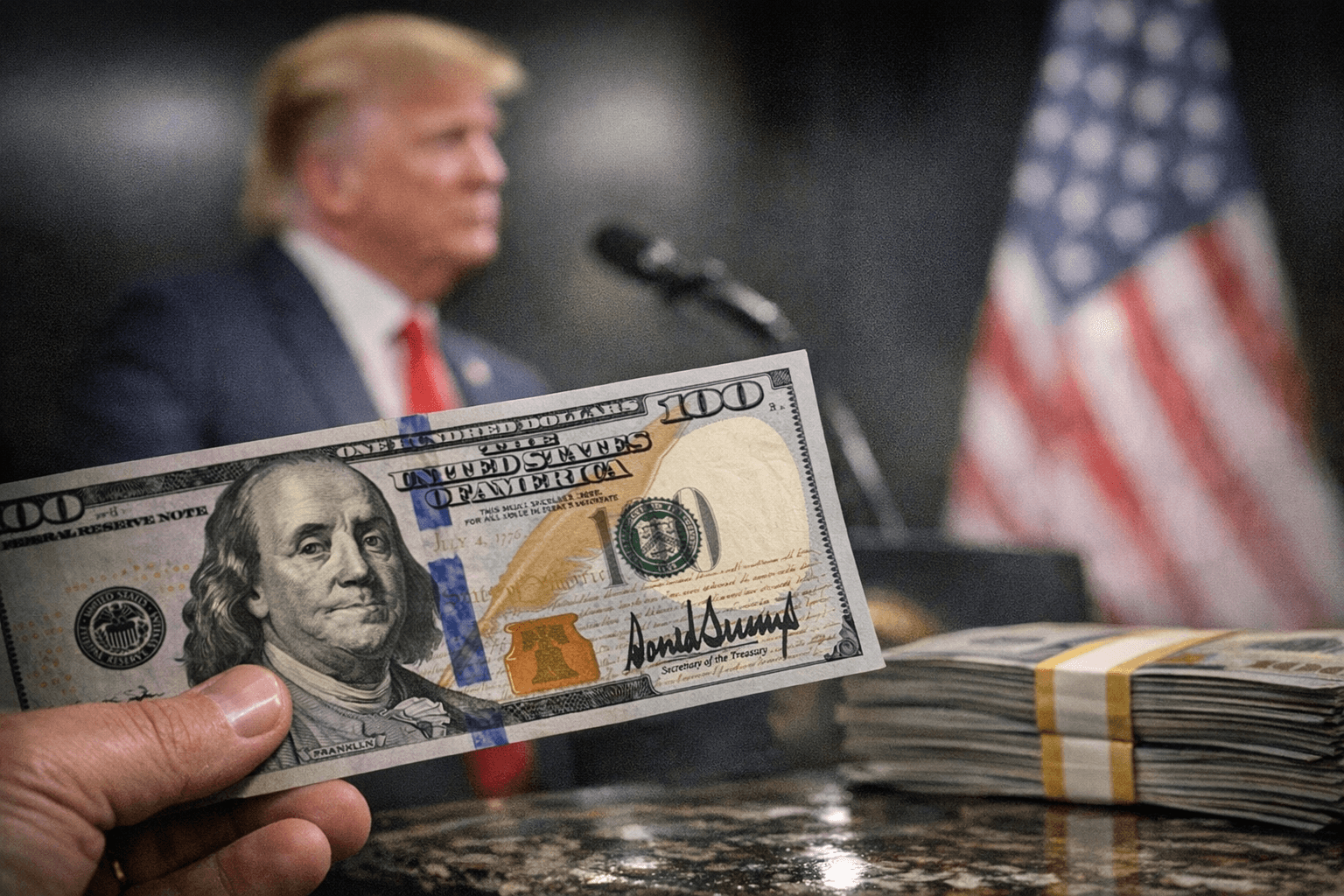
For the first time in U.S. history, a sitting president's signature will appear on paper currency — $100 bills bearing Trump's name print in June.

For the first time in U.S. history, a sitting president's signature will appear on American paper currency. The Treasury Department announced Thursday that President Donald J. Trump's signature will be added to all new U.S. paper bills to mark the nation's 250th anniversary, a move that simultaneously ends a tradition stretching back to the Civil War era.
The first $100 bills bearing Trump's signature and that of Treasury Secretary Scott Bessent will be printed in June, followed by other bills in subsequent months. The Bureau of Engraving and Printing is currently still producing notes bearing the signatures of former President Joe Biden's Treasury secretary, Janet Yellen, and Treasurer Lynn Malerba.
The new notes will not look dramatically different. Trump's signature will replace the Treasurer of the United States' signature on U.S. money for the first time in 165 years. Malerba will be the last of an unbroken line of Treasurers whose signatures had appeared on U.S. federal currency since 1861, when the government first issued paper money.
Treasury Secretary Scott Bessent framed the decision in sweeping terms. "Under President Trump's leadership, we are on a path toward unprecedented economic growth, lasting dollar dominance, and fiscal strength and stability," Bessent said, adding that "there is no more powerful way to recognize the historic achievements of our great country and President Donald J. Trump than U.S dollar bills bearing his name, and it is only appropriate that this historic currency be issued at the Semiquincentennial."
U.S. Treasurer Brandon Beach echoed that sentiment, declaring that the unprecedented move to add the president's signature "is not only appropriate, but also well deserved." Beach also said in the Treasury's press release that "American currency will continue to stand as a symbol of prosperity, strength, and the unshakable spirit of the American people under President Trump's leadership."
The decision drew sharp criticism from Democrats. Polls show voters are unhappy with the economy, citing rising inflation and high cost of living, and Rep. Shontel Brown (D-OH) made that connection explicit Thursday evening, posting on X that the Treasury plan is "gross and un-American. But at least it will remind us who to thank when we pay more for gas, goods, and groceries." The announcement came against a backdrop of surging energy costs; the war in Iran, which began Feb. 28, has caused oil and gas prices to soar, deepening affordability concerns across the country.
The currency announcement is part of a broader cluster of Semiquincentennial gestures bearing Trump's name. Trump's name is now affixed to the Kennedy Center for the Performing Arts and the U.S. Institute of Peace in Washington, and is also attached to discount drug programs, savings accounts, and proposed warships. The plan also comes in tandem with an ongoing effort to get Trump's face on a coin; earlier this month, a federal arts commission approved the final design for a 24-karat gold commemorative coin bearing Trump's image to help celebrate America's 250th birthday.
That coin effort, however, runs up against a legal constraint. A statute governing the printing of Federal Reserve notes gives the Treasury broad discretion to change designs to guard against counterfeiting, but the law requires keeping certain elements, including the words "In God We Trust," and only allows portraits of deceased individuals. The signature, unlike a portrait, does not depict the president's likeness, providing the legal latitude for Thursday's announcement.
One unnamed economist quoted by the Associated Press offered a long-range perspective on what these bills might become: "It also means that many years from now those bills will be collectors' items." The July 4, 2026 semiquincentennial celebration gives the Treasury a firm deadline, and the June printing schedule for $100 bills suggests the first notes will enter circulation well before the national birthday arrives.
Sources:
Know something we missed? Have a correction or additional information?
Submit a Tip