TSA Absences Hit Record High Amid Government Shutdown Staffing Crisis
Over 3,250 TSA officers called out in a single day as the DHS shutdown stretched past 40 days, with some airports losing nearly half their screeners.
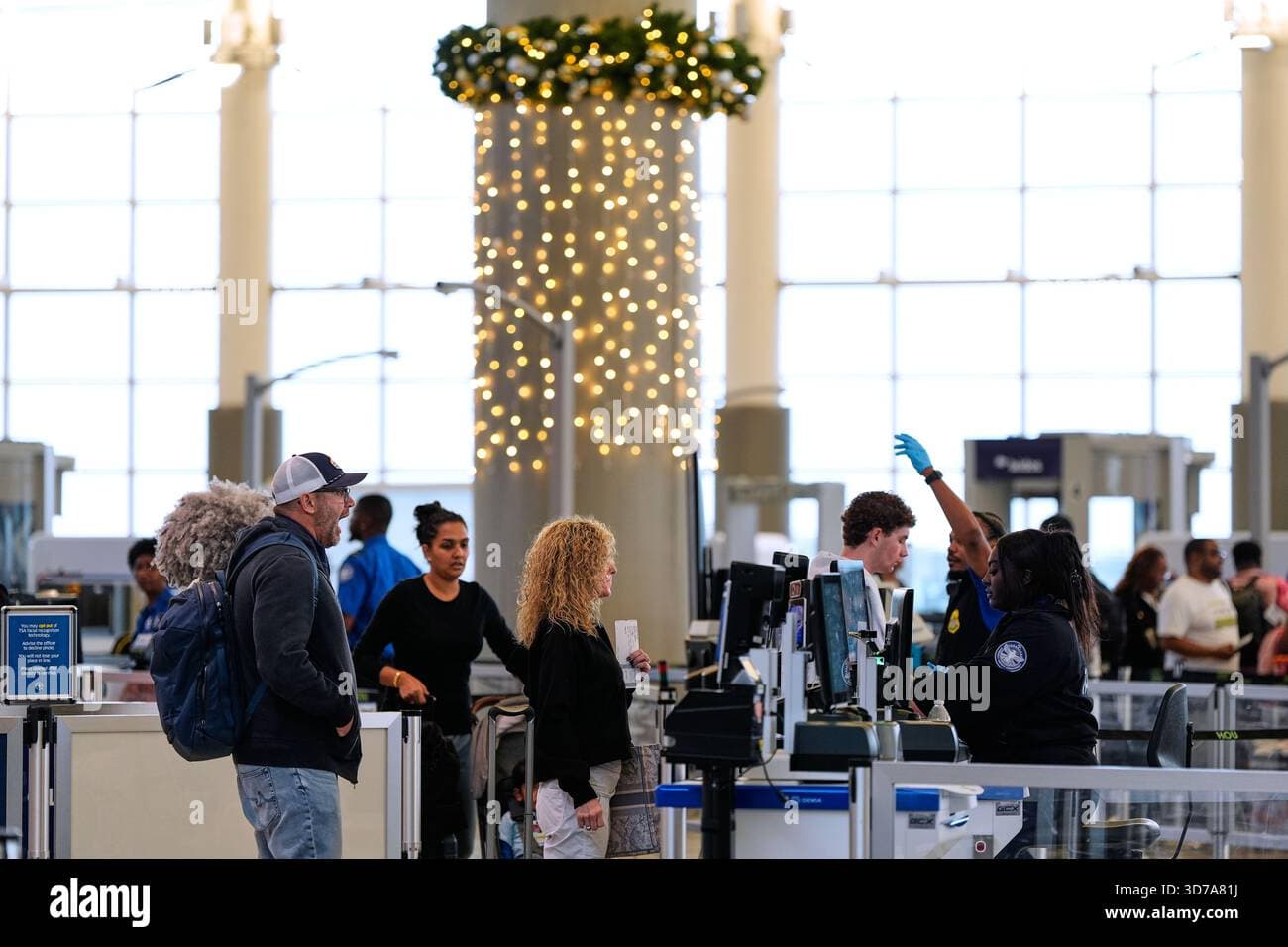
The officers screening passengers at Houston's William P. Hobby Airport on March 21 were part of a skeleton crew. Nearly half their colleagues, 47.4% of scheduled TSA personnel, had called out that day, leaving checkpoints severely understaffed during one of the busiest spring break travel weekends of the year.
That scene played out, in varying degrees, at airports from Atlanta to New York. Nationwide, more than 3,250 TSA officers called out on Saturday, March 21, according to TSA data, accounting for 11.51% of the scheduled workforce, the highest single-day callout rate since the partial Department of Homeland Security shutdown began. The cause was direct: those officers had not received a paycheck in more than three weeks.
The DHS funding lapse remained unresolved since February 14, the product of a congressional impasse over immigration policy. Democrats demanded reforms to Immigration and Customs Enforcement and Customs and Border Protection policies as a condition of voting to fund the department. The Senate failed to advance a funding bill for the fifth time in a single week, with Senator John Fetterman of Pennsylvania standing as the only Democrat to vote yes. Senate Minority Leader Chuck Schumer pushed for a procedural vote that would fund TSA separately from the rest of DHS, a proposal that reflected how acute the airport staffing crisis had become.
Ha Nguyen McNeill, the acting administrator of the TSA, testified before the House Committee on Homeland Security that daily callout rates had climbed from 4% before the shutdown to 11% nationwide, with individual airports reaching 40% to 50%. "Some are sleeping in their cars, selling their blood and plasma, and taking on second jobs to make ends meet," McNeill said in her prepared remarks, "all while being expected to perform at the highest level when in uniform to protect the traveling public." She added that staff "simply cannot afford to report to work."
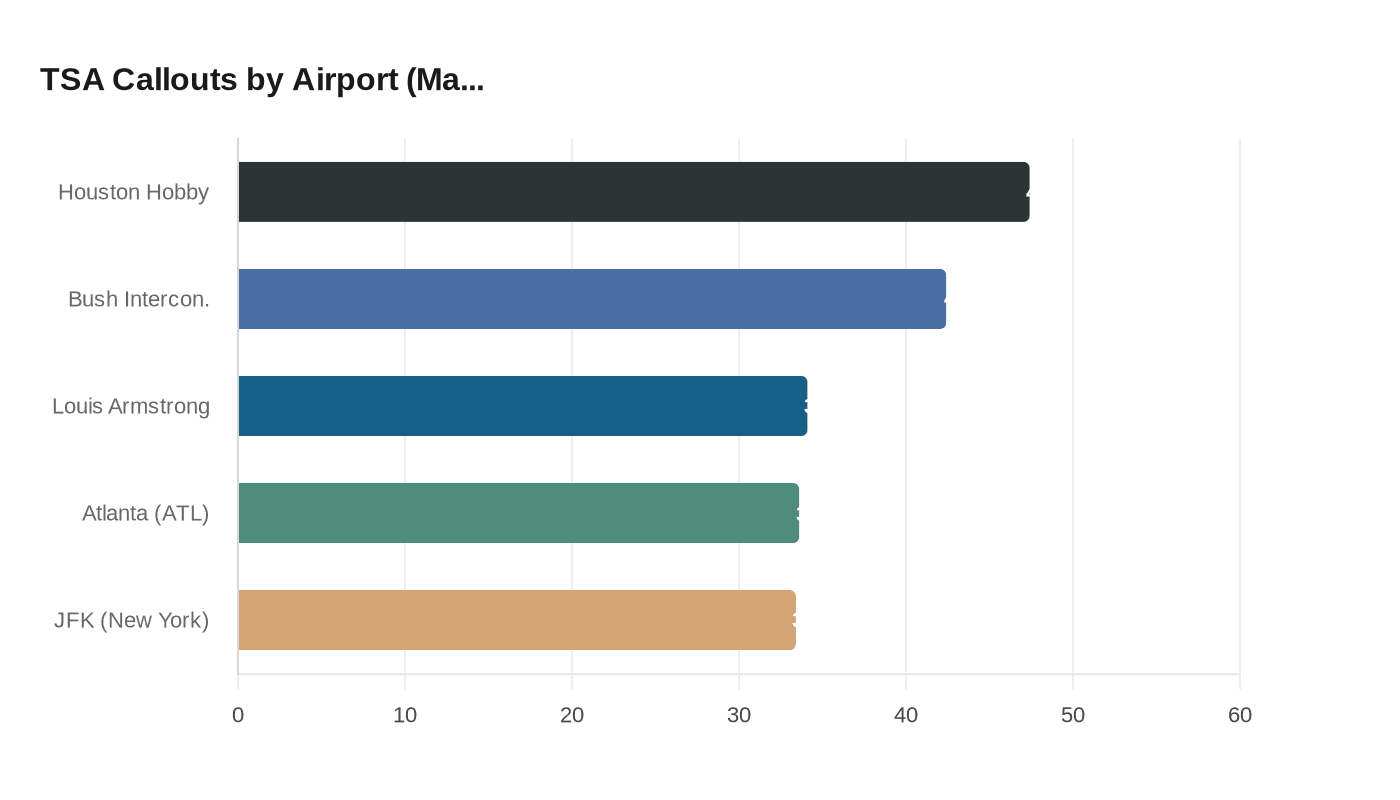
The numbers bore that out at every major hub. DHS figures from a Tuesday mid-week showed nearly 37% of TSA workers called out at both Hartsfield-Jackson Atlanta International Airport and John F. Kennedy International Airport in New York. Houston's William P. Hobby Airport recorded a 43% callout rate that same day; George Bush Intercontinental came in at nearly 40%. Louis Armstrong International Airport in New Orleans sat at about 36%. TSA data for Saturday, March 21 placed George Bush Intercontinental at 42.4%, Louis Armstrong at 34.1%, Hartsfield-Jackson at 33.6%, and JFK at 33.4%.
Passengers experienced the consequences in real time. On Wednesday of that week, 38% of TSA employees called out at Hartsfield-Jackson alone, pushing the national callout rate to 10% and overwhelming even premium screening lanes. "We got here at 9:00 and it snakes around and snakes around and no one is making progress," one traveler said. "Even people in TSA Pre-Check are waiting in line." McNeill warned that wait times had surpassed four hours at some airports, raising what she described as major security risks beyond the inconvenience of missed flights.
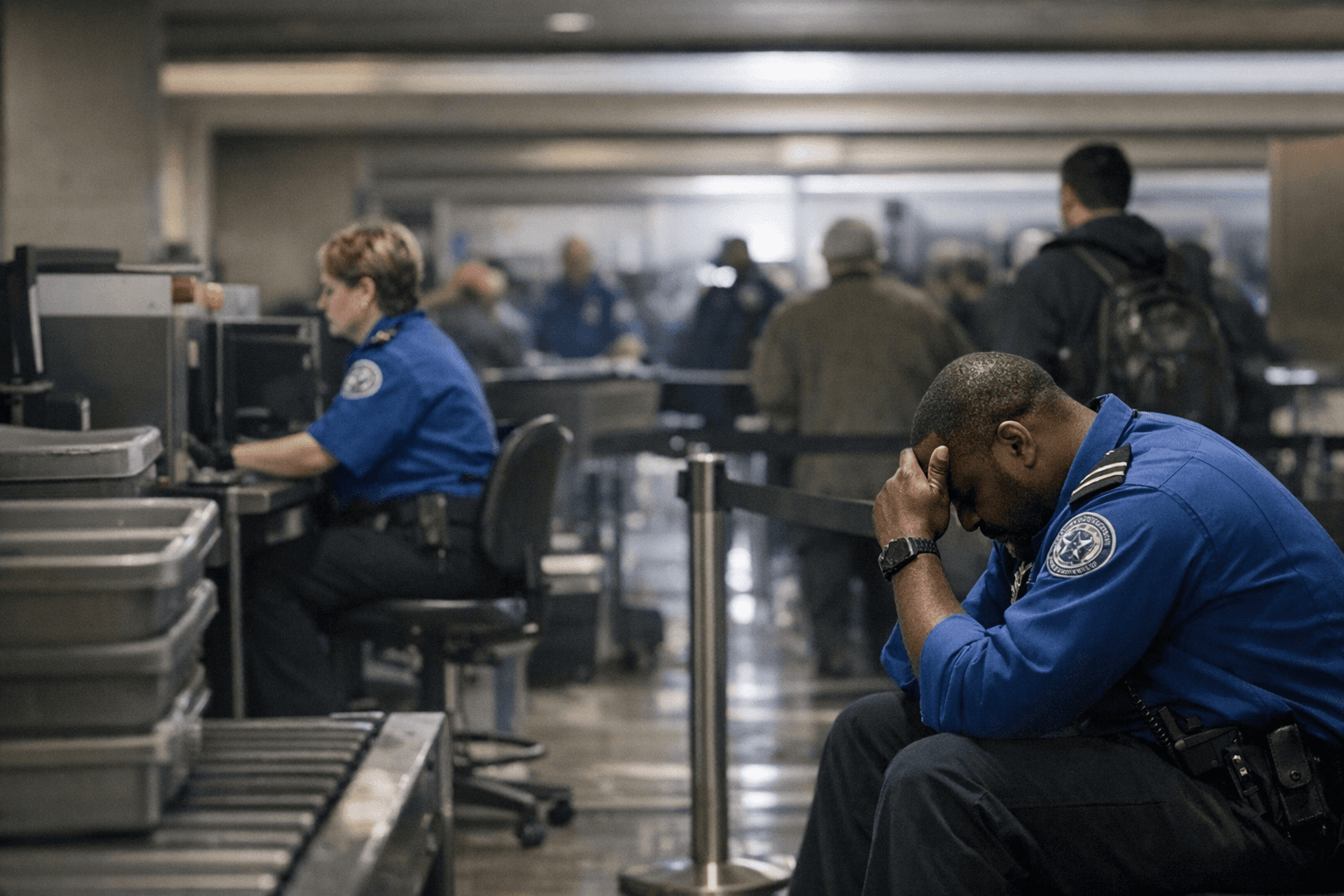
At least 481 TSA employees resigned since the shutdown began, the most recent official tally, up from more than 300 resignations documented in mid-March, a sign that the workforce was eroding faster than the standoff was resolving. McNeill also disclosed that assaults against TSA officers had increased during the shutdown, a development tied directly to understaffing and mounting passenger frustration during the spring break surge.
President Donald Trump escalated the standoff by posting on social media that he would deploy ICE agents to airports unless Democrats agreed to a funding deal. Atlanta Mayor Andre Dickens confirmed that federal personnel from Homeland Security Investigations and ICE would be deployed to Hartsfield-Jackson on a Monday morning. Federal officials stated those personnel would report directly to TSA and would not conduct immigration enforcement, though the deployment illustrated how far the crisis had extended beyond the checkpoint itself.
On the 40th day of the DHS budget standoff, McNeill put the institutional consequence in blunt terms: callout rates had nearly tripled from their pre-shutdown baseline, the spring break crowds were not relenting, and the political impasse showed no sign of breaking.
This article was produced by Prism’s automated news system from verified source data, official records, and press releases, then run through automated quality and moderation checks before publishing. The system is built and supervised by the people who set the standards it runs under. Read our full AI policy.
Did this article answer your question?

