TSA Officers Still Calling Out Sick Despite Trump's Pay Order
At Houston's Hobby Airport, 53% of TSA officers went absent in a single day. Trump's pay order hasn't stopped the callouts as lines top four hours.

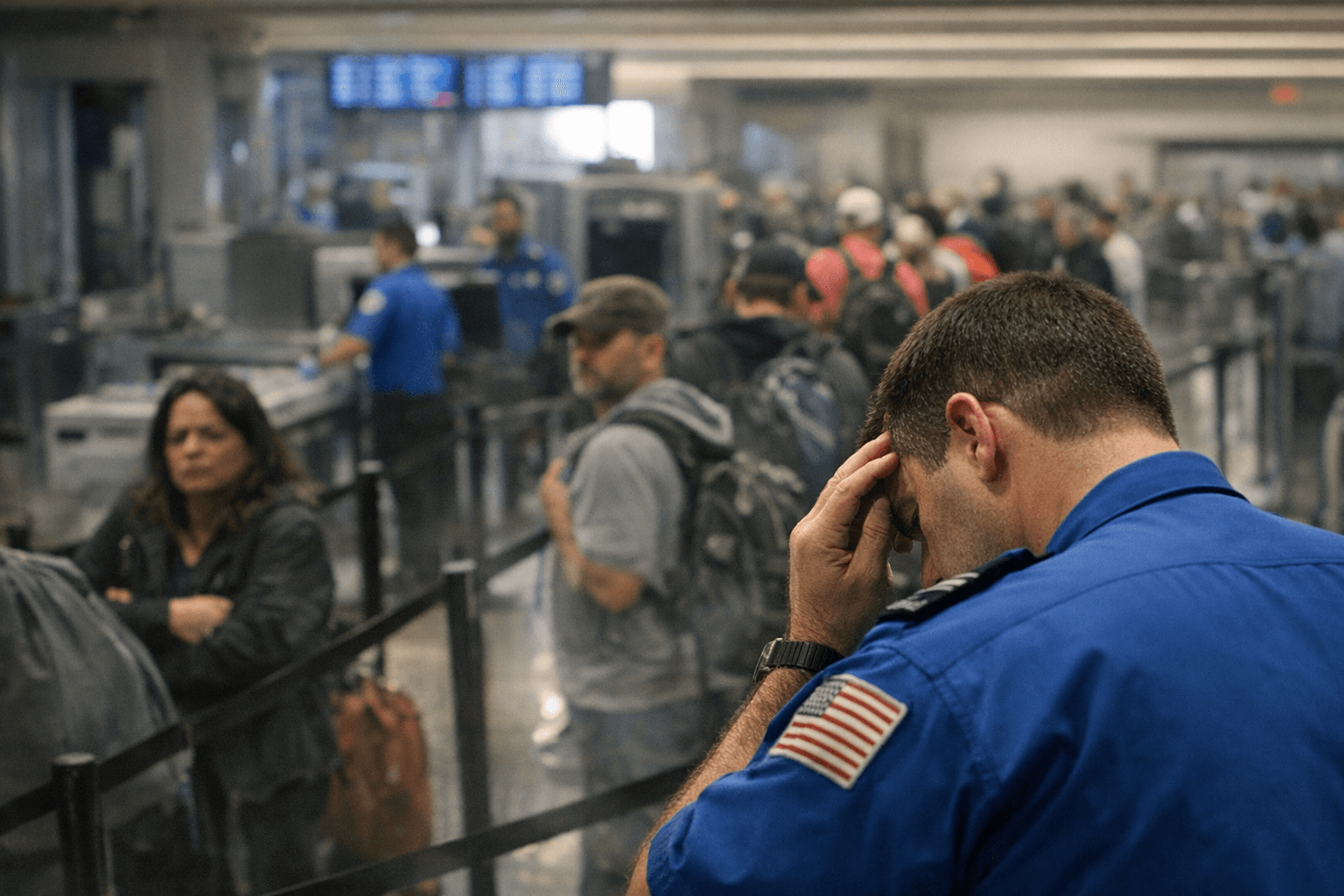
At Houston's William P. Hobby Airport on March 8, more than half the scheduled TSA officers never showed up. The 53% callout rate, followed by 47% the next day, left security lines stretching past four hours during one of the busiest travel weekends of the year, and it came after President Trump had already posted on Truth Social promising to "immediately pay our TSA Agents."
The pay has not stopped the callouts.
Internal TSA statistics show the nationwide callout rate averaged 6% during the partial DHS shutdown that began February 14, three times the roughly 2% baseline before funding lapsed. At some airports the rate exceeded 40%. JFK International recorded the worst per-airport average among major hubs, with 21% of officers absent across the shutdown period. Hartsfield-Jackson Atlanta came in at 19%, Hobby at 18%, Louis Armstrong New Orleans at 14%, and Pittsburgh International at 13%.
The reasons run deeper than a missing paycheck. During the shutdown, TSA required officers who called out sick for even a single day to produce a doctor's note or face discipline, a sharp departure from the agency's collective-bargaining agreement, which normally allows workers to self-certify illness for up to three days. The change pushed officers toward burning paid vacation days rather than calling out, while also forcing them to pay a medical co-pay on top of weeks without wages.
Cameron Cochems, a union representative and TSA agent in Boise, Idaho, described the policy in blunt terms. "That's just another way the agency is, I would say, intimidating people to not call out," he said. TSA did not respond to questions about the doctor's note requirement.
An inequity inside DHS itself compounded the morale problem. ICE agents dispatched to airports to assist overwhelmed TSA checkpoints continued receiving paychecks throughout the shutdown, funded through the One Big Beautiful Bill Trump signed into law last year. The roughly 50,000 frontline TSA screening officers those agents were sent to assist had not been paid since mid-March, when they missed their first full paycheck since the lapse began. More than 300 TSA employees resigned since February 14 according to internal data; a White House statement put the departure figure closer to 500.
Trump directed newly sworn-in DHS Secretary Markwayne Mullin to issue the payments after announcing he would sign an executive order to that effect. Senate Majority Leader John Thune welcomed the move but called it limited. "Well, obviously it takes the immediate pressure off, but you know, it's a short-term solution," Thune told reporters. "Give the president credit for responding to a crisis in a way that will make sure that after these guys drug this out for 41 days now, TSA agents are finally going to get paid."
If you are flying this week, Hobby Airport and JFK have logged the steepest per-airport absence rates during the shutdown. Build at least 90 additional minutes into your arrival timeline, confirm your airline's rebooking policy before leaving home, and check your departure airport's website for live security advisories. Atlanta and New Orleans have also recorded double-digit absence averages, so the exposure is not limited to Texas or the Northeast.
The Senate has not resolved the underlying funding fight. Democrats have withheld DHS funding until Republicans agree to curb elements of the administration's immigration enforcement policy; Republicans and the White House have refused those terms. Until Congress acts, a pay directive alone cannot fill checkpoints that are losing officers faster than they can be replaced.
This article was produced by Prism’s automated news system from verified source data, official records, and press releases, then run through automated quality and moderation checks before publishing. The system is built and supervised by the people who set the standards it runs under. Read our full AI policy.
Did this article answer your question?

