TSMC evacuates some Hsinchu facilities, staff return after offshore quake
A magnitude 7.0 earthquake off Taiwan on Dec. 27 prompted outdoor evacuations at a small number of Taiwan Semiconductor Manufacturing Co. facilities in Hsinchu Science Park, though work safety systems were reported intact and staff later returned. The limited disruption and brief local outages underline both the resilience and vulnerability of the island's critical chip supply chain.
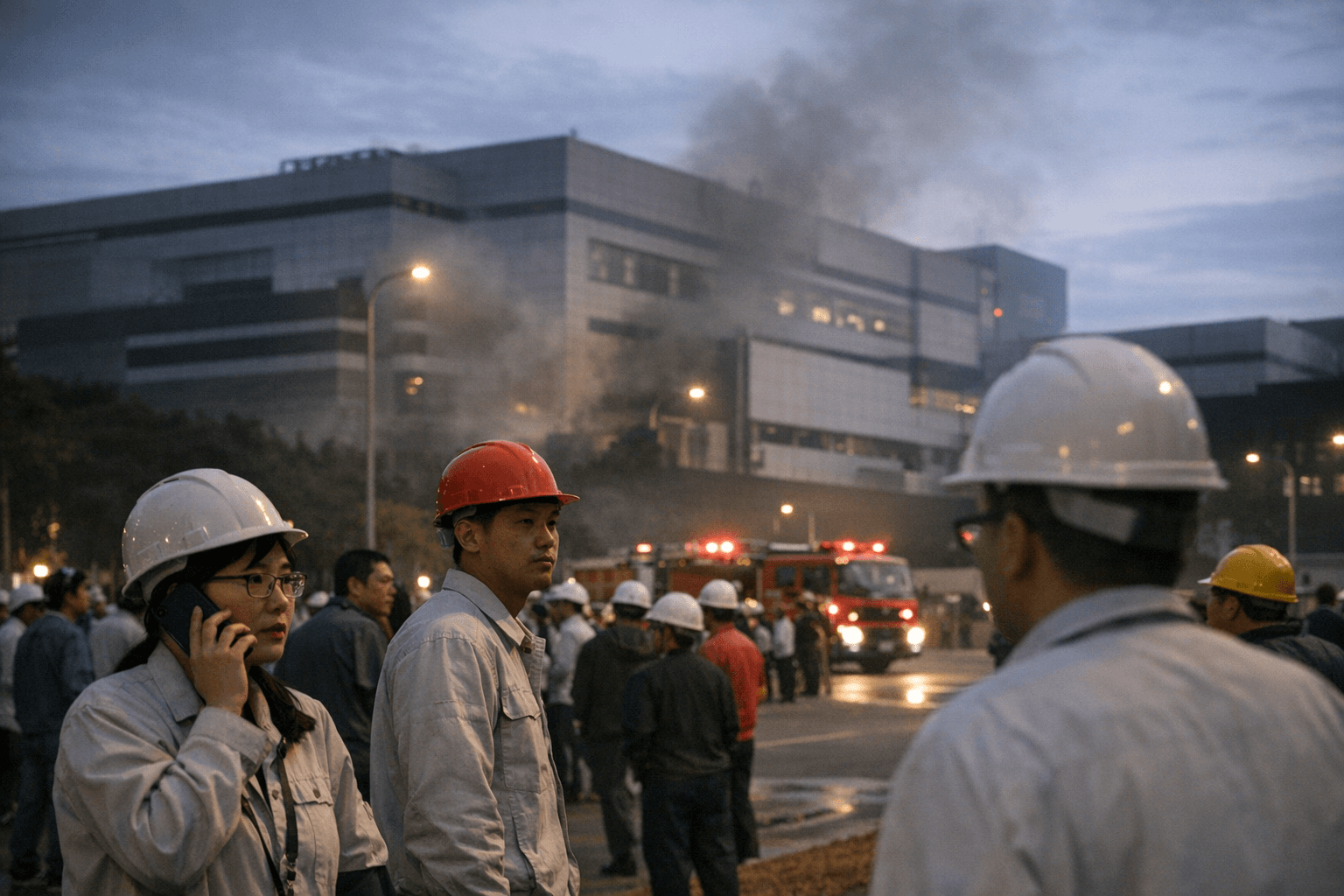
A magnitude 7.0 earthquake centered about 32 kilometers off Yilan on Saturday prompted emergency evacuations at a small number of Taiwan Semiconductor Manufacturing Company facilities in the Hsinchu Science Park, the company said. TSMC said the evacuations were carried out under established emergency procedures and stressed that safety systems at all facilities were functioning normally, saying, "Prioritising personnel safety, we are conducting outdoor evacuations and headcounts in accordance with emergency response procedures. Work safety systems at all facilities are operating normally."
The United States Geological Survey located the quake offshore and Taiwan’s weather administration placed the tremor at a depth of 73 kilometers, assigning it an intensity four classification that indicates minor damage was possible. Authorities warned residents to be alert for aftershocks in the magnitude 5.5 to 6.0 range in the hours and days that followed. Later updates indicated evacuated TSMC staff had returned to their posts, reflecting a rapid operational assessment and resumption of work at the facilities involved.
Islandwide impacts were limited but tangible. Taipei city officials reported no major structural damage, while noting isolated incidents such as gas and water leaks and minor building damage. Taiwan Power Company said more than 3,000 homes in Yilan experienced brief power outages. President Lai Ching te posted that authorities had the situation under control and urged the public to remain vigilant for aftershocks.
The episode reinforces Taiwan’s longstanding exposure to seismic risk. The island sits at a complex tectonic junction and has experienced deadly earthquakes in recent decades, including a 2016 event in southern Taiwan and a 7.3 magnitude quake in 1999 that caused thousands of fatalities. Those precedents inform the robust emergency systems now in place at industrial hubs such as the Hsinchu Science Park, where leading chip makers concentrate sophisticated, vibration sensitive manufacturing.
Industry accounts also point to a separate earlier quake on January 21 that reportedly had more consequential effects for production at specific fabs. Those reports attributed temporary shutdowns and wafer losses at some advanced production sites, and estimated tens of thousands of damaged wafers at facilities producing 3 nanometer, 4 nanometer and 5 nanometer chips. Those events are distinct from the offshore quake on December 27 and should be treated separately when assessing production risk.
For now, verified information indicates the Dec. 27 quake led to brief evacuations, no immediate major damage to critical infrastructure, and short power interruptions in parts of Yilan. What remains to be determined is whether the offshore tremor caused any measurable loss to chip wafers or longer term disruption at specific production lines. Given TSMC’s central role in the global semiconductor supply chain, even limited interruptions draw scrutiny from customers and markets, and authorities and companies are likely to continue assessing facilities as aftershocks subside.
This article was produced by Prism’s automated news system from verified source data, official records, and press releases, then run through automated quality and moderation checks before publishing. The system is built and supervised by the people who set the standards it runs under. Read our full AI policy.
Did this article answer your question?


