TSMC raises revenue forecast as AI-chip demand drives spending surge
TSMC lifted its 2026 sales view above 30% growth and pushed capex toward $56 billion as AI orders kept outrunning chip supply.
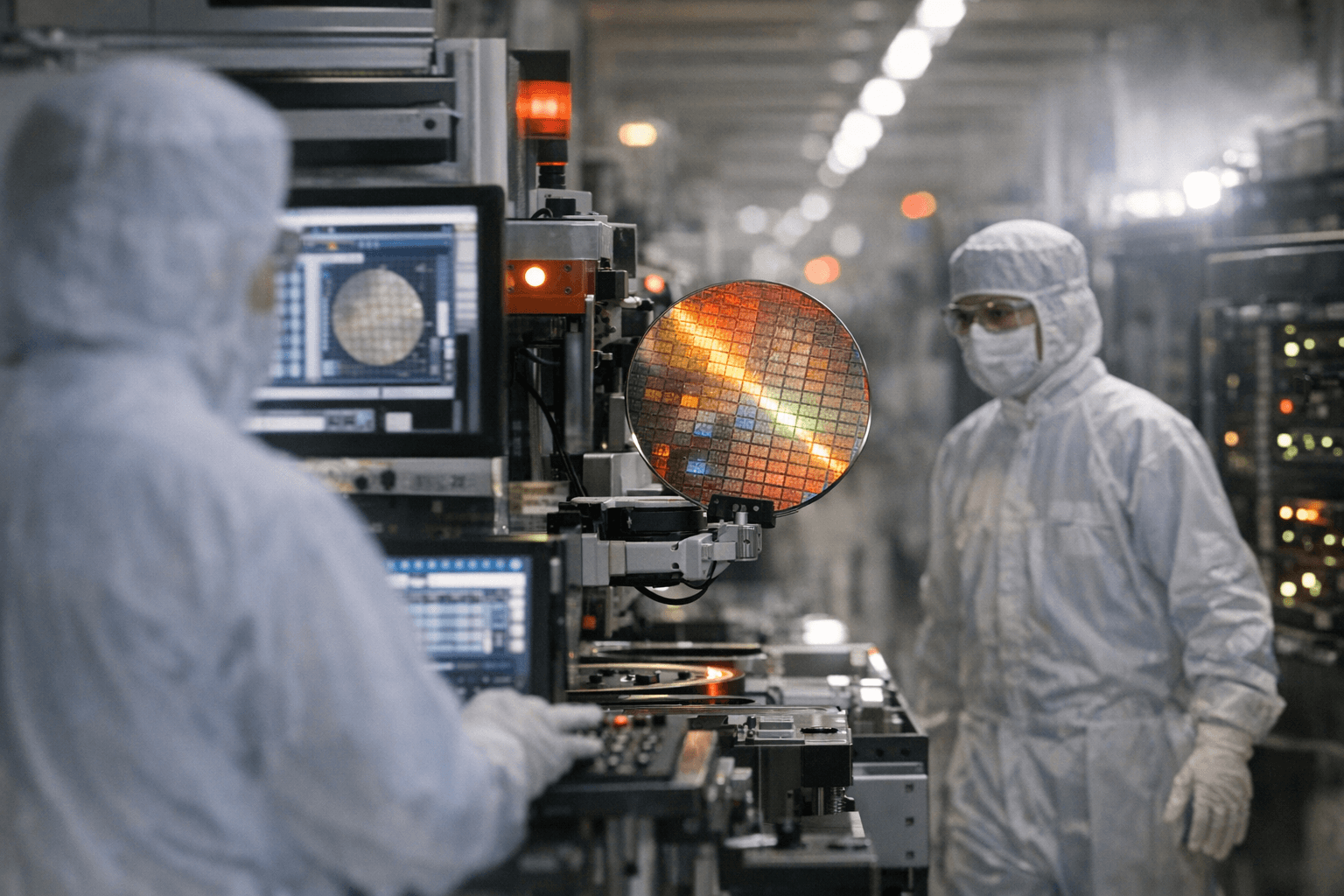
Taiwan Semiconductor Manufacturing Co. raised its full-year revenue forecast and said it will spend at the high end of its capital budget this year, signaling that the AI buildout is still pressing harder on the world’s most important chip maker than the supply chain can easily absorb.
The company said 2026 sales will grow by more than 30% in U.S. dollar terms, up from an earlier forecast of closer to 30%. It also said capital expenditure will land at the high end of its $52 billion to $56 billion range, after first-quarter capex of $11.1 billion and $101.0 billion spent over the previous three years. That is a clear sign that demand for advanced computing chips is still running ahead of available capacity.
The upgrade came after a first quarter that set records across the board. Net revenue reached NT$1.134 trillion, or $35.90 billion, while net income rose to NT$572.48 billion, about $18.16 billion. Diluted earnings per share were NT$22.08, gross margin came in at 66.2% and operating margin at 58.1%. The profit figure marked the company’s eighth straight quarter of double-digit growth and easily beat expectations.
Chief executive C.C. Wei said AI-related demand remained “extremely robust,” even as he pointed to macroeconomic uncertainty tied to the Middle East conflict. TSMC also forecast second-quarter revenue of $39.0 billion to $40.2 billion, a range that implies the company still sees demand strengthening rather than easing. For investors trying to gauge whether the AI boom is still translating into real industrial spending, TSMC’s numbers remain one of the clearest barometers.
The company is responding by expanding 3-nanometer capacity across Taiwan, the United States and Japan, with production plans that stretch into 2027 and 2028. New 3nm lines in southern Taiwan are scheduled for mass production in the first half of 2027. A second Arizona fab has been completed and is slated for 3nm commercial production in the second half of 2027. A second fab in Kumamoto, Japan, is scheduled to begin 3nm commercial production in 2028, after Taiwan’s government approved the new production plan for Japan.
That expansion matters well beyond TSMC’s own earnings. The company makes chips for Nvidia and other AI hardware players, so every extra wafer it can push through advanced lines helps determine who can ship more servers, accelerators and data-center gear. It also underscores how dependent the global AI economy remains on Taiwan, even as TSMC spreads capacity to Arizona and Japan to reduce bottlenecks and geopolitical concentration.
TSMC said it is also investing in advanced Chip-on-Panel-on-Substrate assembly and working with outsourced semiconductor assembly and testing firms to lift output. It is watching potential supply-chain pressure from the Middle East conflict, including risks to helium and hydrogen, though it said it has diversified sources, kept sufficient inventory and expects little short-term production impact. The message from the world’s biggest foundry is blunt: the AI cycle is still driving capital spending, and the race to add capacity is far from over.
This article was produced by Prism’s automated news system from verified source data, official records, and press releases, then run through automated quality and moderation checks before publishing. The system is built and supervised by the people who set the standards it runs under. Read our full AI policy.
Did this article answer your question?
%3Amax_bytes(150000)%3Astrip_icc()%2FCertificate-of-deposit-2301f2164ceb4e91b100cb92aa6f868a.jpg&w=1920&q=75)