Twenty Wickets Fall at MCG, Australia Creep Ahead in Ashes
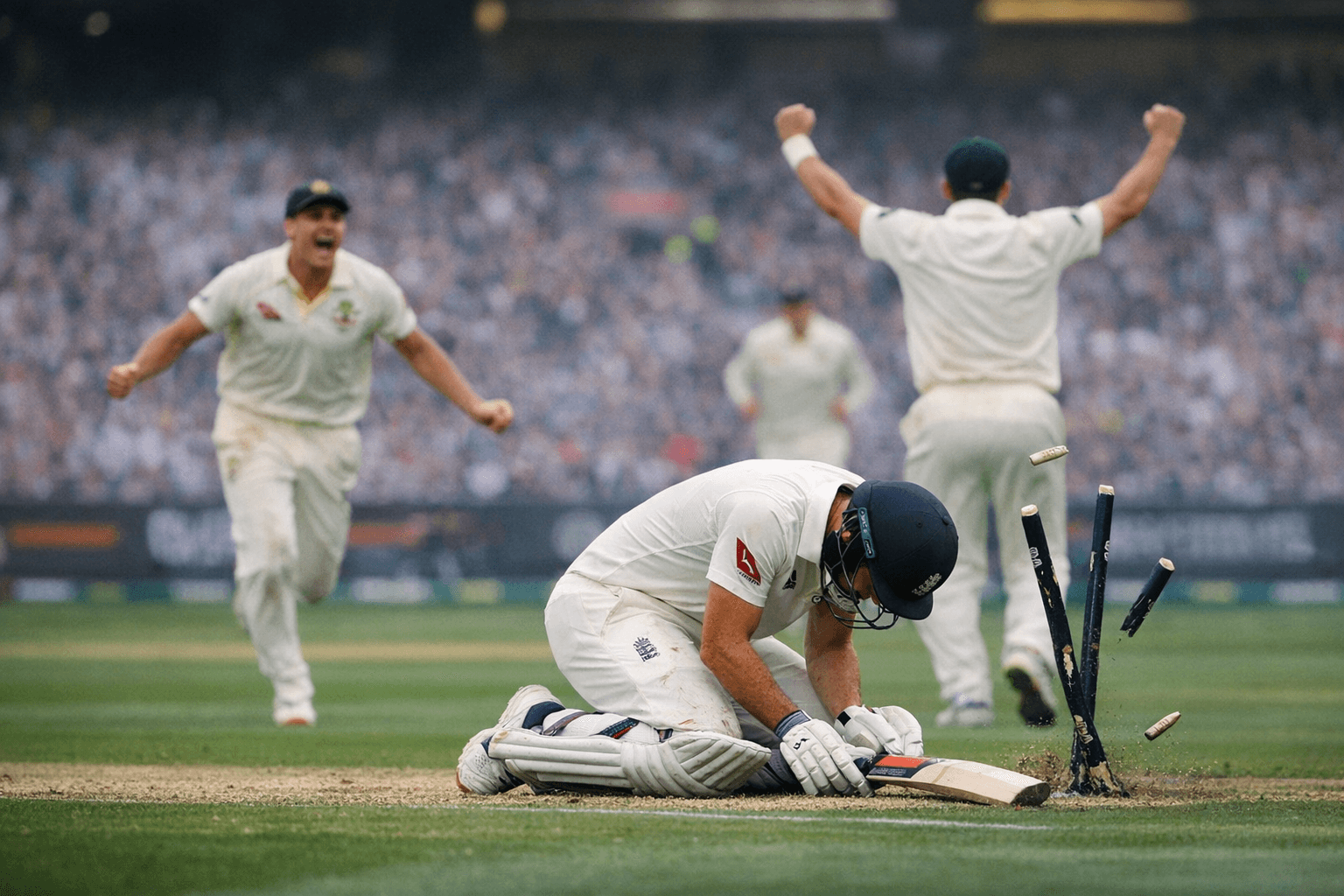
A frenetic Boxing Day at the Melbourne Cricket Ground saw 20 wickets tumble on a grassy pitch in front of a record crowd, leaving Australia marginally ahead after a manic fourth Test opening day. The carnage on a seam-friendly surface reshapes selection questions, fuels debate over pitch preparation, and underlines the enduring commercial power of the Boxing Day Test.

Twenty wickets fell on the opening day of the fourth Ashes Test at the Melbourne Cricket Ground, leaving Australia 4 for 0 in their second innings and 46 runs ahead after both sides were dismissed cheaply. Australia were all out for 152 in their first innings, England were bowled out for 110, and the hosts resumed with Scott Boland unbeaten on 4 and Travis Head yet to score as twilight fell across the packed stadium.
England captain Ben Stokes won the toss and elected to field on a surface covered with roughly 10 millimetres of grass, a factor Steve Smith, standing in as Australia captain, said would force batters to be "on their game." Broadcasters and commentators described the pitch as lively and helpful to pace, with Fox Sports calling it imperfect for batting and noting bowlers were effectively running riot through the day.
The two main spells of the day told the story. England seamer Josh Tongue produced a career best 5 for 45 to skittle Australia in the morning, extracting movement and bounce that troubled the top order. Michael Neser was Australia’s top scorer in the first innings with 35, and he turned the tide with the ball in England’s reply, taking 4 for 45. Boland chipped in with 3 for 30 as the visitors’ promising start, anchored briefly by Harry Brook’s 41, collapsed into a long afternoon of wickets. Jacob Bethell, making his Ashes debut for England, reached one before nicking to Neser early in the innings, while Ben Duckett and Zak Crawley were undone by disciplined seam bowling from Mitchell Starc and others.
The statistical rarity of the day was stark. Media outlets reported this as the most wickets to fall on the opening day of an Ashes Test since 1909, and Fox Sports noted that 20 wickets had not fallen on a first day at the MCG since 1894 or 1895. The historic scale of the collapse amplified the sense of drama for an estimated Boxing Day crowd that several outlets put at a record level, with figures reported at 93,442 and alternatively at 94,119, eclipsing the previous single day attendance cited as 93,013.
Beyond the immediate scoreboard the day carries clear implications. For England, a vulnerable top order and susceptibility to the new ball under pressure will intensify selection scrutiny and tactical reassessment ahead of the series remainder. For Australia, the performance reinforces the depth of their seam resources and the value of local knowledge in preparing for and exploiting home conditions. The spectacle also reaffirmed the Boxing Day Test as a commercial and cultural touchstone, drawing mass attendance and national attention that underlines Test cricket’s place in Australia’s sporting calendar.
The match will reopen with momentum finely balanced but coloured by a day that raised questions for groundskeepers, selectors and broadcasters alike. The MCG crowd and the old pitch record reminded organisers of the event’s economic pull, while players and coaches must now grapple with how much seam and grass should be part of cricket’s showcase events as the series progresses.
This article was produced by Prism’s automated news system from verified source data, official records, and press releases, then run through automated quality and moderation checks before publishing. The system is built and supervised by the people who set the standards it runs under. Read our full AI policy.
Did this article answer your question?
.jpg&w=1920&q=75)