Two Greensboro Crashes Damage Utility Poles, Temporarily Close Multiple Roads
Two separate crashes on Jan. 17 damaged utility poles and briefly closed multiple Greensboro roads, causing delays as crews cleared debris and checked infrastructure.
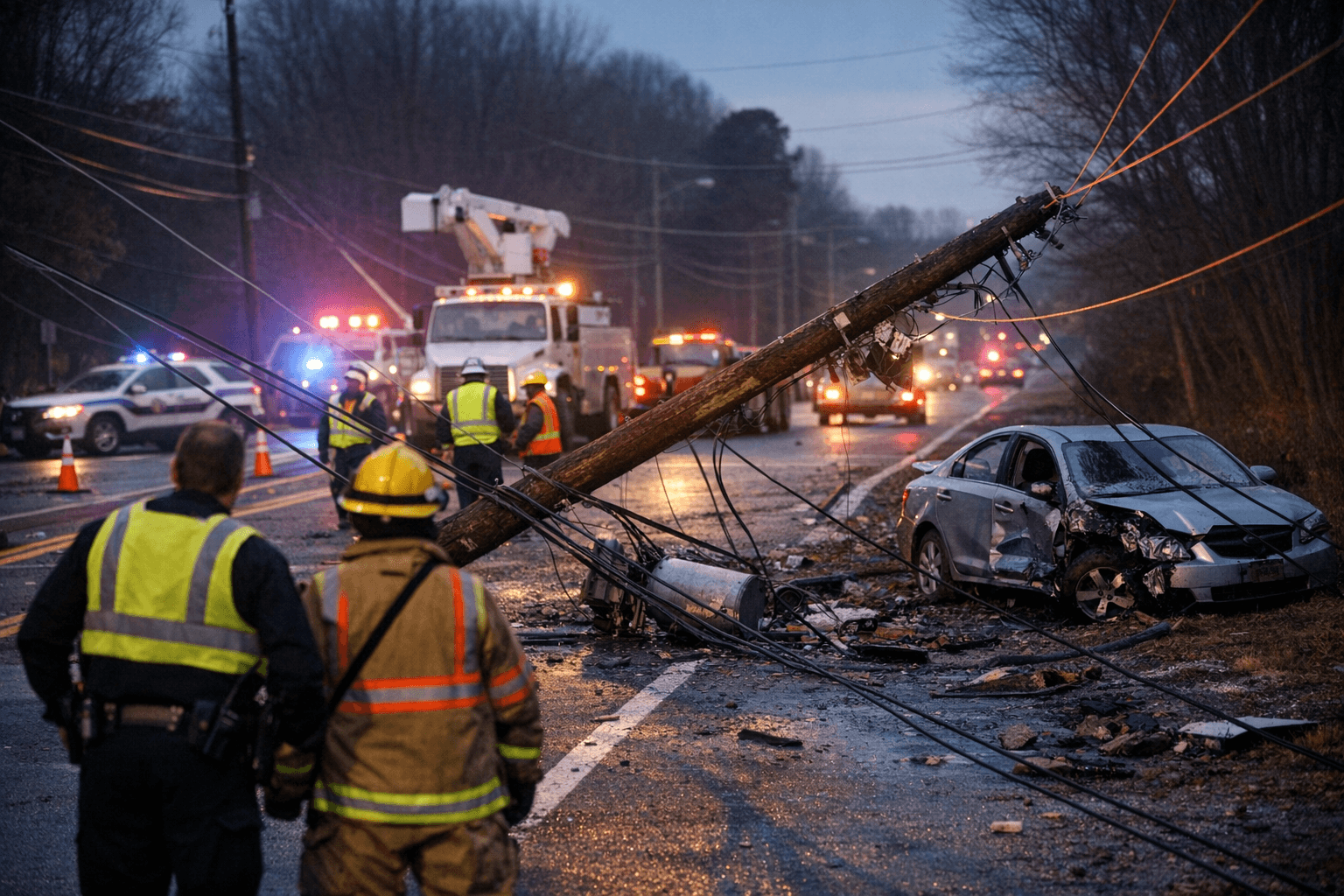
Two separate crashes in Greensboro on Jan. 17 damaged utility poles and forced temporary road closures as emergency crews and utility workers responded. The incidents closed Martinsville Road between Lawndale Drive and Pisgah Church Road and blocked lanes at the intersection of Presbyterian Road and Alamance Road for several hours while debris was removed and infrastructure was assessed.
Traffic lanes remained shut for hours while investigators and utility crews worked at the scenes. By the time of reporting on Jan. 19 the roads had reopened, but the closures caused localized delays and disrupted typical commuting patterns for drivers who use those corridors. No serious injuries were reported for at least one of the crashes, and investigations into both collisions were ongoing.
The immediate impact fell on motorists, school-trip drivers and local businesses that rely on these arterials for deliveries and customer access. Martinsville Road is a key east-west connector for parts of Guilford County, and even short closures there can reroute traffic onto smaller neighborhood streets such as Lawndale and Pisgah Church Road, increasing congestion and travel time. At Presbyterian and Alamance roads, the intersection's role as a feeder into nearby residential areas meant crews had to coordinate traffic control to keep side streets moving while work continued.
Damage to utility poles prompted careful assessment by utility technicians. When poles are struck, crews must check for structural integrity and potential hazards to power, phone and internet lines before restoring normal traffic flow. Removing debris and making initial repairs can take several hours, and follow-up work sometimes requires additional outages or lane restrictions until full restoration is complete.
These incidents highlight the everyday fragility of roadside infrastructure and the ripple effects a single crash can have on traffic, local commerce and utility services. For residents, the practical lesson is to allow extra travel time when crews are present and to expect possible detours on familiar routes. Motorists should also be prepared for periodic lane shifts when utility repairs are underway.
City and county crews returned the corridors to service by the time of reporting, and investigators continue to examine the causes of each collision. For now the immediate disruptions have eased, but the events underscore the importance of careful driving on routes that carry both commuter traffic and critical infrastructure.
Sources:
Know something we missed? Have a correction or additional information?
Submit a Tip