UC Santa Barbara chemists unveil sunlight-storing molecule that releases heat on demand
UC Santa Barbara chemists built a sunlight-charged molecule that stored more than twice the energy density of a lithium-ion battery and released enough heat to boil water.
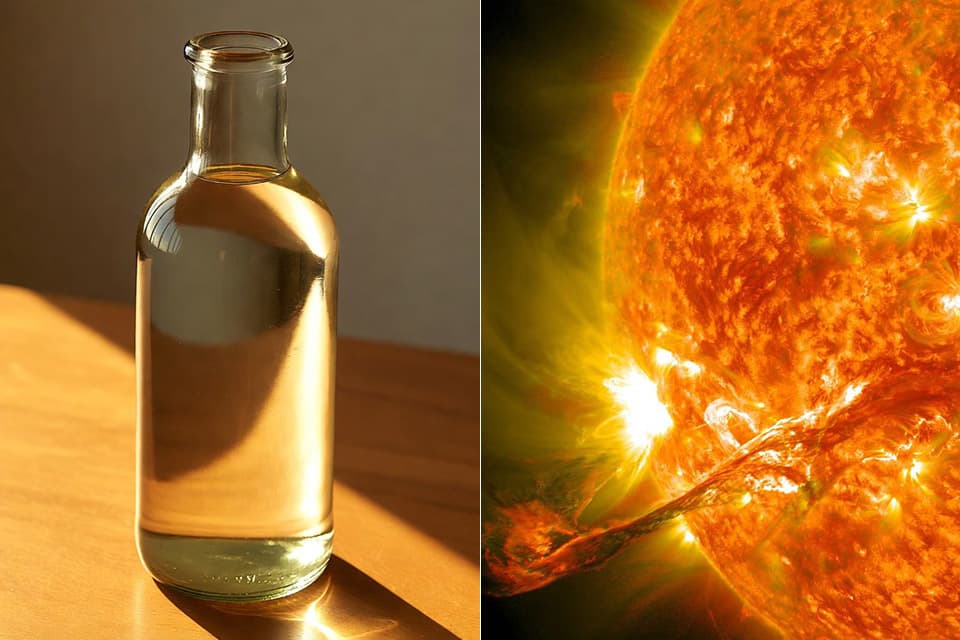
UC Santa Barbara chemists have pushed a lab-scale heat-storage concept closer to real-world energy use with a molecule that captured sunlight, locked it into chemical bonds and then released that energy as heat on demand. In tests, the material delivered more than 1.6 megajoules per kilogram, roughly double the energy density of a standard lithium-ion battery, and the team showed the heat was strong enough to boil water.
The work centers on a modified organic molecule called pyrimidone, part of a class of molecular solar thermal, or MOST, systems designed to act like rechargeable batteries for sunlight. Sunlight charges the molecule into a strained, high-energy shape; a later trigger, such as a small amount of heat or a catalyst, snaps it back and frees the stored energy as heat. UC Santa Barbara reported the material in Science on Feb. 12, 2026.
Grace Han, an associate professor in UC Santa Barbara’s Department of Chemistry and Biochemistry, said her goal was to design molecules that could provide clean, reliable power even when the sun was not shining. The appeal of MOST technology is not electricity storage, but thermal storage that could be reused and recycled, with energy stored as a reversible molecular shape change. That makes it a potential fit for residential and industrial heating, off-grid thermal power and other uses where heat is the end product, not a byproduct.
The main challenge now is not the chemistry alone, but whether it can be made efficient, durable and cheap enough to move from a clever molecule to scalable infrastructure. Han’s group said the stored energy remained stable for years, based on computational modeling with Ken Houk, a distinguished research professor at UCLA. If that durability holds in practical devices, the technology could offer long-duration storage measured in months or even years, a different niche from batteries and a possible complement to heat pumps and electrification strategies.
Han was named one of five scientist-inventors nationwide to receive a 2025 Moore Inventor Fellowship from the Gordon and Betty Moore Foundation, recognition that helped spotlight the work’s broader promise. She joined UC Santa Barbara in 2025 after starting her independent career at Brandeis University in 2018 and being promoted to associate professor with tenure in 2024. For now, the advance shows how a sunburn-inspired molecular trick may one day help carry solar energy from the lab into the grid and the furnace room.
This article was produced by Prism’s automated news system from verified source data, official records, and press releases, then run through automated quality and moderation checks before publishing. The system is built and supervised by the people who set the standards it runs under. Read our full AI policy.
Did this article answer your question?