UK heatwaves may have caused 2,877 deaths, UKHSA estimates
UKHSA estimates 2,877 heat-related deaths in May and June, nearly twice last year, as 36.1C heat closed schools and disrupted transport.

Heatwaves in May and June may have caused 2,877 deaths, according to a preliminary UK Health Security Agency estimate that nearly doubles last year’s toll. The figure lands after a June spell that produced the UK’s hottest June day on record, with 36.1C recorded in Gosport, Hampshire, and forced hundreds of schools across England and Wales to close while transport was disrupted.
BBC reporting on 13 July said more than 2,700 people may have died from heat-related causes in England and Wales during the exceptionally hot weather, with most of those deaths expected to have occurred during the June heatwave. The scale of the estimate shows how quickly a few days of extreme heat can turn into a mass-casualty event, especially in a country where public infrastructure still struggles when temperatures climb far beyond what many buildings and services were designed to handle.
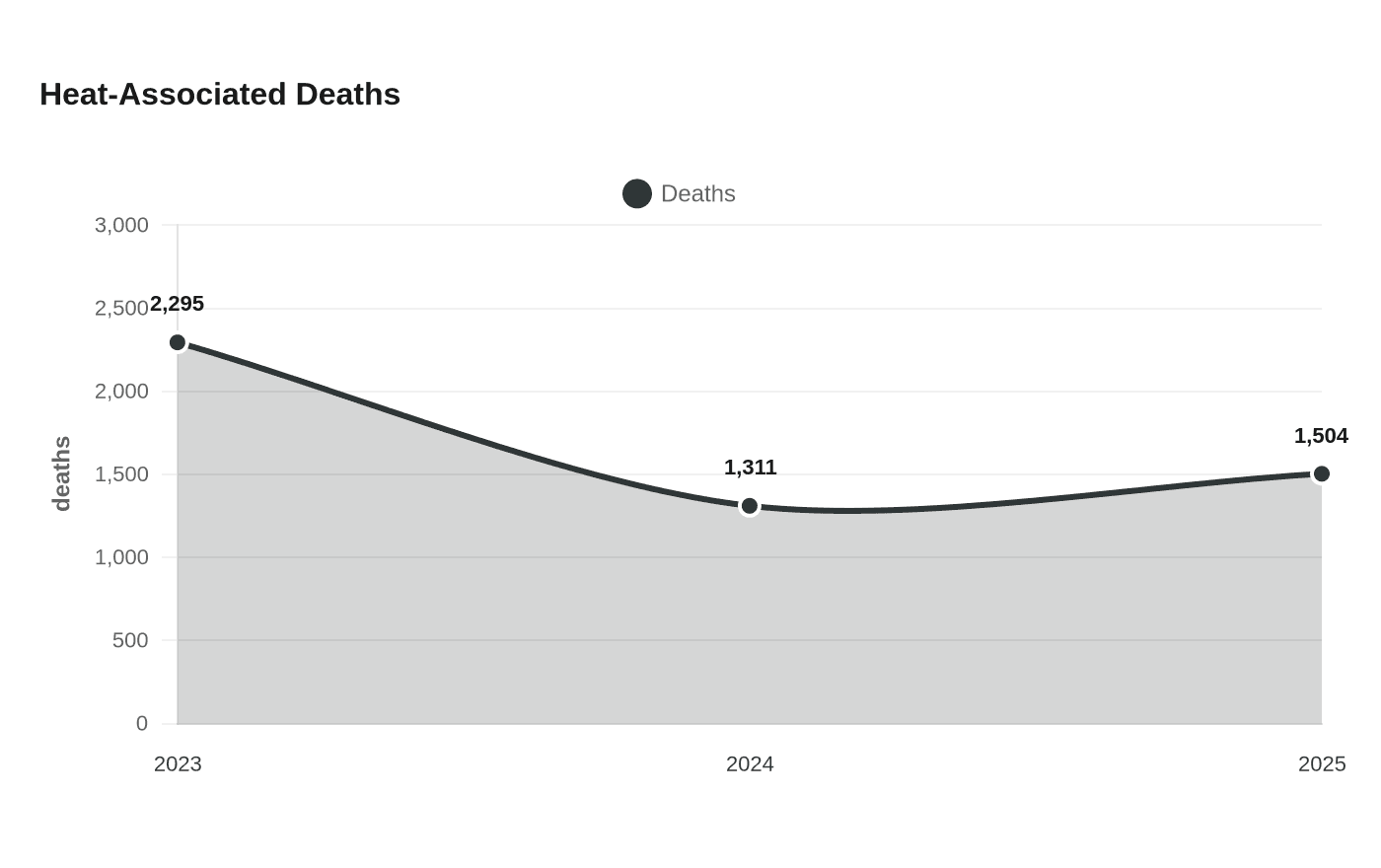
The latest estimate also fits a broader pattern in the UK’s heat mortality data. UKHSA’s Heat mortality monitoring report, England: 2025, an official statistics release, recorded 1,504 heat-associated deaths during the summer of 2025. That was higher than the 1,311 reported in the cooler summer of 2024, but lower than 2,295 in 2023. BBC reporting on summer 2025 described the figure as much lower than expected, even though 2025 was the UK’s warmest summer.
UKHSA’s summer guidance, published on 11 June 2025, describes heat health as a public-health issue and warns of the risks posed by hot weather. The World Health Organization says heat can affect anyone, but older people, babies and young children are more vulnerable. That warning is sharpened by recent academic analysis: Imperial College London and the London School of Hygiene & Tropical Medicine said climate change increased heat-health risks from the 2026 May and June heatwaves, while a separate Imperial analysis of Europe’s summer heat deaths found that warmer conditions led to additional fatalities.
For officials, the immediate question is not whether the weather was unusual. It is why a record June, school closures, transport disruption and a death toll of this scale still expose the same weak points in Britain’s homes, hospitals, workplaces and transport networks.
This article was produced by Prism’s automated news system from verified source data, official records, and press releases, then run through automated quality and moderation checks before publishing. The system is built and supervised by the people who set the standards it runs under. Read our full AI policy.
Did this article answer your question?