Ukraine Announces Mass Production of EW-Resilient Bird FPV Drones
Ukraine’s Ministry of Defense says the locally developed “Bird” FPV family is now in mass production, with EADaily reporting the Bird is “invulnerable to electronic warfare” and has a claimed range of up to 50 km.
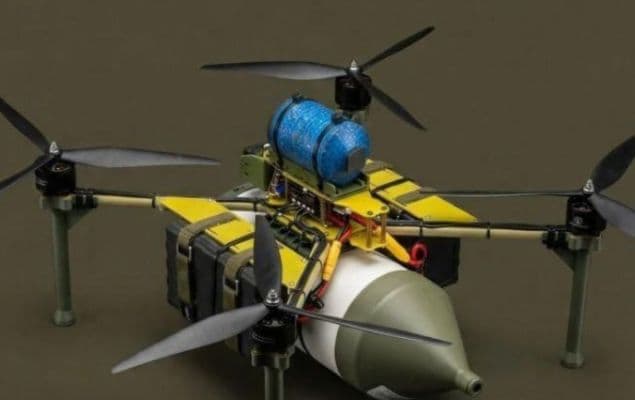
Ukraine’s Ministry of Defense and regional outlets reported that a domestically developed FPV family called the Bird, also styled Bird of Prey, has entered mass production, and EADaily quoted the MoD saying the Bird is "invulnerable to electronic warfare" with a range of up to 50 km, adding "This drone has already been used by the Armed Forces of Ukraine." EADaily also wrote that a 50 km range is "enough to strike 'military and energy infrastructure in the border regions of the Russian Federation, including Belgorod.'"
That Bird-specific announcement lands amid a nationwide scaling of FPV procurement: Al Jazeera reported the ministry planned to buy about 4.5 million FPV drones in 2025 with an allocation equivalent to more than $2.6bn, and quoted Hlib Kanevsky, director of the ministry’s procurement policy department, saying, "This year, the figures will be even higher because the capabilities of the domestic defence industry in 2025 are approximately 4.5 million FPV drones," and that Ukraine had purchased "more than 1.5 million drones in 2024, 96 percent of which were bought from Ukrainian manufacturers and suppliers." CSIS put 2024 production into a broader frame, stating Ukrainian defense companies manufactured and assembled more than 1.5 million FPV drones and that overall Ukraine produced approximately 2 million drones in 2024, noting 96.2 percent of UAVs used by Ukrainian forces in 2024 were produced domestically.
Procurement and logistics changes underpin those numbers. TheDefensePost reported that Ukraine delivered an initial 100,000 FPV drones to frontline units under the DOT-Chain Defence system, with automated logistics hubs introduced in mid-2024 cutting delivery timelines to a "one-week average." TheDefensePost also said fiber-optic FPV integration "has accelerated to blunt Russian electronic warfare dominance" and quoted Defense Minister Denys Shmyhal: "almost one-third of the first batch consists of fiber-optic FPVs, which are systems valued for their resilience against electronic warfare and reliability during complex strike operations." The same reporting detailed a catalogue of "more than 180 FPV drone models built by 40 domestic manufacturers" and an ambition pushed toward producing one million drones per year.

Official procurement counts and delivery claims from the Defense Procurement Agency are equally concrete: Mod Gov Ua reported the DPA "supplied more than 1 million FPV drones" between January and July 2025 and that the DPA "has contracted over 2 million FPV drones for 2025." Arsen Zhumadilov, Director of the DPA, said, "We have launched additional mechanisms to enable a large-scale supply of UAVs. These are framework agreements under the Prozorro system and DOT-Chain Defence. The latter provides units with the ability to independently choose the drones necessary for their missions."
The reporting leaves technical verification unresolved. EADaily’s phrasing that the Bird is "invulnerable to electronic warfare" stands apart from TheDefensePost’s characterization of fiber-optic systems as "valued for their resilience against electronic warfare." CSIS data on platform trends — a shift from 7 inch propellers in 2022 to larger 9–10 inch quadcopters dominating operations — and lists of strike quadcopters, kamikaze drones, winged reconnaissance and long-range deep-strike types show the industrial mix now in play. Confirming the Bird’s manufacturer, test data for a 50 km range, and whether the Bird is catalogued in DOT-Chain Defence or contracted under Prozorro will determine how this mass-production claim translates into battlefield and technical realities.
Know something we missed? Have a correction or additional information?
Submit a Tip