Ukraine drone strikes force Russia to shift defenses toward Moscow
Ukraine’s drones have forced Russia to pull air defenses toward Moscow, even as strikes keep reaching refineries, depots and key supply routes deep inside Russia.
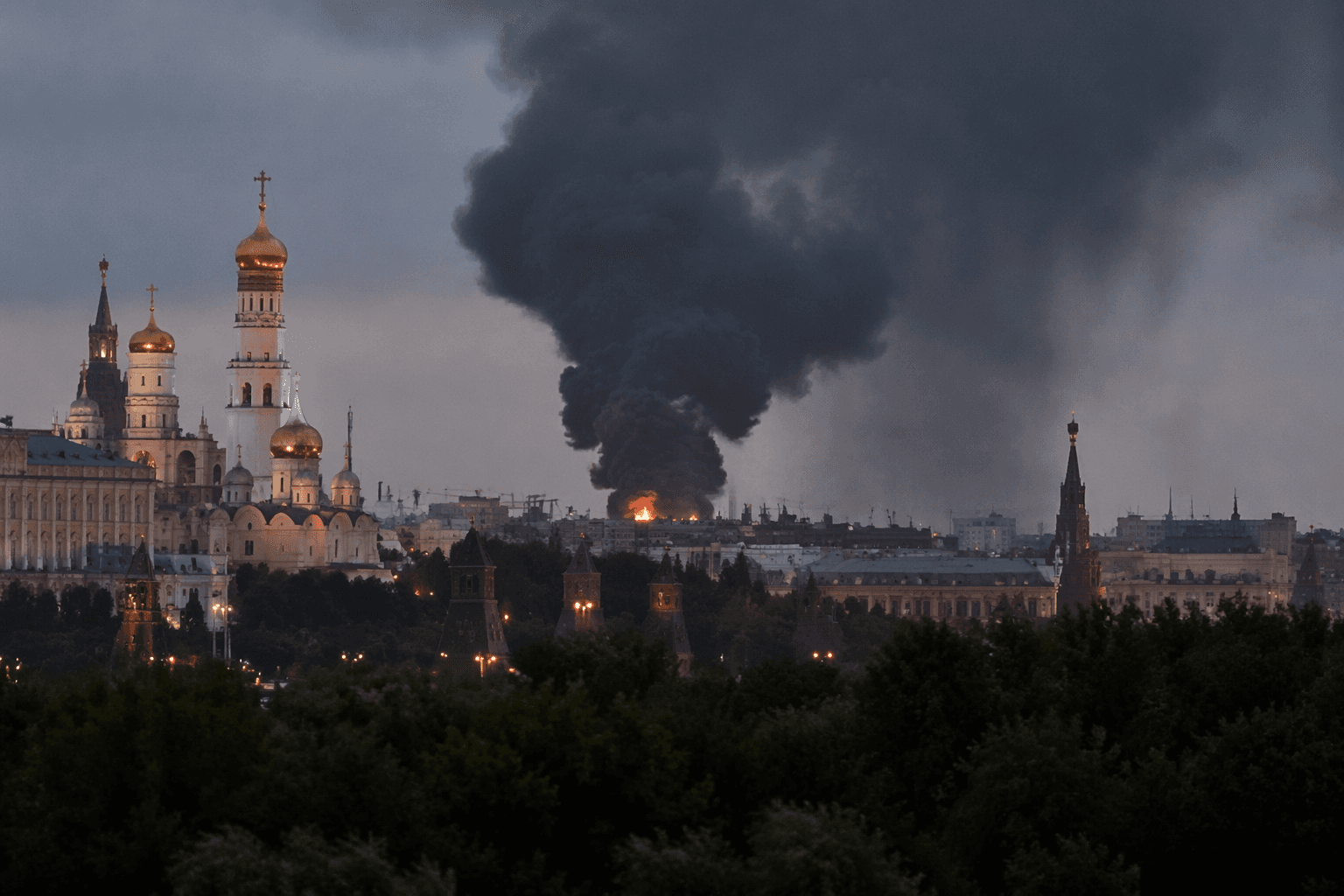
Volodymyr Zelenskyy said Russia has moved a significant share of its air defenses toward Moscow and Valdai after Ukrainian drone strikes reached deep into Russian territory. The shift, if sustained, leaves the Kremlin with a harder balance: protect the capital and presidential sites, or keep enough coverage over military and industrial targets farther from Moscow.
Zelenskyy said Russia has amassed hundreds of air-defense launchers in the Moscow region and redeployed nearly 90 more to Valdai, a town about 500 kilometers northwest of the capital that hosts a residence used by Vladimir Putin. Russia is also protecting the Kerch Bridge, the vital link between occupied Crimea and mainland Russia, adding another high-value target to a shrinking pool of defensive assets.

The redeployment came as Ukrainian long-range drones struck two oil refineries in Ufa and an oil depot in Russia’s Krasnodar region in the same overnight wave. Zelenskyy said those drones can now fly more than 1,500 kilometers, a range that puts refineries, depots and command sites far beyond the front line within reach. That has turned rear-area logistics into a live battlefield and forced Russia to spend more on interception, repositioning and protection.
The pressure was visible in the June 18 drone assault on Moscow, one of the largest single-night long-range strikes of the war. Russia’s Defense Ministry said it shot down about 555 Ukrainian drones overnight, while Moscow’s mayor, Sergei Sobyanin, said about 180 were intercepted as they approached the capital. The Moscow Oil Refinery was struck for a second time within a week, and the attack briefly grounded flights at four Moscow airports.
Ukraine’s campaign has widened sharply since early 2024, when it launched only a few dozen drones per month. POLITICO has described the current pace as averaging 200 to 300 drones launched nightly against targets in Russian territory, a scale that has made air-defense allocation itself part of the war. Every battery moved toward Moscow or Valdai is one less available elsewhere, and every launcher assigned to protect symbolic sites is a launcher not guarding refineries, depots or front-line logistics.
The effect has been to force Russia into a defensive tradeoff that cuts across the whole war. Ukraine is not trying to win by airpower alone, but by making Russia defend more places with finite equipment. That has slowed Moscow’s freedom of movement and added fresh costs to a war that is already entering its fifth year without an easier path for the Kremlin.
This article was produced by Prism’s automated news system from verified source data, official records, and press releases, then run through automated quality and moderation checks before publishing. The system is built and supervised by the people who set the standards it runs under. Read our full AI policy.
Did this article answer your question?