Ukraine hits Moscow oil refinery again, smoke rises over capital
Smoke rose over Moscow after drones hit a refinery inside the ring road for the second time in three days, disrupting airports and daily life in the capital.

Smoke and flames rose over Moscow after Ukrainian drones struck a Gazprom Neft-operated refinery on the city’s southeastern edge, inside the ring road and about 15 kilometers from the Kremlin. The hit landed twice in three days, and twice in the same week, underscoring how Ukraine is trying to push the war’s cost deep into Russia’s rear, not just along the front.
The refinery in Kapotnya supplies around a third of Moscow’s gasoline and fuel, making it one of the city’s most sensitive energy targets. Moscow Mayor Sergei Sobyanin said several drones reached the site, while the Russian defense ministry said 555 drones were shot down nationwide and about 180 were intercepted around Moscow. The blast was powerful enough to throw the lid of an oil storage tank into the air, and the strike also caused minor damage to a shopping center nearby.
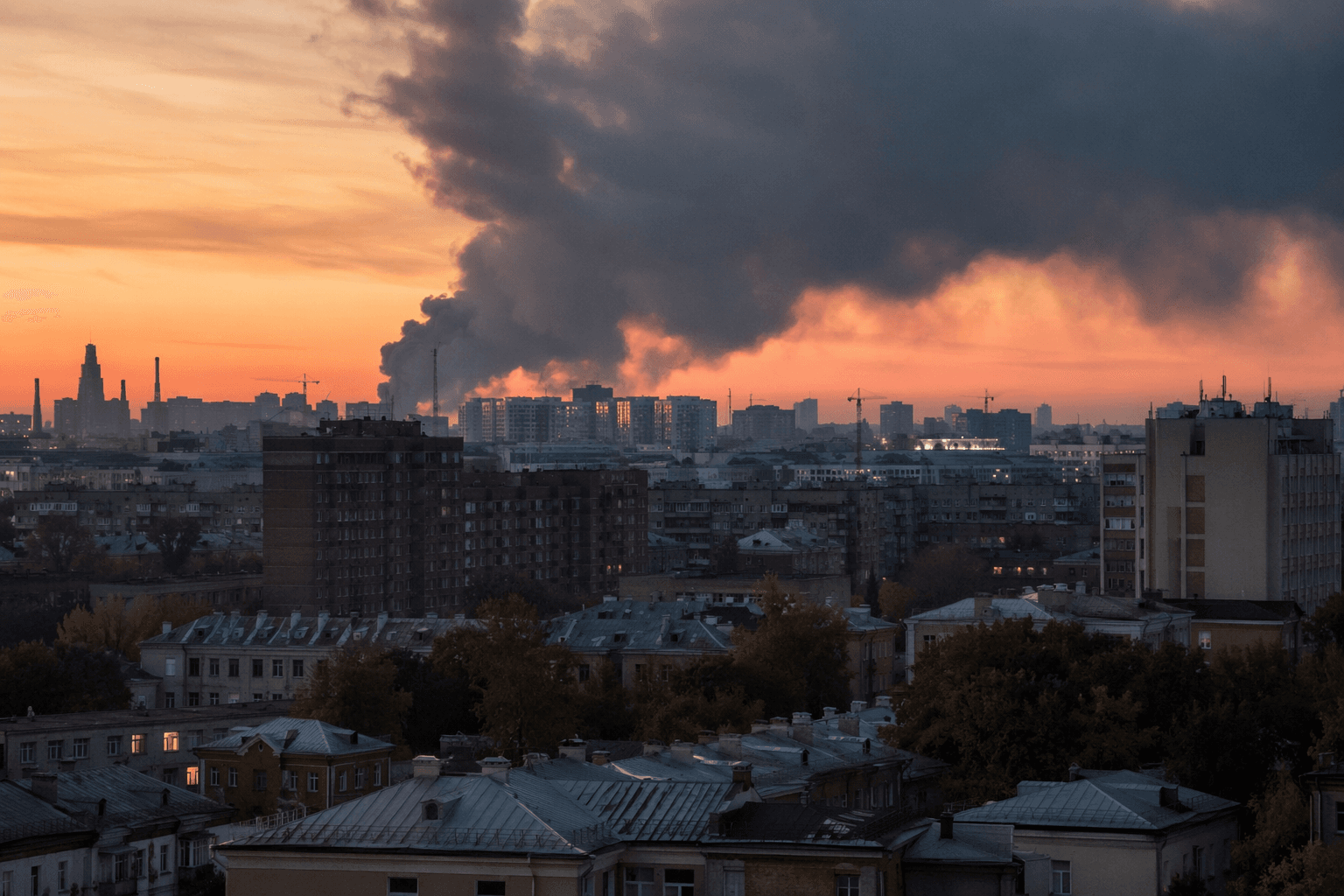
The attack disrupted a capital of 13 million people. Flights were suspended at all Moscow airports, Sheremetyevo Airport was evacuated, traffic was halted near the refinery, and residents said they heard no sirens or SMS warnings. Moscow region governor Andrei Vorobyov said at least 17 people, including two children, were wounded in the wider region, and RTÉ said a shopping centre and apartment building also caught fire. The image of smoke over Moscow carried a different weight from earlier drone incursions, but the more immediate impact was practical: blocked air travel, frightened residents, and a refinery that already had reportedly halted operations after an earlier June 16 strike.
Ukrainian leaders cast the assault as part of a wider campaign to cripple Russia’s oil infrastructure, which helps finance the war. Volodymyr Zelenskyy called the strikes a “fully justified response” to Russian attacks on Ukrainian cities and communities, and Andrii Sybiha said Muscovites should ask Vladimir Putin when he plans to end the war. The timing, during the G7 summit in France, also kept pressure on Donald Trump and other leaders as Zelenskyy sought more support.
For Moscow, the material damage matters, but so does the signal. Russia has faced drone incursions since at least May 2023, when drones reached the Kremlin, yet Thursday’s strike showed Ukraine can still force air defenses to chase threats over the capital itself. Yuri Ushakov said the attacks were pushing back any prospect of direct Putin-Zelenskyy contacts, and Sergei Lavrov vowed “massive group strikes” in retaliation, deepening a cycle that now reaches from Kyiv’s damaged sites to Moscow’s fuel depots.
This article was produced by Prism’s automated news system from verified source data, official records, and press releases, then run through automated quality and moderation checks before publishing. The system is built and supervised by the people who set the standards it runs under. Read our full AI policy.
Know something we missed? Have a correction or additional information?
Submit a Tip