Ukraine says strike hits Russian oil facility near Volgograd, sparks fire
A fire broke out near Kotovo after Ukraine said it hit a key oil pumping node tied to Russian refineries and export lines. The strike fits a widening campaign on Russian energy assets.
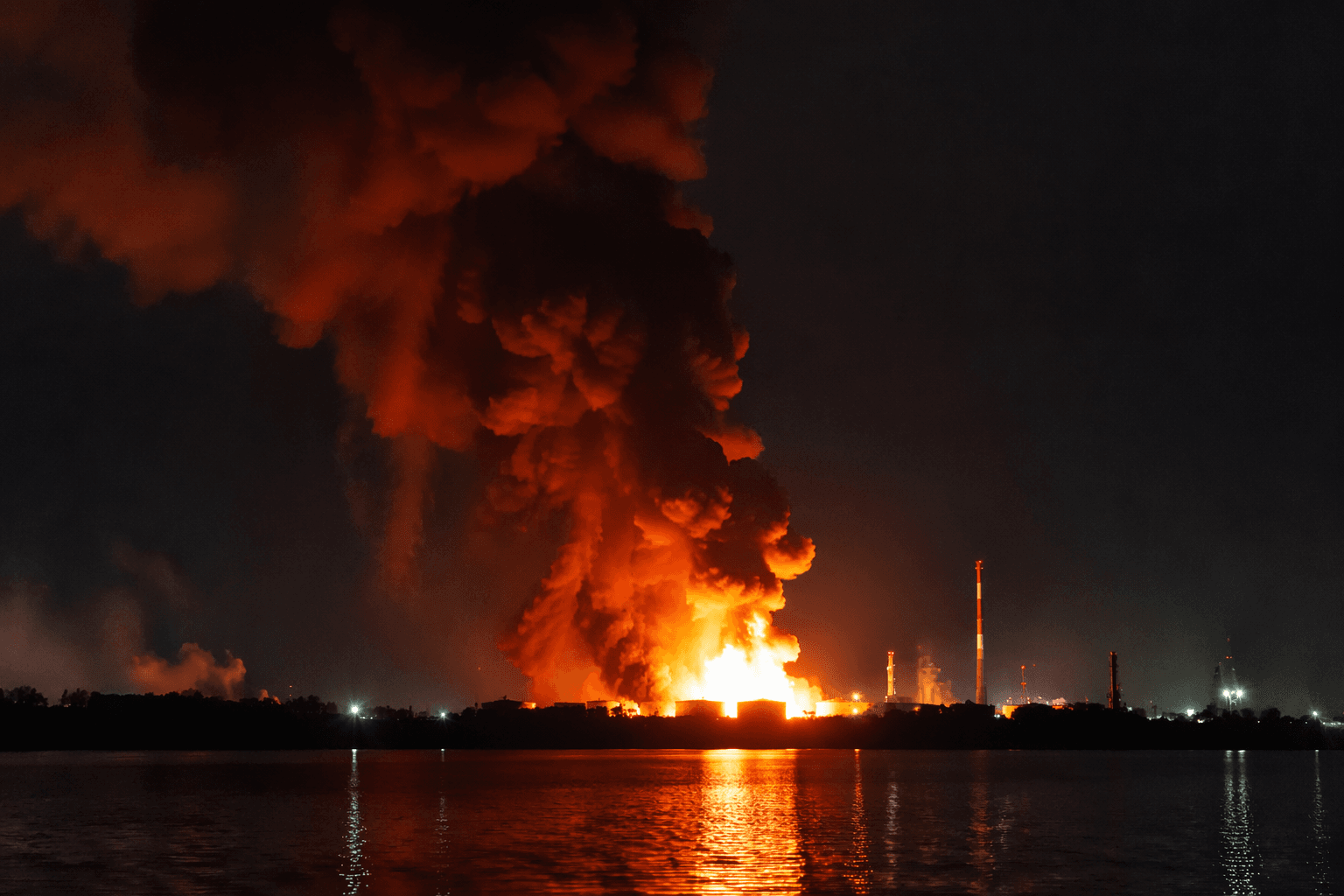
Ukraine said its forces struck an oil processing and pumping facility near Kotovo in Russia’s Volgograd region, setting off a fire at a site built into the flow of crude toward Russian refineries and export infrastructure. The target was not just a local industrial installation: Kyiv described it as part of a pipeline system that handles processing, transportation and pumping of oil, placing it squarely in the war over Russia’s logistics and revenue base.
The facility also processed oil from the Korobkovskoye oil and gas field and neighboring deposits in Volgograd and Astrakhan regions and the Republic of Kalmykia, according to the Ukrainian account. That matters strategically because it makes the site a transfer point in a larger energy network, not a standalone plant. Damage at that kind of node can slow throughput, trigger emergency repairs and disrupt the movement of fuel and feedstock that support both civilian supply chains and state finances.
The strike came overnight on June 12-13, 2026, during a broader Ukrainian operation against additional Russian targets. Ukrainian sources said no injuries were reported at the Kotovo facility. The attack was presented in Kyiv as a deliberate hit on energy infrastructure, part of a wider effort to reduce Russia’s ability to sustain the war.

That approach has become a defining feature of the conflict. Recent strikes have also hit oil and fuel infrastructure in Volgograd, Yaroslavl and Krasnodar regions, showing a sustained push against assets that are easier to reach than front-line positions but still central to Russia’s war machine. Energy infrastructure has emerged as one of the war’s most important battlegrounds because it can affect exports, regional supply chains and the state’s fiscal intake at the same time.
For Moscow, the risk is cumulative. A fire at one pumping station may be localized, but repeated attacks across a vast network force Russia to spread defenses, absorb repair costs and protect the infrastructure that keeps oil moving. In that sense, the Kotovo strike fits a broader Ukrainian strategy: hit the system that funds and feeds the war, not just the forces fighting it at the front.
This article was produced by Prism’s automated news system from verified source data, official records, and press releases, then run through automated quality and moderation checks before publishing. The system is built and supervised by the people who set the standards it runs under. Read our full AI policy.
Know something we missed? Have a correction or additional information?
Submit a Tip