UMD Creates Living 3D Fibroid Models to Test Less-Invasive Treatments
Dr. Erika Moore and Allison Moses built first-of-their-kind 3D living fibroid models about the size of a pencil eraser, and the inhibitor SB431542 halted growth in preliminary tests.

University of Maryland bioengineering assistant professor Dr. Erika Moore and doctoral student Allison Moses ’23 have engineered first-of-their-kind 3D lab-grown uterine fibroid models that replicated fibroid stiffness and a surrounding polymer sheath, and their experiments using the chemical inhibitor SB431542 reportedly halted tumor growth. The study was recently published in the ACS Biomaterials Science & Engineering Journal and the models measure about the size of a pencil eraser, according to UMD communications.
Moore’s drive for the project is personal. In 2023 Erika Moore started experiencing menstrual blood clots and painful bloating, and WMAR reported she has spent the last three years battling pain and discomfort from uterine fibroids. Moore described how the symptoms affected her work life and travel, and she said, "For me it started with these weird symptoms like I felt pressure, pelvic pressure a little bit of abnormal bleeding you know around the time that I menstrate," before seeking care and receiving a fibroid diagnosis.
The UMD team built the models from patients’ uterine cells obtained from a commercial vendor and induced the cells into two tissue types: fibroid cells and myometrial tissue, the middle layer of the uterus. The lab-made fibroids include a synthetic polymer sheath Moore had designed in earlier work, described as a "malleable encasement that fortifies cells and their nutrients" and a polymer "shown to alter cellular signals." The models were engineered to "replicate their natural stiffness but kept the myometrial tissue soft," a contrast the researchers say may help reveal drivers of fibroid growth.
Moore framed the scientific gap in blunt terms in explaining the lab approach. She told WMAR, "Unless someone is literally in my body taking a biopsy at every single stage of my fibroid development, we have no idea how they form or why they form and so for me and my group we have the power to actually engineer different tissues to build these jello models to understand why you know certain diseases occur and so it was kind of this aha moment where I was like why don't we put the expertise that I have together with a solution that affects almost 80 percent of women to figure out what fibroids even develop in the first place," and she added, "I started finding that there weren't a lot of options that are not really invasive."
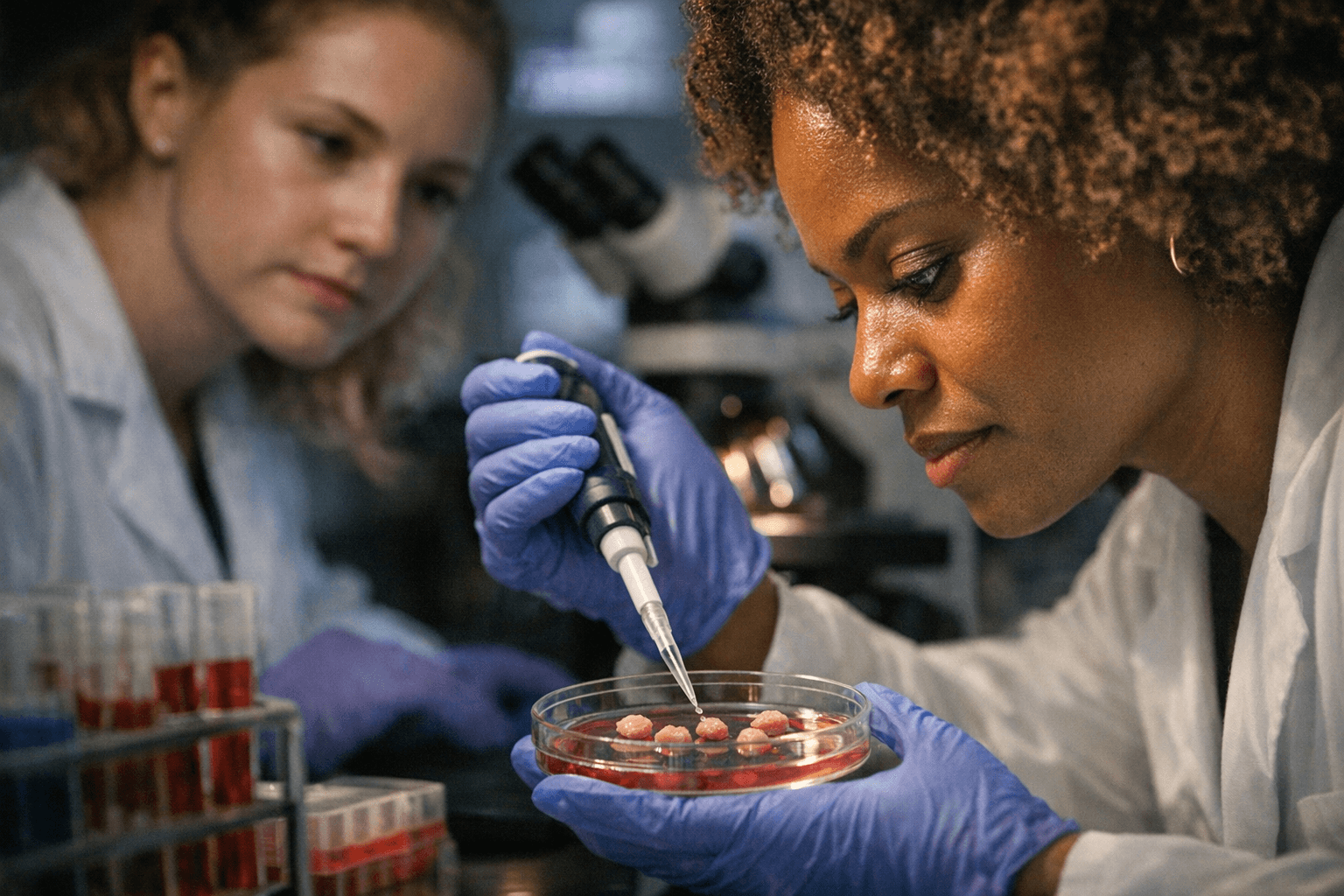
For the therapeutic tests, the researchers selected SB431542 after prior promise in two-dimensional fibroid representations and delivered the inhibitor by mixing it into the models’ daily nutrient media. Bioengineering coverage says follow-up testing "confirmed they were realistic copies of the real things" and reported preliminary success in blocking fibroid growth in the 3D models; Moore recalled, “When we saw the data, we were like, ‘Oh my God, it actually worked,’”
Patient-advocacy groups took notice. Sateria Venable, founder and CEO of the Rockville-based Fibroid Foundation, called Moore’s work “groundbreaking” and said, “It fulfills a huge need in understanding the actual dynamics of what’s growing and the environment in which it grows.” The Fibroid Foundation’s LinkedIn post highlighted Moore as a "featured speaker at Fibroid Summit 2026" and linked to UMD’s coverage.
The work so far has been an in-lab testbed for understanding formation and for screening chemicals that might halt growth while preserving surrounding myometrium, a potential path away from current surgical options. WMAR noted, "There are only a few ways to treat fibroids, all of which involve some type of surgery," and quoted Moore: "Removing the uterus is the only clinical option available right now for most of the women that have fibroids that keep growing," underscoring why UMD researchers say these 3D models could reshape how Baltimore-area patients and clinicians approach noninvasive treatments.
Know something we missed? Have a correction or additional information?
Submit a Tip