Union County joins regional homelessness count to guide funding
Community Connection conducted the annual Point in Time count to measure sheltered and unsheltered homelessness; results will help shape local funding and services.
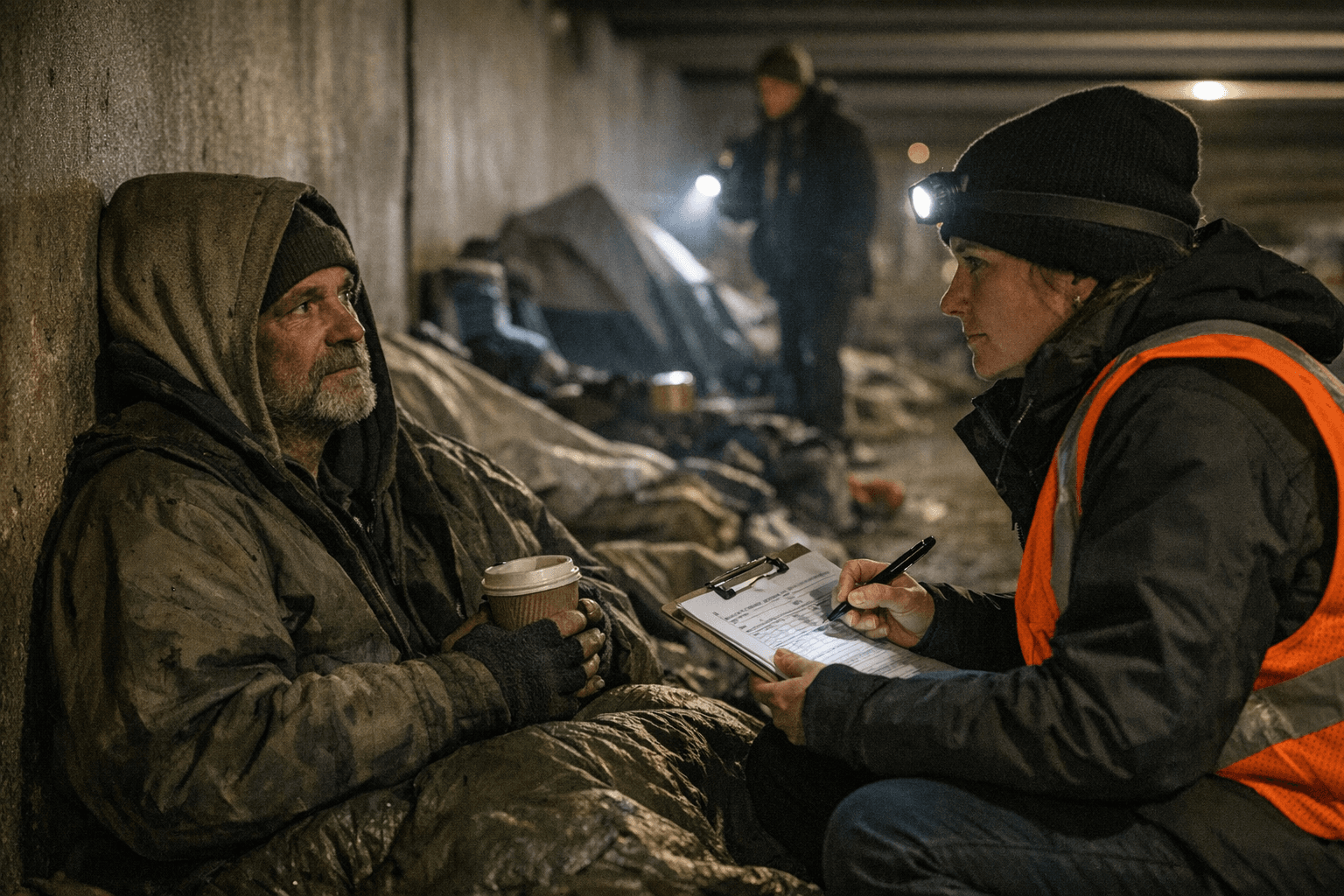
Community Connection of Northeast Oregon conducted its annual Point in Time (PIT) Count on January 15, 2026, gathering a one-day snapshot of sheltered and unsheltered homelessness across Union, Baker, Grant and Wallowa counties. The federally required count is used to guide planning, funding and service delivery for homelessness programs regionally.
The count mobilized trained volunteers, service providers and local partners at multiple locations and times throughout the day. County-specific locations and schedules were shared through CCNO’s Facebook pages and partner channels in advance so outreach teams and volunteers could be assigned and trained. Community organizations were asked to participate and to contact CCNO for details on volunteer training and assignments.
For Union County residents, the exercise matters because the resulting data feeds into decisions about where to allocate limited resources such as shelter beds, outreach workers, rental assistance and case management. PIT counts are a key input for regional funding applications and program planning; higher documented need can increase eligibility for state and federal grants, while declines can change funding priorities. That makes accurate counting especially important for La Grande and the county’s more rural communities, where dispersed populations and weather-related access issues can bias a one-day snapshot downward.
Statistically, PIT counts are a single-day measurement that captures both sheltered and unsheltered individuals. While they provide essential baseline figures, experts caution that a one-day survey can undercount transient or hidden homelessness, particularly in rural areas where people may be doubled-up or temporarily staying in vehicles or remote locations. Those methodological limits will be a key consideration as CCNO and local partners analyze the results and translate them into program adjustments.
Beyond immediate allocations, PIT outcomes inform longer-term planning. Local policymakers and service providers use trends across annual counts to decide whether to expand emergency shelter capacity, invest in permanent supportive housing, or redirect outreach toward high-need subpopulations. For Union County, tracking year-over-year changes will help officials weigh budget trade-offs at the county and city level and align local strategies with regional priorities.

CCNO emphasized that trained volunteers conducted the counts and that information collected will inform policy and funding decisions. Residents interested in how the count unfolded locally or in volunteering for future outreach should contact Community Connection of Northeast Oregon through its county-specific channels for schedules and follow-up information.
What comes next is analysis: CCNO and partner agencies will compile the data and use it to shape service delivery and funding requests. For Union County residents, those findings will translate into concrete decisions about where help is focused and how the community plans to address homelessness in the coming year.
Sources:
Know something we missed? Have a correction or additional information?
Submit a Tip