United States Sinks Suspected Narco Terrorist Submersible, Then Frees Crew
In October U.S. forces sank a semisubmersible suspected of carrying drugs, killing two crew members and rescuing two survivors who were later released. The episode, revealed by a Dec. 27 investigation, raises urgent questions about lethal maritime tactics, legal accountability, and the public health consequences for communities already harmed by the drug trade.
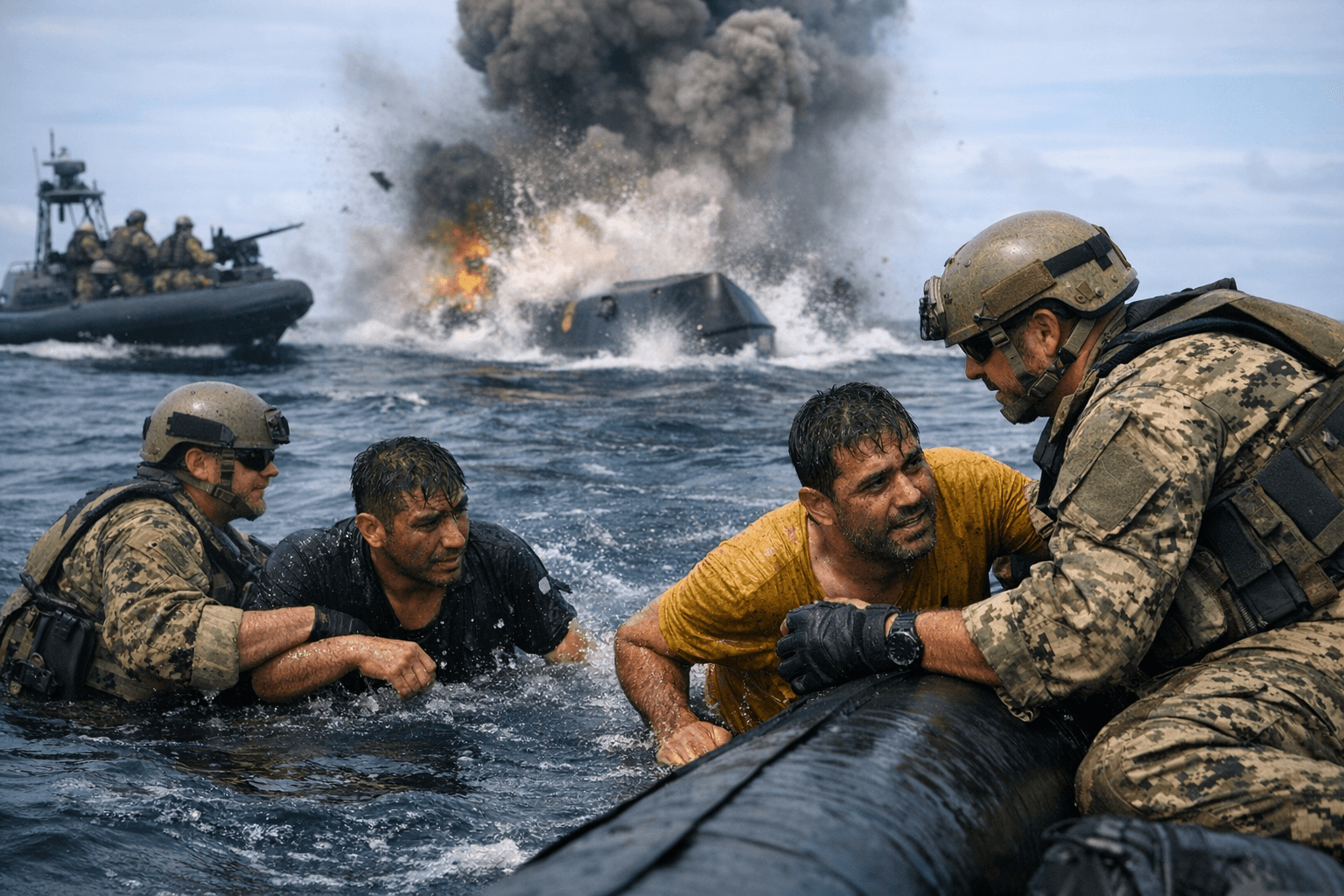
In an operation this past October, United States maritime forces sank a semisubmersible vessel suspected of trafficking drugs, killing two people aboard and pulling two survivors from the water. The survivors were not prosecuted and were released following their rescue. The incident is described in a Dec. 27 investigation that traces a string of similar strikes on suspected smuggling vessels across international waters.
The episode highlights a tension at the heart of American counter narcotics strategy: an expanding reliance on offensive maritime actions that can have immediate lethal consequences while producing limited follow through in terms of justice or humanitarian care. Officials have repeatedly framed such strikes as disrupting organized trafficking networks. Yet sinking a vessel in open water, and then permitting survivors to go free, leaves open pressing questions about how evidence is preserved, how responsibility is established, and who bears the human costs.
For coastal and inland communities already bearing the burden of drug related harm, the practical effects are complex and often perverse. Military interdiction can alter trafficking routes and methods, pushing supply chains into ever more dangerous forms of transport. That fragmentation can increase the volume of adulterated or more potent drugs reaching local markets, aggravating overdose risk and complicating public health responses. Emergency rooms and harm reduction programs do not see fewer harms when interdiction increases, they see different and sometimes deadlier ones.
The humanitarian dimension extends to the survivors and to those who recover bodies. The two people killed in October are part of a pattern of casualties at sea that receive little public accounting. Families seeking answers face opaque military and diplomatic channels. Survivors who are released without charges may carry trauma, untreated injuries, and infectious disease risks that transcend borders and require medical attention that military operations do not systematically provide.
Legal scholars and human rights advocates contend that maritime law and customary obligations impose duties to render assistance and to follow transparent procedures in the aftermath of lethal force. When those steps are unclear or uneven, it undercuts international norms and fuels mistrust among partner nations and coastal populations whose lives intersect with smuggling routes. The lack of visible accountability also erodes confidence in a system that relies heavily on force rather than on mechanisms for evidence based prosecution and cross border cooperation.
Public health experts argue that an approach focused primarily on interdiction will not solve the underlying demand driving trafficking. Investments in prevention, treatment, and harm reduction are essential companions to law enforcement action if communities are to see sustained reductions in overdose, violence, and organized crime related harms. Transparency about operations, timely medical and social services for survivors and families, and clearer legal pathways for accountability are necessary to align military action with humanitarian and health priorities.
As investigators piece together the pattern of naval strikes and their aftermath, policymakers face a choice about whether to rebalance resources toward approaches that reduce harm onshore and ensure that actions at sea meet legal and medical standards. For communities on the front lines of the drug crisis, that reckoning cannot wait.
This article was produced by Prism’s automated news system from verified source data, official records, and press releases, then run through automated quality and moderation checks before publishing. The system is built and supervised by the people who set the standards it runs under. Read our full AI policy.
Did this article answer your question?


