Universal Music Group rejects Bill Ackman bid as too low
Universal Music Group said Bill Ackman’s offer was too low, exposing how prized music catalogs and streaming growth have pushed media valuations higher.

Universal Music Group drew a line under Bill Ackman’s latest approach, rejecting Pershing Square’s April 7 unsolicited proposal as non-binding and not in the best interests of shareholders, artists, songwriters, employees and other stakeholders. The fight is really about price: Reuters calculated the offer at about €30.40 a share, or €55.75 billion, a level UMG’s board deemed too low for one of the world’s most valuable music companies.
That valuation dispute lands at a moment when recorded music has become a premium asset class. UMG controls catalog and contemporary rights tied to global stars including Taylor Swift, Billie Eilish and Kendrick Lamar, assets that can keep generating cash through streaming, licensing and long-tail catalog monetization. UMG’s response suggests management believes those economics are still being undervalued by public-market and takeover math, especially when compared with the strategic scarcity of a top-tier music library.
The company’s hesitation is also tied to its capital-markets strategy. UMG paused plans for a U.S. secondary listing on March 5, 2026, saying market turbulence had created a meaningful dislocation in its valuation and that it was not the right time to proceed. The pause was not permanent, and UMG said it would update the market if conditions changed. Ackman had argued in March 2025 that a U.S. listing could attract institutional investors, improve analyst coverage and possibly qualify the company for major U.S. indices, all of which could lift the stock over time.
The board’s rejection also reflects the cost of getting to that point. UMG said preparations for a U.S. listing and related M&A advice cost €45 million in 2025, including €17 million in the fourth quarter. The company has traded on Euronext Amsterdam since September 2021, after its spin-off from Vivendi, and any New York move would have been secondary to that existing listing rather than a clean break.
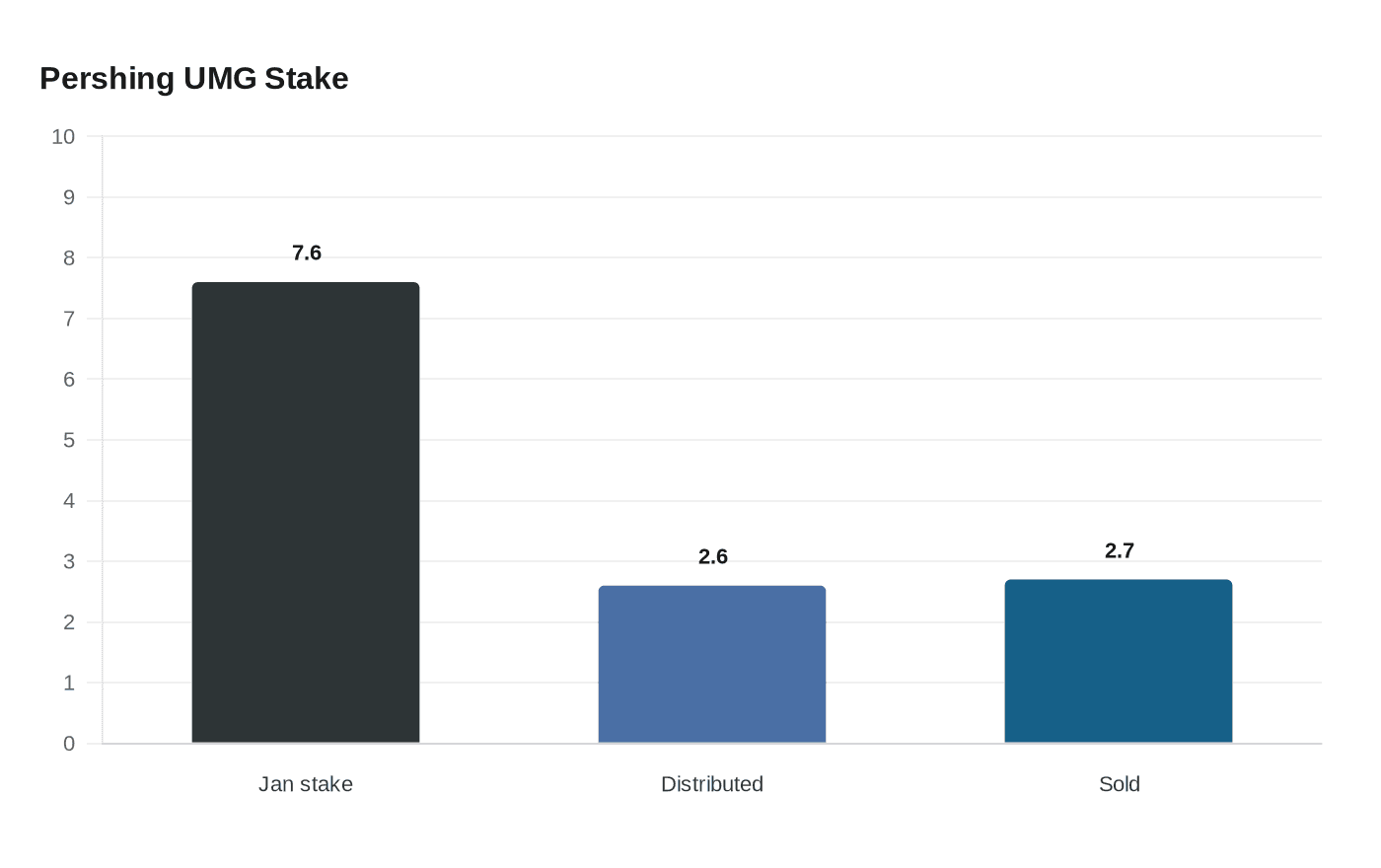
Ackman’s pursuit of UMG has been unusually tangled. Pershing Square held a 7.6% stake in January 2025, distributed 47 million shares, or 2.6% of UMG, to co-investors that month, and sold another 2.7% stake in March for about $1.4 billion. Ackman resigned from UMG’s board in May 2025, citing new executive and board obligations, after earlier serving as a director. His April proposal also called for Michael Ovitz as chairman, two Pershing representatives on the board and a sale of UMG’s Spotify stake.
The rejection keeps UMG independent for now and signals that its board expects more value from patience than from a quick sale. With the Bolloré Group also urging rejection, the message from Hilversum is clear: the world’s biggest music label still sees itself as a long-duration public-market asset, not a bargain buyout target.
This article was produced by Prism’s automated news system from verified source data, official records, and press releases, then run through automated quality and moderation checks before publishing. The system is built and supervised by the people who set the standards it runs under. Read our full AI policy.
Did this article answer your question?