UNM-Gallup CCTE Links Students to McKinley County Careers Through Hands-On Training
UNM-Gallup CCTE expanded hands-on career training linking students to local employers, strengthening job pipelines and practical skills for Gallup and McKinley County residents.
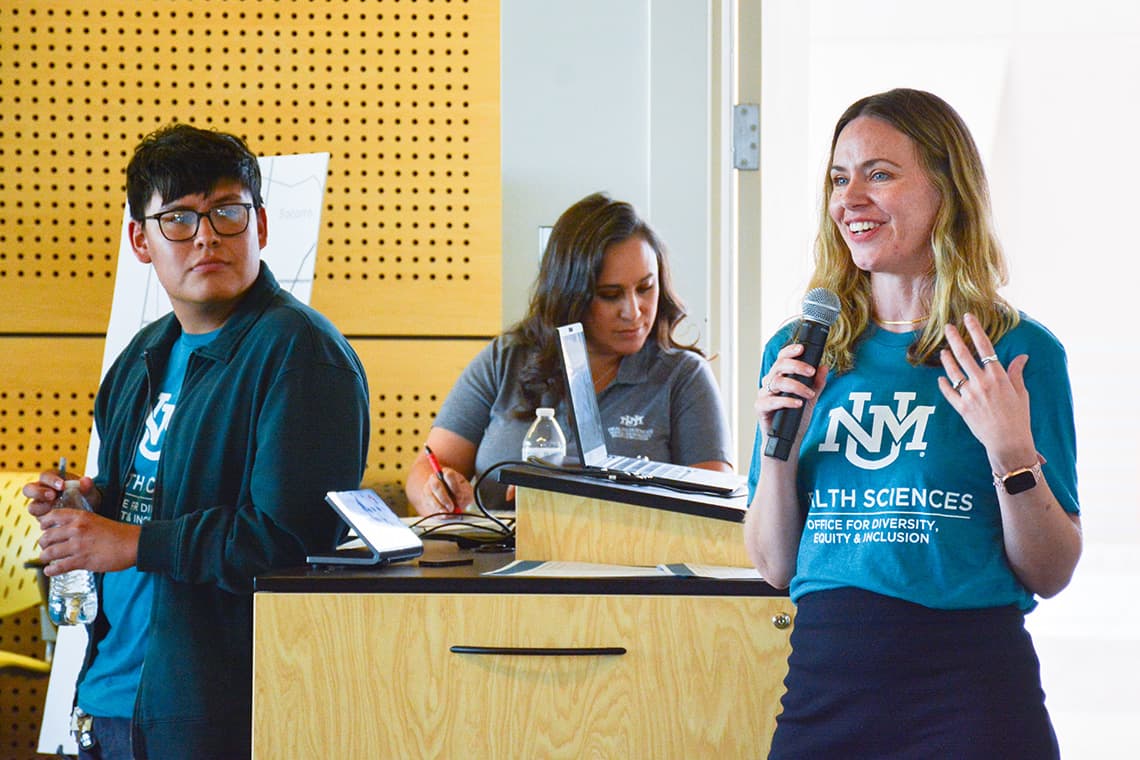
UNM-Gallup’s Center for Career & Technical Education (CCTE) rounded out its Fall 2025 semester with an emphasis on direct employer connections and workplace-ready skills that aim to feed McKinley County’s labor market. CCTE director Karla Baldonado highlighted a slate of hands-on activities and program expansions intended to convert classroom time into local career opportunities.
Among the practical exercises were a simulated burn demonstration conducted at the McKinley County Fire Office and a tour of the county’s Metropolitan Dispatch Authority, giving fire-science students exposure to operations they would encounter on the job. Culinary students prepared a holiday spread blending traditional Thanksgiving dishes with Filipino Christmas foods, illustrating how cultural competency and technical skills can meet hospitality and service-sector needs. The campus also added new film and digital media courses to broaden creative and technical pathways. The Students Achieving New Directions (SAND) program expanded its on-the-job experiences, linking stipends and pre-apprenticeship opportunities to workplace placements.
These activities are explicitly tied to workforce connections with local employers and agencies across trades, public safety, health careers, and the culinary arts. For Gallup and McKinley County residents, the immediate effect is clearer pathways from education to employment close to home. Locally oriented training reduces the friction and cost employers face in hiring and onboarding external applicants and can lower turnover by creating community-rooted talent pipelines.
From an economic perspective, the CCTE approach aligns supply of skills with local demand, a principle that strengthens labor-market matching. Hands-on training and pre-apprenticeship stipends act as partial wage subsidies during skill acquisition, improving access for low-income students and signaling commitment to local employers. Expanded public-safety exposure, such as the simulated burn and dispatch tours, addresses a class of positions where practical readiness is often a hiring prerequisite. Introducing film and digital media coursework also diversifies occupational pathways, which can support small-business growth and local media projects.

Policy implications for county leaders include scaling partnerships that combine classroom instruction with employer internships, supporting stipend programs that remove financial barriers to work-based learning, and tracking placement outcomes to measure return on investment. For employers, deeper engagement with CCTE can reduce recruitment costs and build a more dependable pipeline of trained workers.
For readers in Gallup and McKinley County, the takeaway is practical: students now have more direct routes into local careers, and employers have clearer channels to cultivate homegrown talent. Continued coordination between schools, agencies, and businesses will determine whether these classroom-to-career steps translate into durable local hiring gains and broader economic resilience for the community.
Sources:
Know something we missed? Have a correction or additional information?
Submit a Tip