U.S. allies warn divisions weaken deterrence at Singapore security forum
Allies at Singapore’s top security forum warned that fissures in the U.S.-led camp erode deterrence just as China, Russia, Iran and North Korea test it.

Allies used Singapore’s premier security forum to argue that the biggest threat to deterrence is political fragmentation inside the coalition meant to contain it. Japanese Defense Minister Shinjiro Koizumi, joined by officials from Australia and the Netherlands, said divisions among the United States, Europe and other partners risk blunting the signal adversaries are supposed to hear.
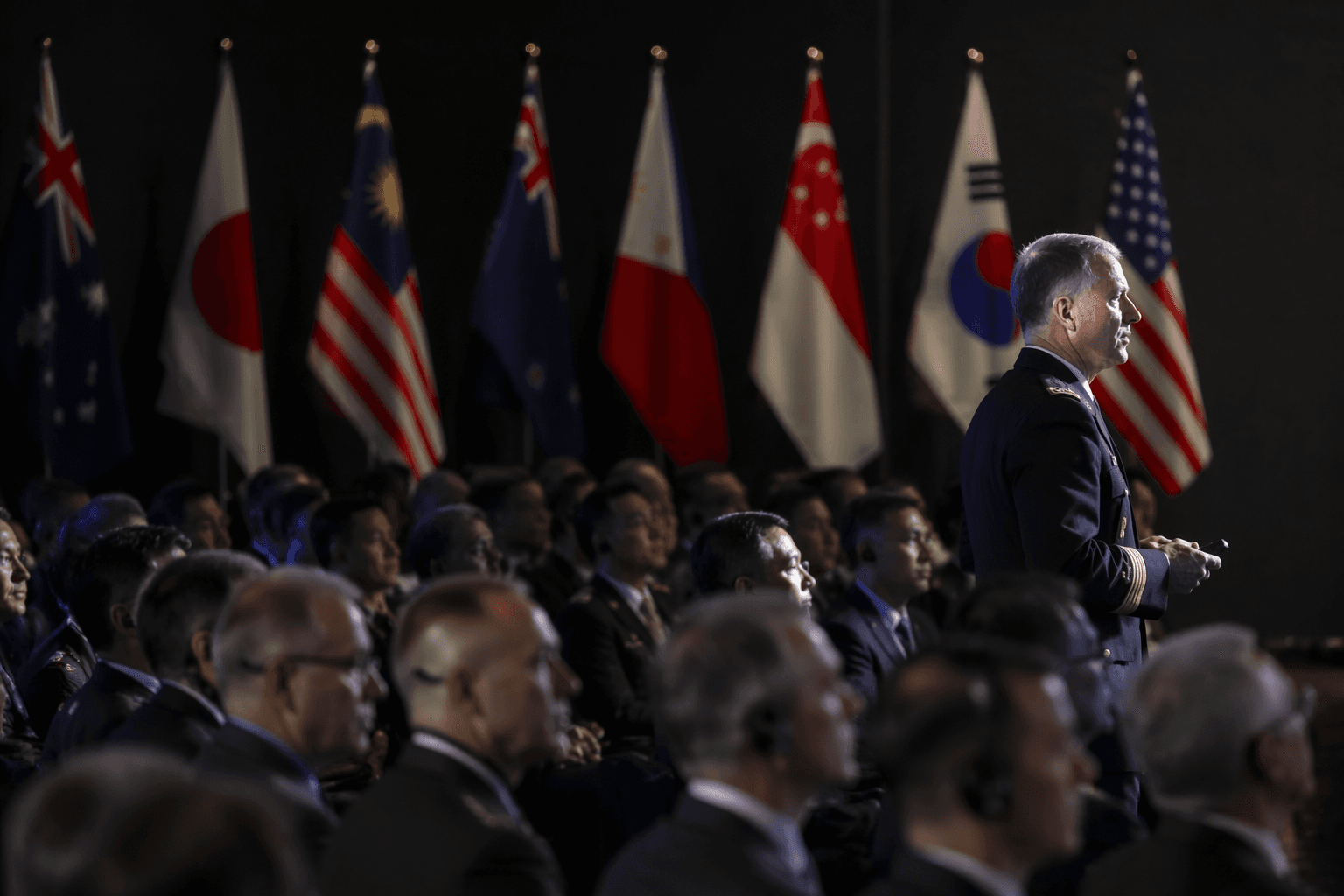
The warning landed at the 23rd Shangri-La Dialogue, held May 29 to May 31 at the Shangri-La Hotel in Singapore, where 44 countries sent delegations, including 54 ministerial-level delegates and more than 42 chiefs of defense and senior defense officials. In a setting long used as a barometer of U.S. leadership in Asia, the message from allies was unusually direct: deterrence depends not only on weapons and budgets, but on whether partners can still speak with one voice.
Koizumi, speaking May 31, defended Japan’s decision to permit lethal weapons exports and rejected accusations of "new militarism" while accusing China of rapidly expanding its military with limited transparency. He said transparency is the "baseline for reducing tensions and preventing crises," and added that "division weakens deterrence, unity strengthens deterrence." Japan’s Cabinet had scrapped a ban on lethal weapons exports in May, drawing criticism from Beijing, whose foreign ministry warned against Tokyo’s "new type of militarism."
The backdrop was an administration in Washington that has pressed allies to spend more and do more. U.S. Defense Secretary Pete Hegseth, speaking May 30, framed American strategy as a "new era of pragmatic idealism" and a "powerful and realistic approach" to defense, while again chastising Western European allies for underinvesting. That message sharpened the tension inside the alliance system even as Hegseth urged stronger, more self-reliant partners.

For Koizumi and other allies, the strategic problem is broader than one speech or one administration. Modern threats move across regions, from conventional war to maritime coercion, cyber operations and supply-chain pressure, and officials in Singapore warned that treating them as separate crises only helps adversaries. The result was a public appeal for coalition cohesion at a moment when the credibility of U.S.-led deterrence increasingly depends on whether allies can absorb political strain without letting it fracture the front line.
This article was produced by Prism’s automated news system from verified source data, official records, and press releases, then run through automated quality and moderation checks before publishing. The system is built and supervised by the people who set the standards it runs under. Read our full AI policy.
Did this article answer your question?