U.S. and Cuban generals hold rare talks at Guantánamo Bay
U.S. and Cuban generals met at Guantánamo Bay for rare talks on security, just as Washington tightened sanctions and military pressure on Havana.

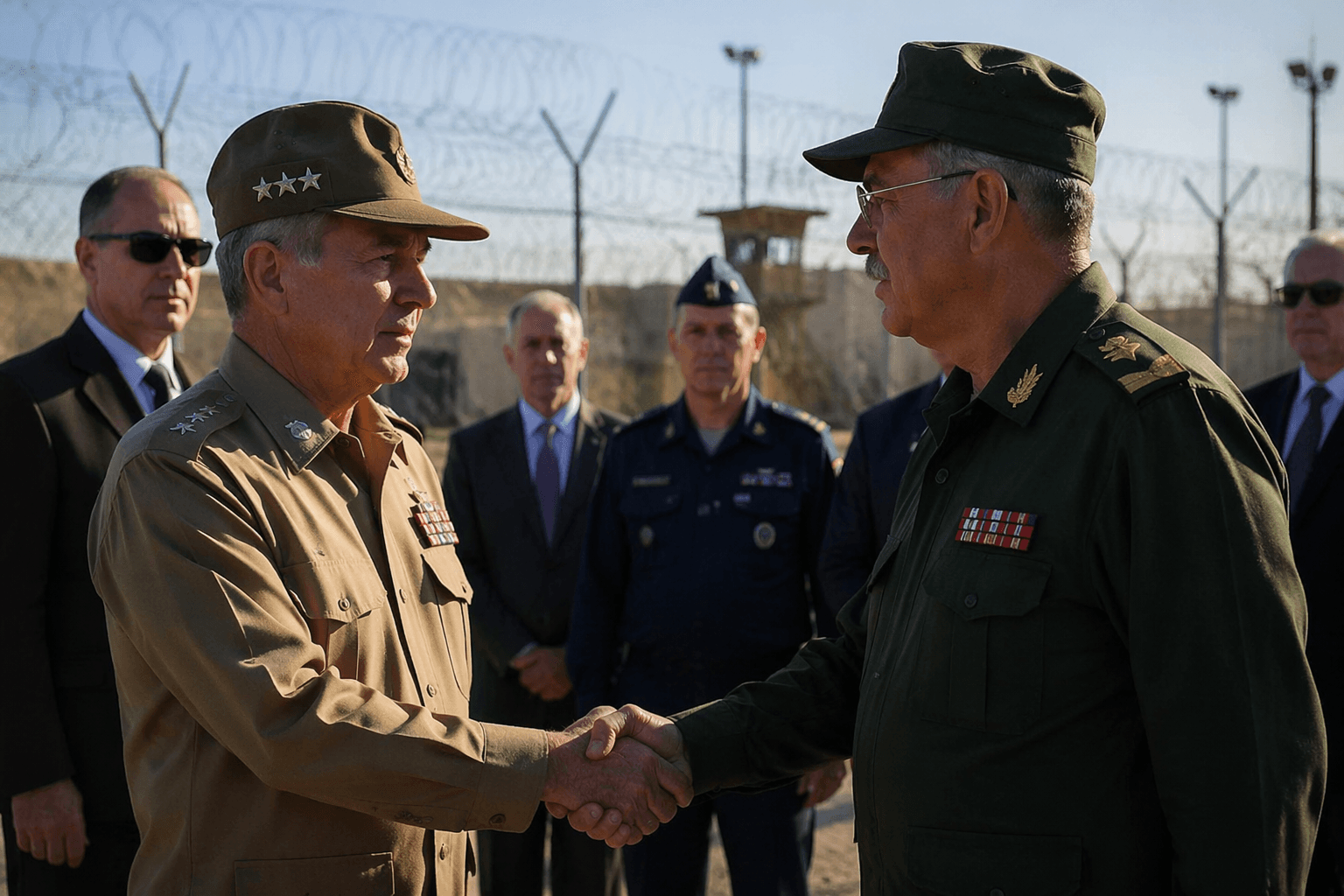
A senior U.S. general and top Cuban military officials met at the perimeter of Naval Station Guantánamo Bay on Thursday, in the highest-level military contact between the two countries in recent memory as tensions over Cuba’s future continued to rise.
U.S. Marine Corps Gen. Francis Donovan, who oversees U.S. forces in Latin America as head of U.S. Southern Command, spoke with Cuban officers about operational security, force protection, safety for service members and their families, and operational readiness, the U.S. military said. The Cuban side said the talks happened by mutual agreement and that both delegations agreed to keep communication lines open. Cuban officials identified one participant as Gen. Roberto Legra Sotolongo, the first deputy minister of the chief of the General Staff.
The meeting mattered less as a diplomatic thaw than as practical risk management. The two militaries share a narrow, volatile geography around Guantánamo Bay, where miscalculation could quickly become a crisis. The discussions touched on perimeter security at the base, a sign that both governments still see value in limited coordination even as broader relations remain deeply hostile.
That hostility has sharpened through May. The Trump administration sanctioned nine Cuban officials and Cuba’s Directorate of Intelligence on May 18, then formally charged former Cuban President Raúl Castro on May 20 over the 1996 shootdown of two planes operated by the Miami-based exile group Brothers to the Rescue. The Pentagon has also positioned forces and weapons in the region for possible military action, and the USS Nimitz carrier strike group entered the Caribbean in May, adding to the sense in Havana that Washington is preparing for more than rhetorical pressure.
The talks came after a rare visit to Havana earlier in May by CIA Director John Ratcliffe, another indication that intelligence and military channels remain active even as public rhetoric hardens. Secretary of State Marco Rubio has called Cuba a national security threat 90 miles from Florida, and President Donald Trump has tied Cuba policy to his second-term foreign policy goals, with officials signaling the island could become a focus after the war with Iran ends.
Cuban officials have warned that any U.S. military action could cause mass casualties, a reminder of how much is at stake around an island already battered by blackouts, food shortages and economic collapse. For now, the Guantánamo meeting suggests both governments are still trying to contain the danger even as they prepare for a more dangerous confrontation.
This article was produced by Prism’s automated news system from verified source data, official records, and press releases, then run through automated quality and moderation checks before publishing. The system is built and supervised by the people who set the standards it runs under. Read our full AI policy.
Know something we missed? Have a correction or additional information?
Submit a Tip