U.S. and Iran Hold High-Stakes Talks in Pakistan as Ceasefire Nears Expiration
VP Vance arrived in Islamabad Saturday to lead the highest-level U.S.-Iran talks since 2015, with a Pakistan-brokered ceasefire expiring in 12 days.

Vice President JD Vance arrived in Islamabad Saturday to lead the most senior U.S. engagement with Iran since Secretary of State John Kerry negotiated the 2015 nuclear deal, as a fragile two-week ceasefire ticked toward its April 22 expiration.
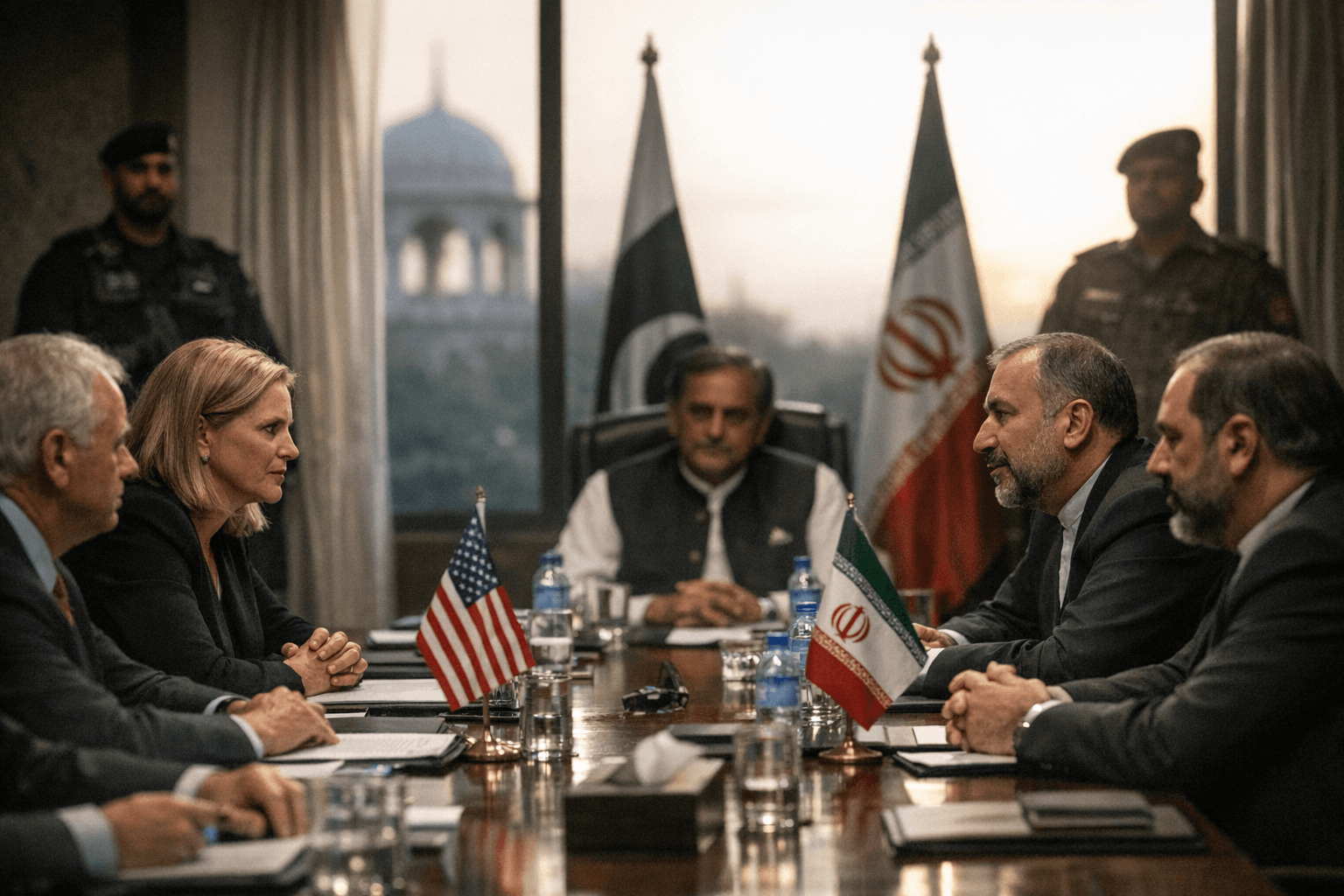
The talks brought together Vance, Special Envoy Steve Witkoff, and presidential son-in-law Jared Kushner on the U.S. side, facing an Iranian delegation expected to include Parliament Speaker Mohammad Bagher Ghalibaf, a former Islamic Revolutionary Guard Corps commander, and Foreign Minister Abbas Araghchi. Vance's presence marked the first visit by a sitting U.S. vice president to Pakistan since Joe Biden traveled there in January 2011.
The negotiations came six weeks after the United States and Israel launched coordinated airstrikes on Iran under Operation Epic Fury on February 28, killing Supreme Leader Ali Khamenei and striking Iran's military and nuclear infrastructure. More than 2,000 people were killed in the first five weeks. Iran retaliated by closing the Strait of Hormuz, through which roughly 20% of global oil and gas passes, and firing hundreds of missiles and thousands of drones across the region. The International Energy Agency called the disruption the "greatest global energy security challenge in history," with crude supply shortfalls estimated at 12 million barrels per day and a global shortage nearing 400 million barrels.
The gap between the two sides remains vast. Washington's reported 15-point proposal centers on Iran's enriched uranium stockpile, its ballistic missile program, sanctions relief, and reopening the Strait. Tehran countered with a 10-point plan demanding Iranian oversight of the waterway, including tolls for vessels, an end to all regional military operations, full sanctions relief, and reconstruction assistance. Negotiations are expected to be indirect, with Pakistani officials shuttling proposals between delegations seated in separate rooms, mirroring the format of earlier Oman-mediated nuclear rounds.
Before departing, Vance made the stakes plain. "If the Iranians are willing to negotiate in good faith, we're certainly willing to extend the open hand," he said. "If they're going to try to play us, then they're going to find the negotiating team is not that receptive." Trump told NBC separately that he was "very optimistic" and that Iranian leaders were "much more reasonable" in private.
The ceasefire arrived at Saturday's talks already fraying. Israel, with apparent U.S. backing, continued major strikes against Hezbollah in Lebanon after the truce came into force, with Lebanese authorities reporting at least 182 killed and hundreds wounded in what Israel called its largest coordinated Lebanon strike since the war began. Iranian President Masoud Pezeshkian warned on X that the Lebanon attacks made negotiations "meaningless," while Ghalibaf alleged parts of Iran's proposal had been violated before talks even started.
Former U.S. Ambassador to Pakistan Cameron Munter predicted the negotiations will be "very public," "very belligerent," with both sides arriving with "maximal demands," and warned that Iran "may be very satisfied to string this out for a very long time."
Pakistan's role reflects months of deliberate groundwork. Army Chief General Asim Munir, described as "clearly the key guy" in the mediation effort, worked back channels to bring both parties to the table after Prime Minister Shehbaz Sharif formally offered to host on March 23. Both leaders had met with President Trump at the White House in September 2025. As a Major Non-NATO Ally that does not host U.S. military bases, Pakistan carried a credibility with Tehran that few American partners could claim.
When the ceasefire was announced on April 7 and 8, U.S. crude prices plunged 16.4% and the Dow Jones posted its best single day in a year. With the expiration deadline less than two weeks away and Iran yet to reopen the Strait of Hormuz, those gains remain entirely contingent on what the delegations agree to across those separate rooms in Islamabad.
This article was produced by Prism’s automated news system from verified source data, official records, and press releases, then run through automated quality and moderation checks before publishing. The system is built and supervised by the people who set the standards it runs under. Read our full AI policy.
Did this article answer your question?


