U.S. and Israel strikes on Iran spark global condemnation and calls for civilian protections
World leaders condemned escalation after U.S. and Israeli strikes on Iran, which provoked Iranian missile and drone retaliation and a U.N. Security Council emergency meeting.

The United States and Israel launched a major combined assault on targets across Iran, reported as operations named Epic Fury by Washington and Roaring Lion by Jerusalem, provoking Iranian missile and drone retaliation toward Israel and U.S. bases and triggering a U.N. Security Council emergency meeting. The strikes, which followed weeks of military buildup and failed nuclear negotiations, set off a cascade of diplomatic statements and urgent appeals focused on civilian safety and the risk of nuclear escalation.
U.N. Secretary-General António Guterres condemned the "use of force" by the U.S. and Israel and said those actions undermine international peace and security, calling for an immediate cessation of hostilities and for member states to respect their international-law obligations. The Security Council scheduled an emergency session to address Iran's formal appeal asking the body "to take immediate action to confront the violation of international peace and security."
European leaders emphasized restraint and nuclear safety. In a joint statement, European Commission President Ursula von der Leyen and European Council President António Costa said, "We call on all parties to exercise maximum restraint, to protect civilians, and to fully respect international law." Kaja Kallas, the European Union's foreign policy chief, called the situation "perilous" and flagged protection of civilians as a priority, adding that Iran's ballistic missile and nuclear programs and support for armed groups pose a serious threat to global security.
France, Germany and the United Kingdom issued a separate E3 statement reiterating long-standing demands that Iran end destabilizing behavior while making clear none of the three countries participated in the strikes. Germany said it had been notified only Saturday morning and convened a crisis management team, while France's junior defense minister said Paris had known an action might come but not its timing.
Governments split in their public responses. Australia and Canada expressed support for the U.S. action; Brazil and Pakistan condemned the strikes as dangerous and untimely, stressing negotiations remain the path to peace. Russia and China issued direct criticism. Many regional governments publicly condemned Iran's retaliation while avoiding pointed comment about the U.S.-Israel attack itself. Ukraine's president asserted bluntly that "the Iranian regime chose to be an accomplice to Putin and supplies him with Shaheds."
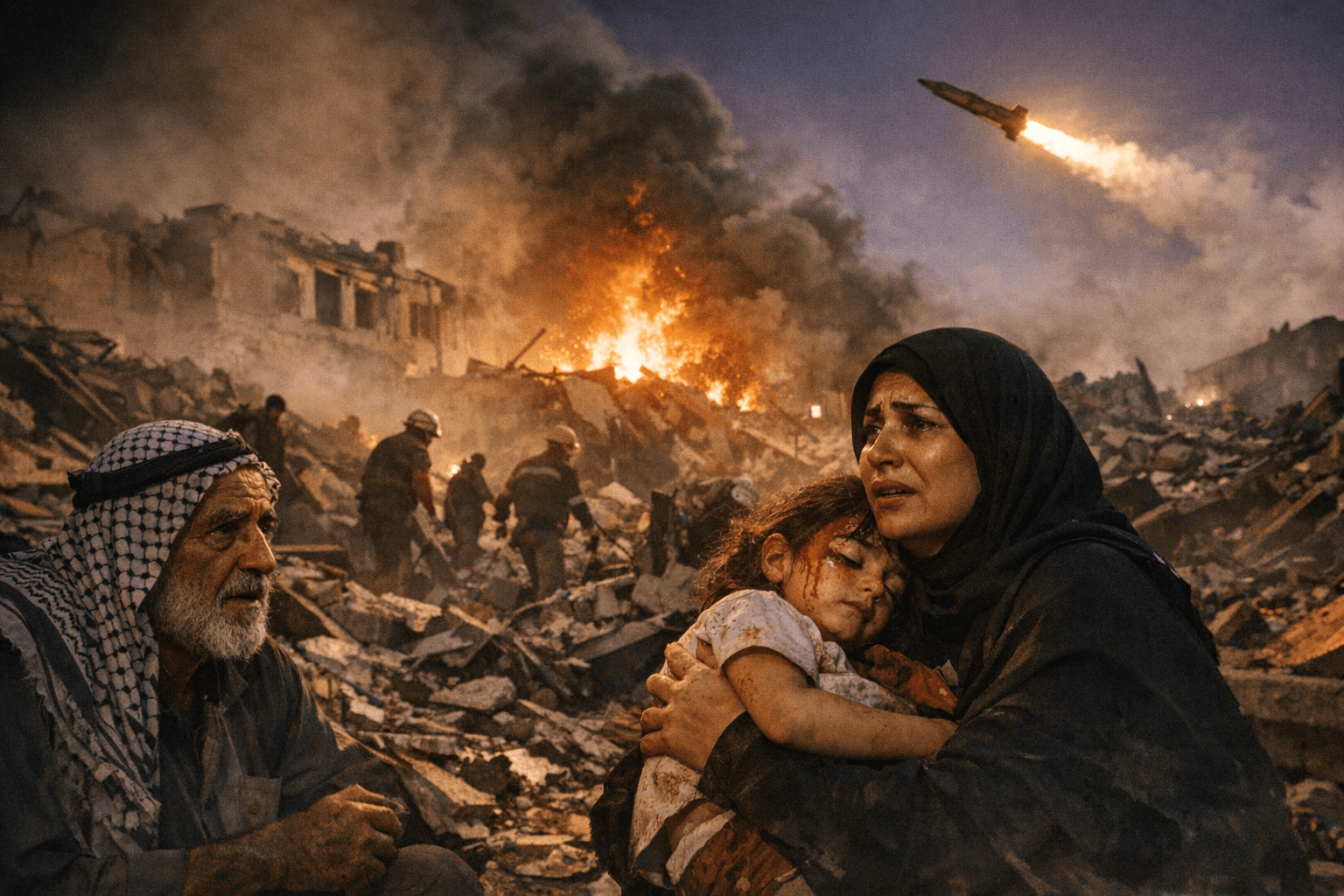
Oman, which had been mediating nuclear talks, voiced dismay. Omani Foreign Minister Badr Albusaidi said on X he was "dismayed" by coordinated Israeli-U.S. attacks, urging the United States not to "get sucked in further" and adding "this is not your war." Iran's foreign ministry asked the U.N. Security Council to act, while images circulated showing plumes of smoke over Tehran and a demonstration in Berlin supporting the strikes.
Humanitarian and arms-control groups warned of wider risks. Melissa Parke, executive director of the International Campaign to Abolish Nuclear Weapons, said, "These attacks are totally irresponsible and risk provoking further escalation as well as increasing the danger of nuclear proliferation and the use of nuclear weapons." Public health and emergency systems in the region now face uncertain strain: hospitals, supply lines and refugee protections are immediate concerns where fighting occurs, and the cloud of nuclear risk sharpens already acute worries about long-term environmental and health consequences.
With no consolidated casualty or target lists released, world capitals pressed for diplomatic channels even as leaders signaled stark differences over strategy and accountability. The immediate questions for global public health and security are practical: how to shield civilians, sustain medical and humanitarian access where violence spreads, and prevent a localized military exchange from sliding into wider regional conflict with catastrophic consequences for communities already living with limited health care and fragile infrastructure.
This article was produced by Prism’s automated news system from verified source data, official records, and press releases, then run through automated quality and moderation checks before publishing. The system is built and supervised by the people who set the standards it runs under. Read our full AI policy.
Did this article answer your question?


