U.S. beats Austria, sets up quarterfinal rematch with Canada
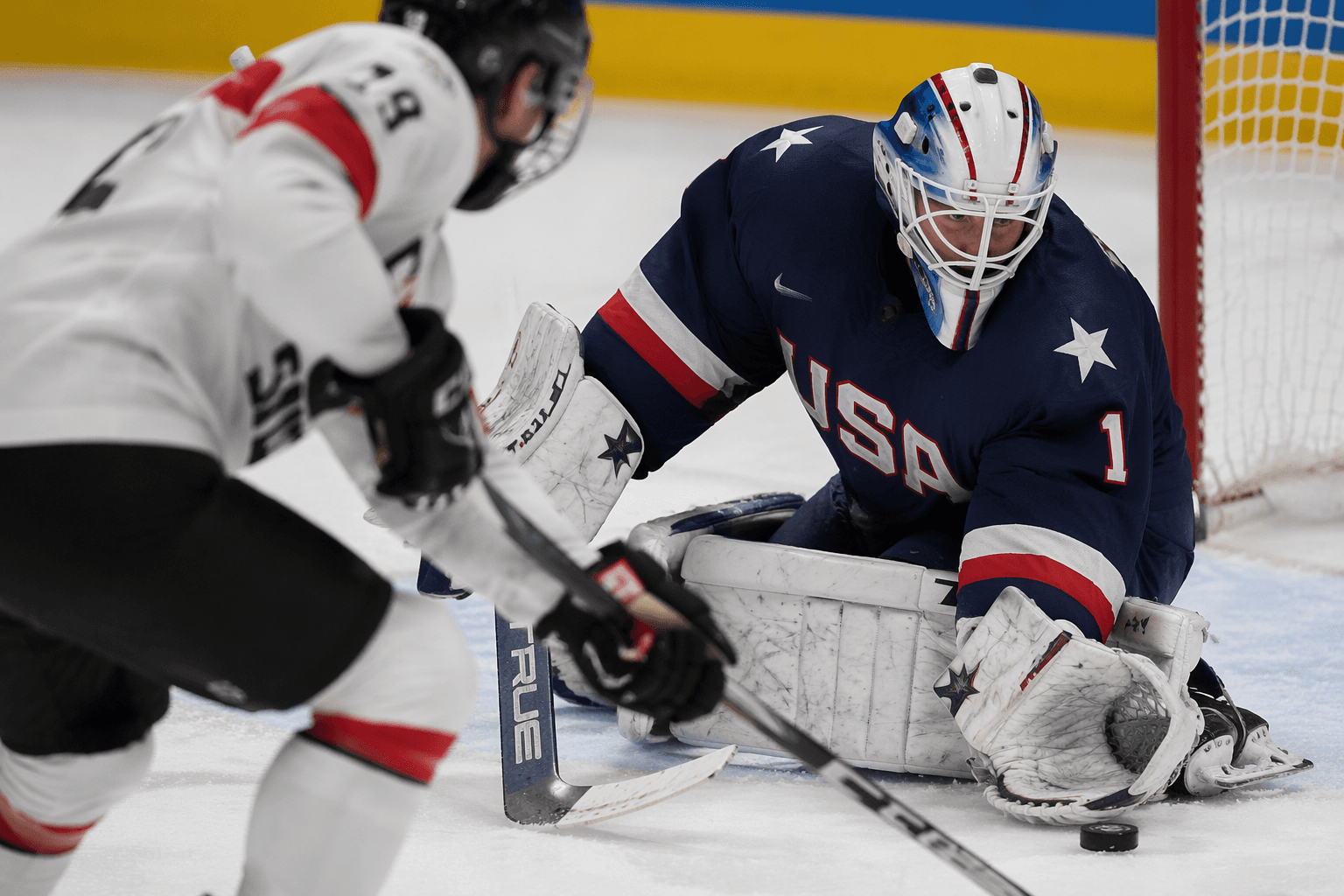
Balanced scoring and 25 saves from Devin Cooley carried the U.S. past Austria 4-1, and into a quarterfinal against Canada with Olympic gold-medal baggage attached.

The United States handled Austria 4-1 on Tuesday and earned a quarterfinal rematch with Canada, turning a routine knockout advance into a measuring-stick game for where American hockey stands heading toward the 2026 cycle.
Connor Clifton, Ryan Ufko, Paul Cotter and Matthew Tkachuk scored for the Americans, while Will Borgen added two assists and Devin Cooley stopped 25 shots. The spread-out scoring and steady work in net gave the U.S. control from the middle of the game onward, a useful sign for a roster that will need more than star power if it is going to survive Canada and keep pushing through the bracket.
The stakes around the matchup go beyond one elimination game. The U.S. and Canada met in the Olympic final in Milan Cortina in February, when the Americans won 2-1 in overtime for gold. That result made this world championship meeting immediate and loaded, with both teams arriving at the quarterfinal round carrying the weight of a recent head-to-head result that still defines the rivalry.
The bracket set-up underscored how tight the preliminary round was. The IIHF standings put the United States fourth in Group A with eight points, while Canada finished first in Group B with 17. Austria ended Group A play in fifth with nine points, and Germany was eliminated after finishing with 10. The knockout field was shaped by fine margins, and the U.S. needed the Austria win to make sure it moved on with its title hopes intact.

The tournament is being staged in Zurich and Fribourg, Switzerland, from May 15 to 31, giving the Americans little time to linger over the bracket. What comes next will say more than the result against Austria did: whether this roster has the depth to score beyond its top names, the form to match Canada’s pace, and the defensive structure to withstand the kind of pressure that has decided so many U.S.-Canada games on the international stage.
This article was produced by Prism’s automated news system from verified source data, official records, and press releases, then run through automated quality and moderation checks before publishing. The system is built and supervised by the people who set the standards it runs under. Read our full AI policy.
Did this article answer your question?