U.S. Boarding of Sanctioned Tanker Raises Legal and Geopolitical Questions
An analysis published Dec. 11, 2025 scrutinizes the legal authorities and strategic consequences of a U.S. operation to board and seize a tanker accused of participating in sanction evasion. The review highlights how international law and U.S. statutes are being invoked, and why the case matters for maritime governance, diplomatic relations, and global energy markets.
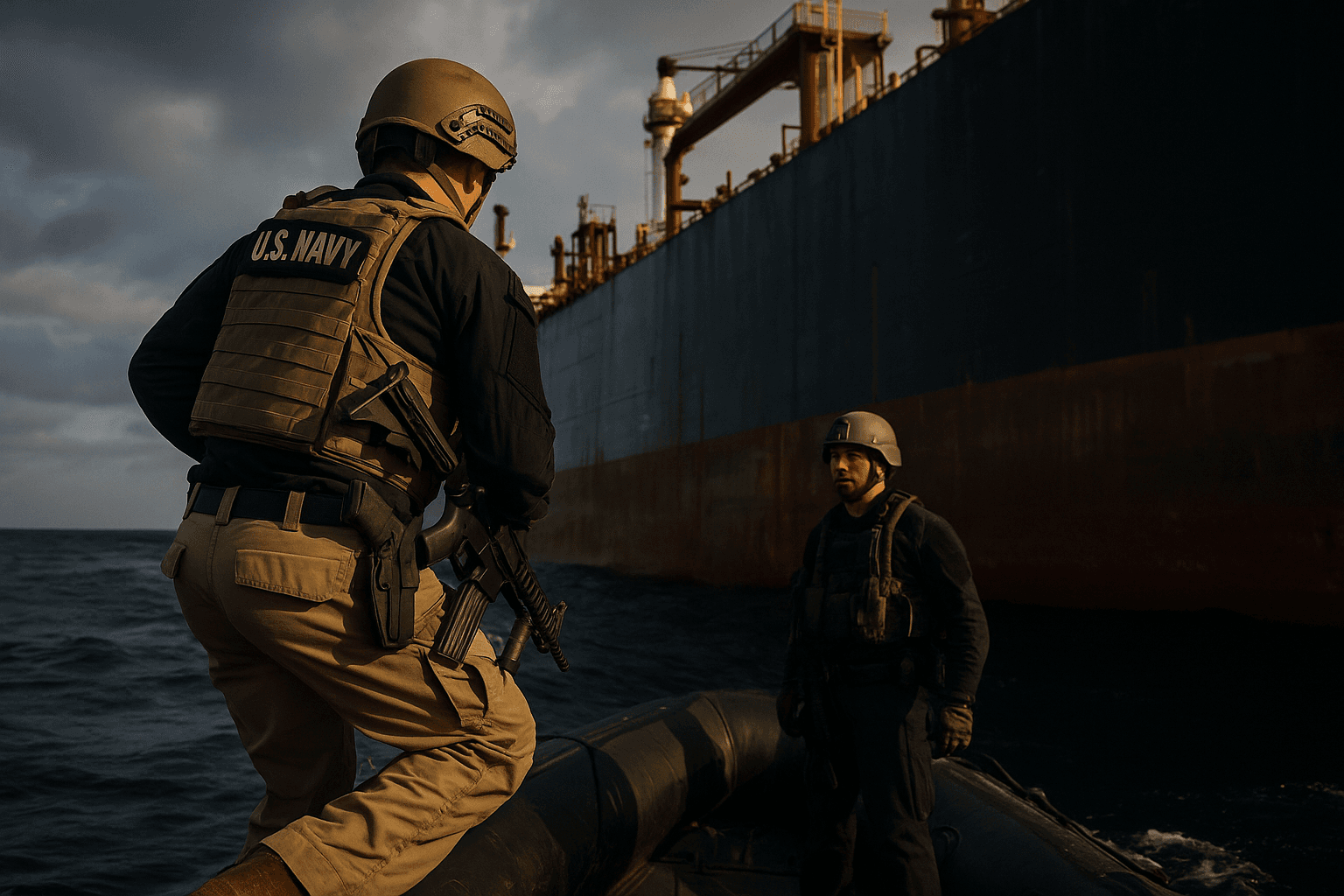
An in depth analysis published Dec. 11, 2025 examines the legal and geopolitical implications of a recent U.S. operation to board and seize a tanker alleged to be operating in sanction evasion networks. The piece situates the action at the intersection of international maritime law and U.S. domestic statutes, and underscores significant gaps in public information about the specific seizure that complicate legal and diplomatic assessments.
The reporting identifies Article 110 of the United Nations Convention on the Law of the Sea as a central international law provision cited to justify boarding and inspection. The analysis states that this legal foundation "enables enforcement agencies to act beyond territorial waters when vessels carry sanctioned commodities or engage in prohibited trade activities." In U.S. statutory law, the International Emergency Economic Powers Act and the Maritime Drug Law Enforcement Act are described as additional authorities that may be invoked to support interdictions on the high seas. The coverage frames these domestic laws as supplemental to treaty based maritime authority in explaining how U.S. agencies might lawfully interdict vessels suspected of transporting sanctioned goods.
Legal scholars and maritime law experts quoted in the analysis were reported as explaining distinctions in enforcement authority and the limits of different legal tools, though the available excerpts do not include full expert statements. The analysis cautions that maritime sanctions enforcement is legally complex and subject to rapid change as political and economic conditions evolve. It explicitly notes that the assessment is based on publicly available information and should not be construed as legal or investment advice.
Beyond legal theory, the analysis flags immediate geopolitical and operational questions. Boarding and seizure of vessels on the high seas can prompt diplomatic friction with flag states and with countries whose traders or shippers are implicated. For commercial operators and insurers, uncertainty about the legality of interdictions can increase risk premia and encourage alternative routing or methods of concealment, complicating enforcement and raising costs for global trade. For states pursuing sanctions, the case highlights the practical challenge of translating legal authority into enforceable outcomes when key facts such as the tanker's name, flag state, precise location, timing, and any subsequent court filings have not been publicly disclosed.
The report underscores how evidence, chains of custody, and cooperation from flag states and port states will be decisive if prosecutions or civil forfeiture proceedings follow. It also points to potential legal challenges that could test how Article 110 and the specified U.S. statutes are interpreted by domestic and international tribunals in the context of sanctions enforcement.
For journalists and policymakers seeking clarity, the analysis recommends verifying primary documents and official statements to establish the facts of the seizure, confirming which statutory and treaty provisions were invoked, and seeking detailed expert commentary on precedent and likely legal challenges. Absent those records, the public record remains incomplete, and the broader implications for maritime governance and international diplomacy will depend on developments that are not yet in the public domain.
This article was produced by Prism’s automated news system from verified source data, official records, and press releases, then run through automated quality and moderation checks before publishing. The system is built and supervised by the people who set the standards it runs under. Read our full AI policy.
Did this article answer your question?