U.S. boat strike campaign in Caribbean and Pacific faces legal scrutiny
A strike in the eastern Pacific killed three men and lifted the toll to at least 205, as watchdogs and lawmakers press for evidence and legal review.
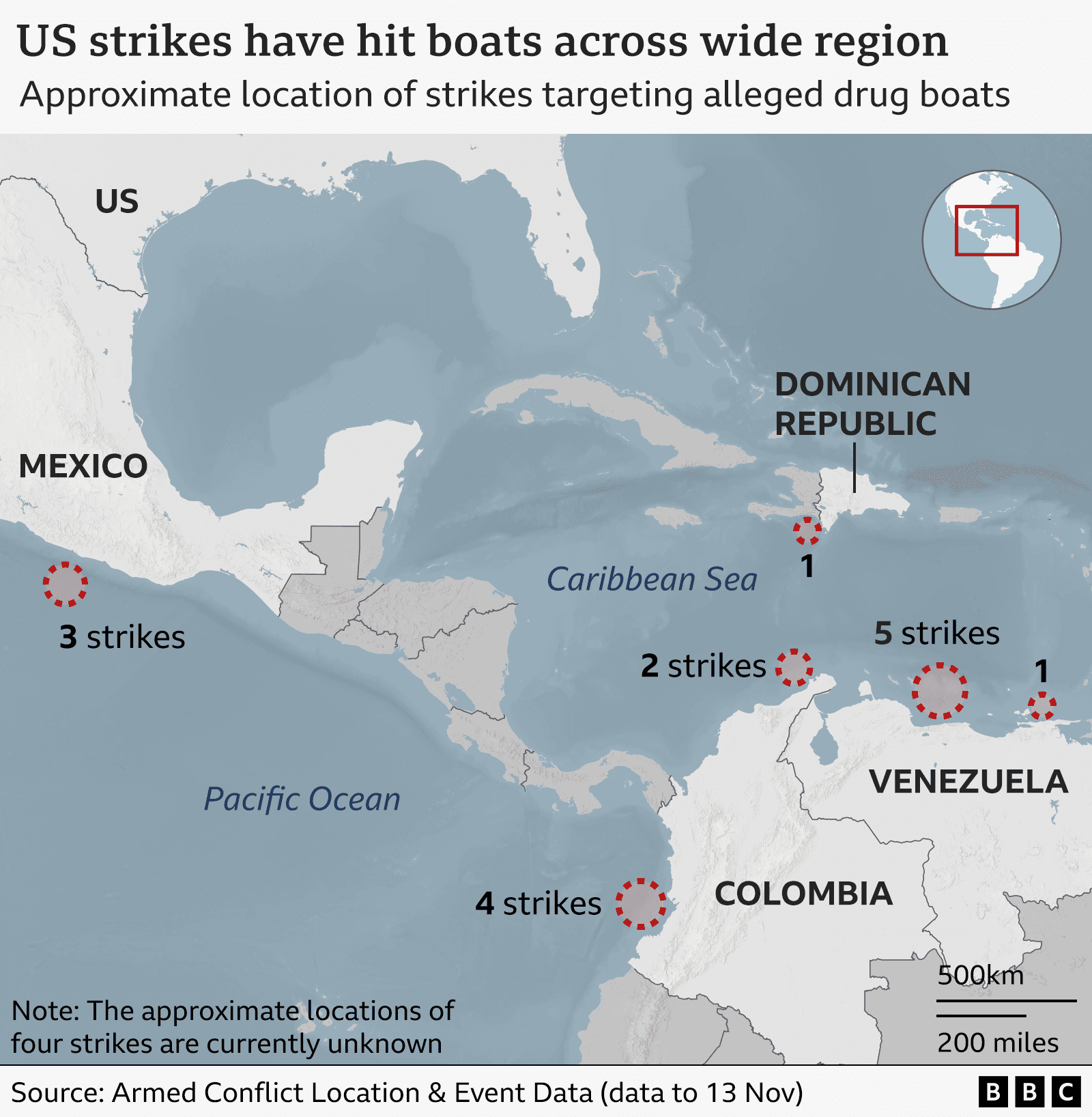
A U.S. strike on a boat in the eastern Pacific on May 31 killed three men, lifting the reported toll from the monthslong anti-drug campaign to at least 205 and intensifying scrutiny of a program that has operated far from public view.
The campaign began in September 2025 in the Caribbean Sea and later expanded into the eastern Pacific Ocean. U.S. forces carried out three lethal strikes in one day on Feb. 16, killing 11 people, and the pace has continued into 2026 with a string of May attacks that killed 2, 1, 3, 2 and then 3 people in successive reported actions. A recent week with four attacks was enough to push the reported death toll to 205.
The Pentagon and the State Department have said the vessels were tied to narco-trafficking and, in some cases, to designated terrorist organizations, but public accounts have not included evidence backing those allegations. The Pentagon’s Office of the Inspector General is probing the operation’s legality, a sign that the campaign is now facing pressure not only from critics abroad but from within the U.S. national-security apparatus itself.

That pressure has sharpened in the region. On March 13, 2026, the Inter-American Commission on Human Rights held a thematic hearing on U.S. counternarcotics operations in the Caribbean and eastern Pacific, underscoring the human-rights scrutiny surrounding the strikes. The State Department responded that the commission had "strayed far outside its mandate" while defending U.S. counter-narcoterrorism efforts.
Washington has cast those efforts as part of broader counternarcotics and maritime-security cooperation in the Caribbean Basin, including work with Caribbean partners through the Caribbean Basin Security Initiative and with the Regional Security System in the Eastern Caribbean. The State Department says that cooperation includes two U.S.-donated C-26 maritime patrol aircraft used to detect and disrupt illicit maritime trafficking.

The legal and political dispute now hangs over a campaign that has shifted sharply from traditional interdiction at sea to repeated lethal airstrikes. With the death toll rising and the evidence still undisclosed, the central question remains whether the operation is disrupting trafficking or simply escalating violence.
This article was produced by Prism’s automated news system from verified source data, official records, and press releases, then run through automated quality and moderation checks before publishing. The system is built and supervised by the people who set the standards it runs under. Read our full AI policy.
Did this article answer your question?

