U.S. construction spending rises 0.4% in April, tops expectations
Construction spending rose 0.4% in April to $2.1724 trillion, but the gain leaned on housing even as nonresidential work slipped and mortgage-rate pressure persisted.
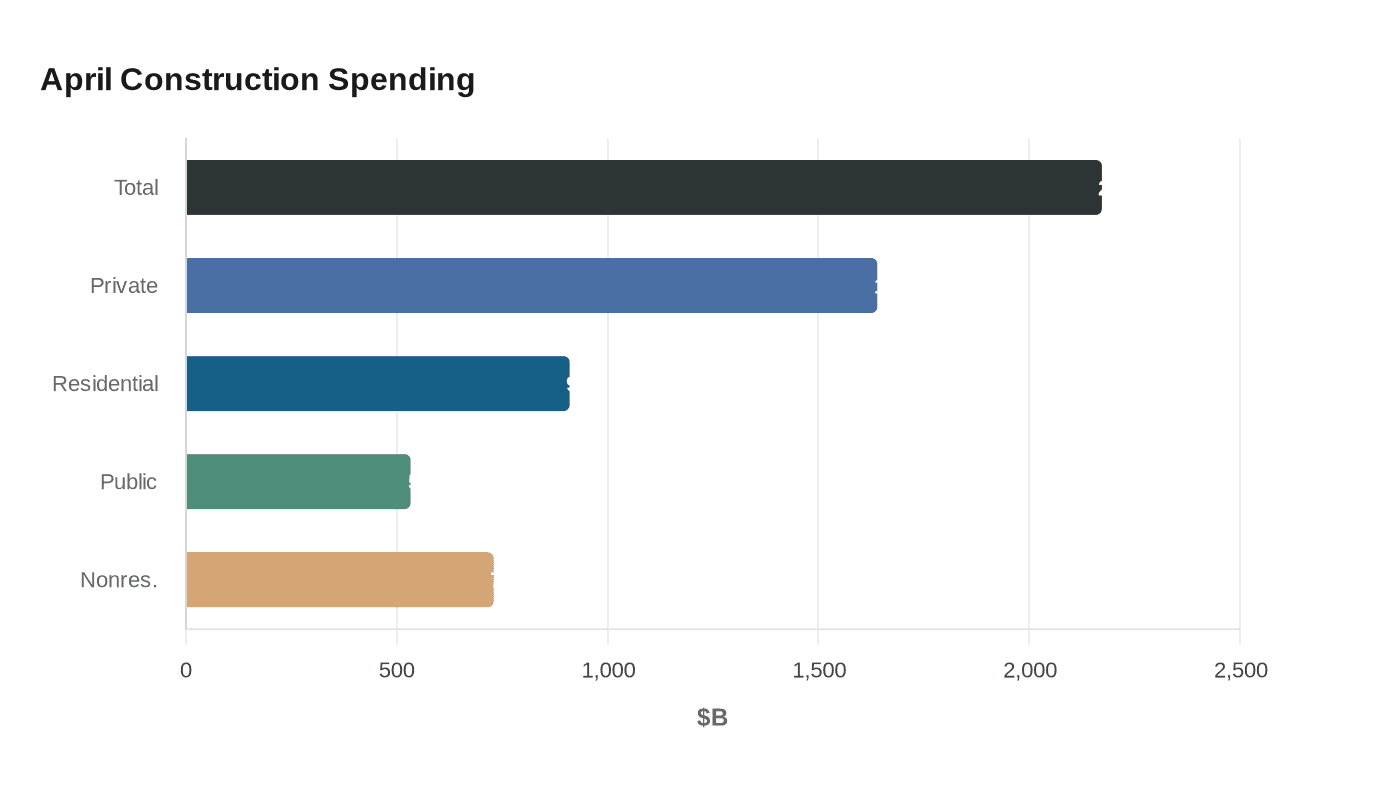
U.S. construction spending continued to edge higher in April, rising 0.4% to a seasonally adjusted annual rate of $2.1724 trillion, a gain that beat expectations but still pointed to a split picture across the building sector. The U.S. Census Bureau said the increase followed a revised 0.2% advance in March and left spending 0.9% above April 2025. Private construction rose 0.4% to $1.6397 trillion, residential spending climbed 0.8% to $909.9 billion, and public construction increased 0.4% to $532.7 billion. Nonresidential spending, by contrast, slipped 0.2% to $729.8 billion.
The April figures suggest construction has not rolled over, but the resilience is uneven. Single-family homebuilding provided an important lift, with new single-family projects up 1.4% in the month, even as broader housing conditions remained under pressure from high borrowing costs and a market still absorbing the effects of the war with Iran, which has added to financing and commodity-price strain. The first four months of 2026 brought $657.2 billion in construction spending, up just 0.2% from the same period a year earlier, a pace that underscores how modest the expansion has been despite one stronger month. If spending keeps holding up, it could add support to second-quarter GDP; if rates stay elevated, housing affordability will continue to cap the upside.
New residential construction data released May 21 added more evidence that the sector is being held together by pockets of strength rather than broad momentum. Privately owned housing starts ran at a seasonally adjusted annual rate of 1.465 million in April, but single-family starts fell 9.0% from March to 930,000. Building permits were 1.442 million annualized, signaling that builders are still moving forward on some projects even as demand has been squeezed.
The National Association of Home Builders has warned repeatedly that the market is facing economic policy uncertainty, a softening labor market and ongoing affordability problems. It said the 30-year fixed mortgage rate averaged 6.25% at the start of 2026, and by May it said elevated mortgage rates, higher inflation and economic uncertainty were keeping more buyers on the sidelines. Public construction offered its own measure of support in April, with educational spending at $113.7 billion and highway work at $149.6 billion. The next Census Bureau construction spending report is due July 1, and it will show whether April marked a durable floor or only a temporary pause in a still-fragile building cycle.
This article was produced by Prism’s automated news system from verified source data, official records, and press releases, then run through automated quality and moderation checks before publishing. The system is built and supervised by the people who set the standards it runs under. Read our full AI policy.
Know something we missed? Have a correction or additional information?
Submit a Tip