U.S. Deploys Special Operations Forces, Marines to Middle East Amid Iran Tensions
3,500 Marines reached CENTCOM as Trump weighs special operations raids on Iran's nuclear sites; Rubio told Congress "people are going to have to go and get" enriched uranium.

Secretary of State Marco Rubio delivered an unusually blunt warning at a congressional briefing when asked how the United States planned to secure Iran's stockpile of highly enriched uranium. "People are going to have to go and get it," he said, declining to specify who.
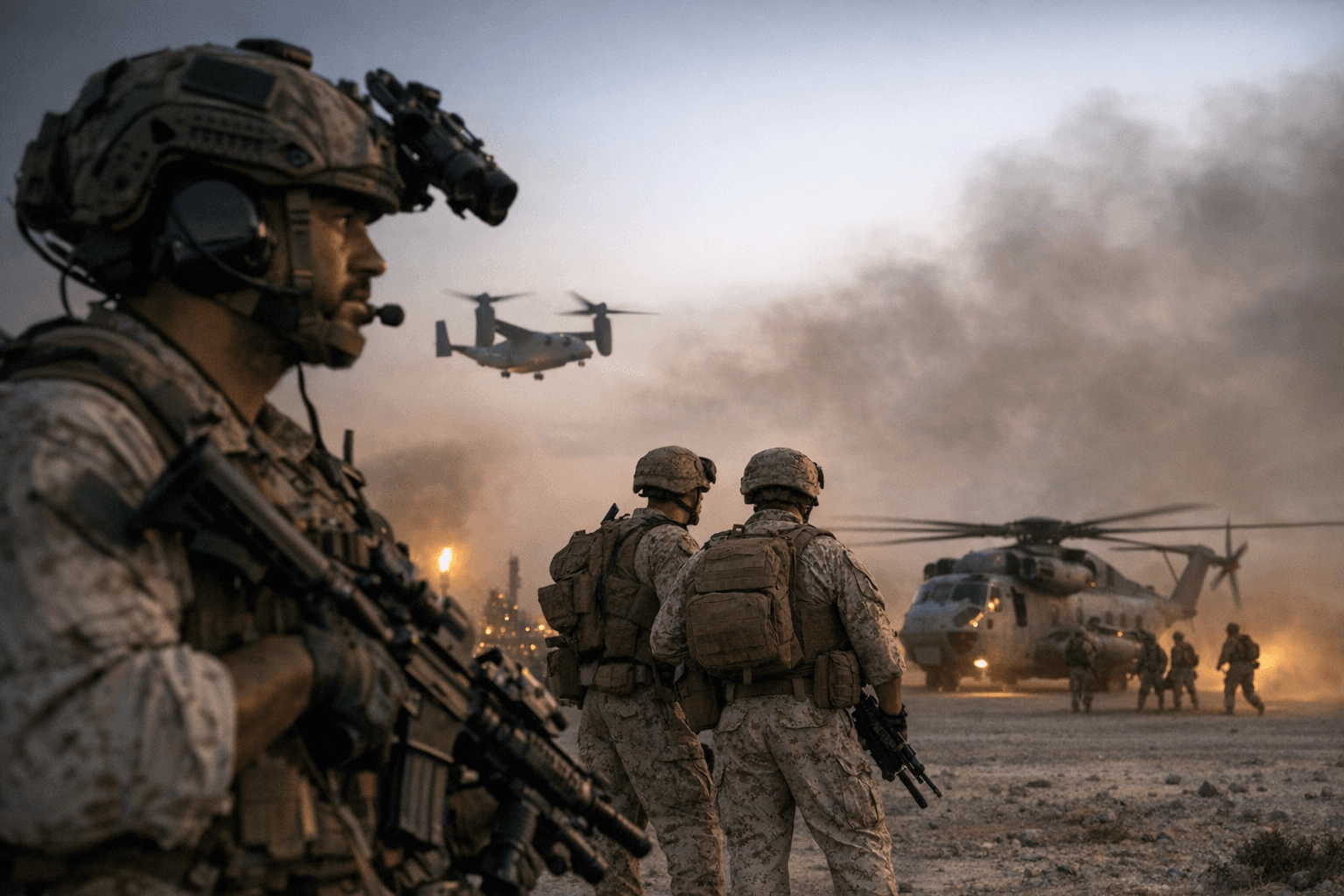
The answer is taking shape in the waters off the Persian Gulf. The USS Tripoli, an America-class amphibious assault ship, arrived in the U.S. Central Command area of responsibility on March 27, delivering approximately 3,500 sailors and Marines of the 31st Marine Expeditionary Unit, along with transport and strike fighter aircraft and amphibious assault assets. It is the most visible component of an accelerating force buildup designed to give President Trump options he has not yet authorized.
The Pentagon's interest in Special Operations forces centers on a problem air power cannot solve. The deep tunnels beneath Isfahan, where Iran's most significant enriched uranium stockpiles are stored, have no ventilation shaft openings that would serve as viable strike points. That gap has driven discussions about deploying elite units from the Joint Special Operations Command, potentially alongside Israeli commando forces, to physically secure or destroy the material. An Israeli defense official confirmed Trump and his team are seriously weighing targeted special operations missions inside Iran. Two options remain under consideration: physically removing the nuclear material from the country, or deploying nuclear experts to dilute it on-site. Either path puts American personnel inside Iran.
The risk calculus is stark. The Islamic Revolutionary Guard Corps claimed over the weekend that its air defenses struck a U.S. F-16 and an MQ-9 Reaper drone in Iran's southern airspace. Shia militia groups in Iraq, including the Popular Mobilization Forces, have declared readiness to join the war in support of Tehran. Any ground operation near Kharg Island, Iran's primary oil export hub and a target the Pentagon has reportedly discussed seizing, or along the Strait of Hormuz coastline, risks triggering a broader regional escalation precisely as the administration is pursuing a diplomatic resolution through ongoing talks in Pakistan.
The diplomatic and military tracks are running simultaneously. Rubio told Congress the United States can meet its objectives "without any ground troops" but added that Trump "has to be prepared for multiple contingencies." Defense Secretary Pete Hegseth confirmed CENTCOM requested the latest reinforcements specifically to expand operational options. No ground operation has been authorized.
America's most capable naval asset in the theater is temporarily offline. The USS Gerald R. Ford, the world's largest aircraft carrier and a central platform for Operation Epic Fury, the joint U.S.-Israeli air campaign now approaching its fifth week, arrived in the Croatian port of Split on March 28 for repairs after a fire broke out aboard the ship on March 12. The Ford had been at sea for nearly nine months, and its absence leaves a meaningful gap in American strike aviation in the region.
Reinforcements are moving to fill it. The USS Boxer, carrying at least 2,200 Marines with the 11th Marine Expeditionary Unit, departed San Diego around March 19 and is less than a month from the CENTCOM area. Once it arrives, CENTCOM will have approximately 5,000 Marines with amphibious capabilities in theater. Between 2,000 and 3,000 paratroopers from the Army's 82nd Airborne Division, including division commander Maj. Gen. Brandon Tegtmeier and the full command element, have received written deployment orders.
CENTCOM has already confirmed the destruction of two-thirds of Iran's arms manufacturing capacity since the campaign began. Whether the Special Operations missions under discussion remain limited nuclear security raids or expand into sustained operations along Iran's coastline will determine whether this deployment produces the decisive endgame the White House is describing or opens a far longer chapter.
Know something we missed? Have a correction or additional information?
Submit a Tip

