U.S. destroyers repel fiercer Iranian attack in Strait of Hormuz
Iranian missiles, drones and small boats pressed three U.S. warships in the Strait of Hormuz, a sharper test of whether the ceasefire can hold and shipping can move.
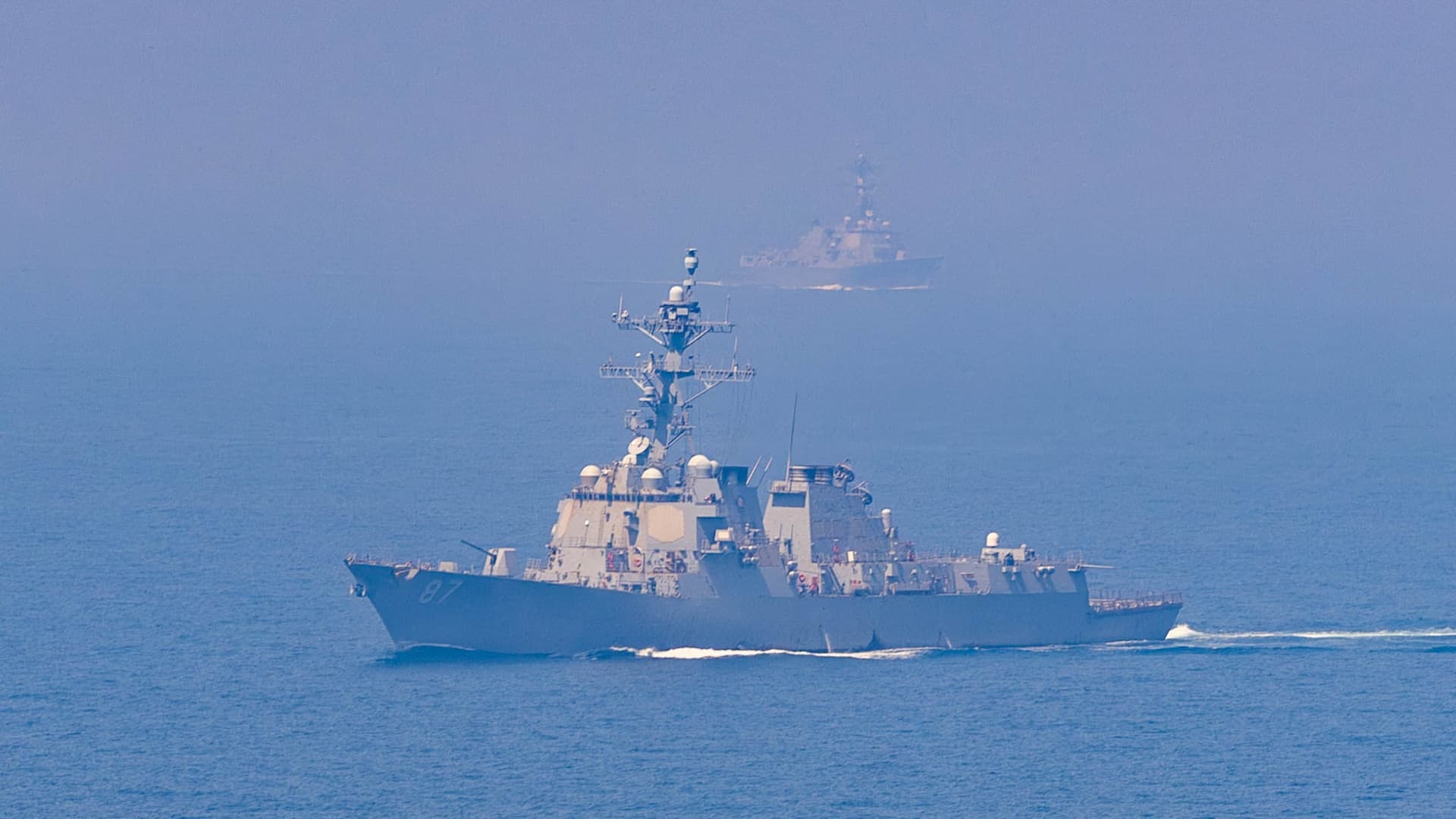
Iranian missiles, drones and small boats swarmed three U.S. Navy ships in the Strait of Hormuz on Thursday in what American officials described as a fiercer and more sustained attack than the barrage the warships faced days earlier.
U.S. Central Command said the USS Truxtun, USS Mason and USS Rafael Peralta were intercepted in the narrow waterway, and that U.S. forces answered with “self-defense strikes” against Iranian military facilities, including drone and missile launch sites. U.S. officials said Iranian fast-attack boats closed so near that American warships fired to keep them away. No casualties or damage to the U.S. ships had been reported.
The confrontation matters far beyond the battle line. The Strait of Hormuz, the chokepoint between Iran and Oman, normally carries about one-fifth of the world’s oil, making every exchange there a direct threat to energy flows, insurance rates and the global economy. CBS News reported that about 2,000 ships were stranded on either side of the strait at one point, while the U.S. mounted a new escort effort, dubbed Project Freedom, to guide commercial vessels through the waterway after President Donald Trump said American forces would help reopen it.
Thursday’s exchange also raised the stakes for deterrence. Earlier in the week, the USS Truxtun and USS Mason transited the strait and entered the Persian Gulf after an Iranian barrage, but neither ship was hit. This time, the attack was broader and more aggressive, bringing a third U.S. warship into the confrontation and underscoring how quickly repeated probes can test Washington’s willingness to absorb pressure without widening the war.
The violence at sea unfolded alongside wider regional spillover. The United Arab Emirates said it came under attack for the first time since a fragile ceasefire took hold in early April, and Iranian strikes reportedly set a fire at an oil facility in Fujairah and injured three Indian nationals. South Korea said it would review whether to join U.S. operations after an explosion and fire on the HMM Namu in the Strait of Hormuz, while Canada and Britain condemned the UAE strikes and called for de-escalation and diplomacy.
Even as Iranian officials said they were reviewing U.S.-mediated peace proposals, they also accused Washington of violating the ceasefire. Ibrahim Zulfiqar said on social media that the United States had broken the truce, and Mohammad Bagher Ghalibaf warned that Iran had “not even started” in its standoff over the strait. The message from the waterway was stark: the ceasefire remained in name, but the fight over who controls maritime access had already entered a more dangerous phase.
This article was produced by Prism’s automated news system from verified source data, official records, and press releases, then run through automated quality and moderation checks before publishing. The system is built and supervised by the people who set the standards it runs under. Read our full AI policy.
Did this article answer your question?