U.S. economy adds 115,000 jobs as unemployment stays at 4.3 percent
Hiring stayed positive but uneven, with 115,000 new jobs, a 4.3 percent jobless rate and more short-term unemployment signaling a cooler labor market.
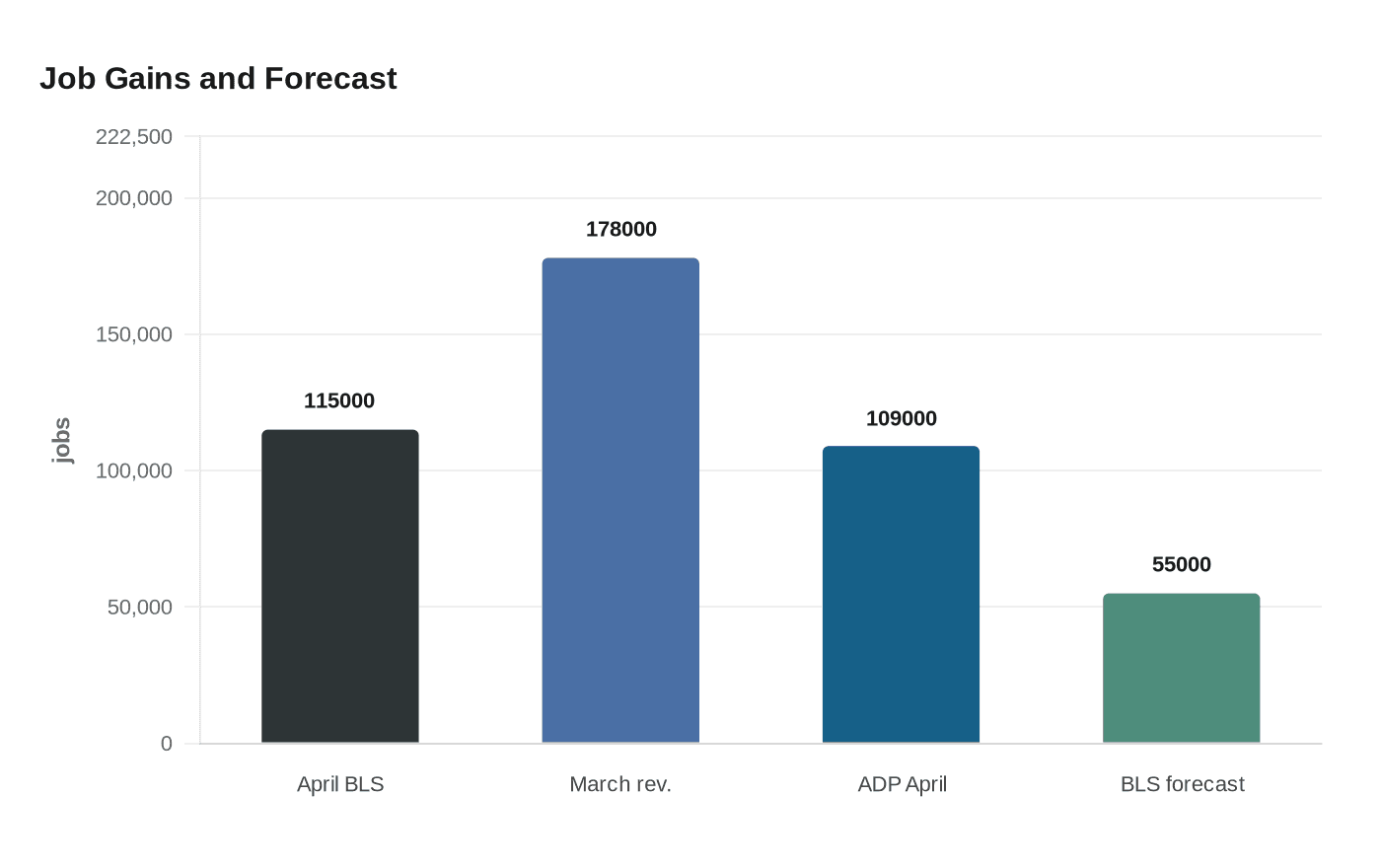
Employers added 115,000 jobs in April, a gain strong enough to show the labor market was still expanding, but soft enough to keep worries about a slowdown alive. The unemployment rate held at 4.3 percent, and federal government employment continued to decline, underscoring a report that pointed to resilience in some corners of the economy and weakness in others.
The best gains came in health care, transportation and warehousing, and retail trade, according to the U.S. Bureau of Labor Statistics. Those increases were enough to offset broader signs of hesitation elsewhere. The BLS said total nonfarm payroll employment had changed little on net over the year ended March 2026, a reminder that the labor market has been losing momentum even before April’s numbers were released.
There were also signs that hiring is becoming harder for job seekers. The number of unemployed people was little changed at 7.4 million, but the number jobless for less than five weeks jumped by 358,000 to 2.5 million. That kind of increase suggests more workers are entering unemployment recently, even as the overall jobless rate remains steady. The labor force participation rate stayed at 61.8 percent, while the employment-population ratio was 59.1 percent.
April’s payroll gain followed a revised March increase of 178,000, a pace that was sturdier than April but still far from the rapid job growth seen earlier in the recovery. The average workweek for private-sector workers edged up to 34.3 hours, while manufacturing hours rose to 40.4 and overtime held at 3.0 hours. For businesses, those figures point to a labor market that is not collapsing, but is not tight enough to force broad-based increases in hours.
Private payroll data had pointed in the same direction. ADP said companies added 109,000 jobs in April, above expectations, while CNBC said the BLS report also beat the forecast for 55,000. Even so, the gap between the headline gain and the uneven labor details kept the focus on whether firms are still confident enough to hire aggressively.
For policymakers, the report offered a mixed signal. Job growth remained positive, but the combination of a 4.3 percent unemployment rate, a flat labor force participation rate and slower momentum than earlier in the year suggests a labor market that is cooling rather than cracking. For workers, that means finding a job may still be possible, but it is no longer getting easier.
This article was produced by Prism’s automated news system from verified source data, official records, and press releases, then run through automated quality and moderation checks before publishing. The system is built and supervised by the people who set the standards it runs under. Read our full AI policy.
Did this article answer your question?

%3Amax_bytes(150000)%3Astrip_icc()%2FCertificate-of-deposit-2301f2164ceb4e91b100cb92aa6f868a.jpg&w=1920&q=75)
