U.S. economy grows 2 percent in first quarter as inflation stays high
Gas prices climbed above $4 a gallon as first-quarter growth held at 2 percent and inflation stayed hot.

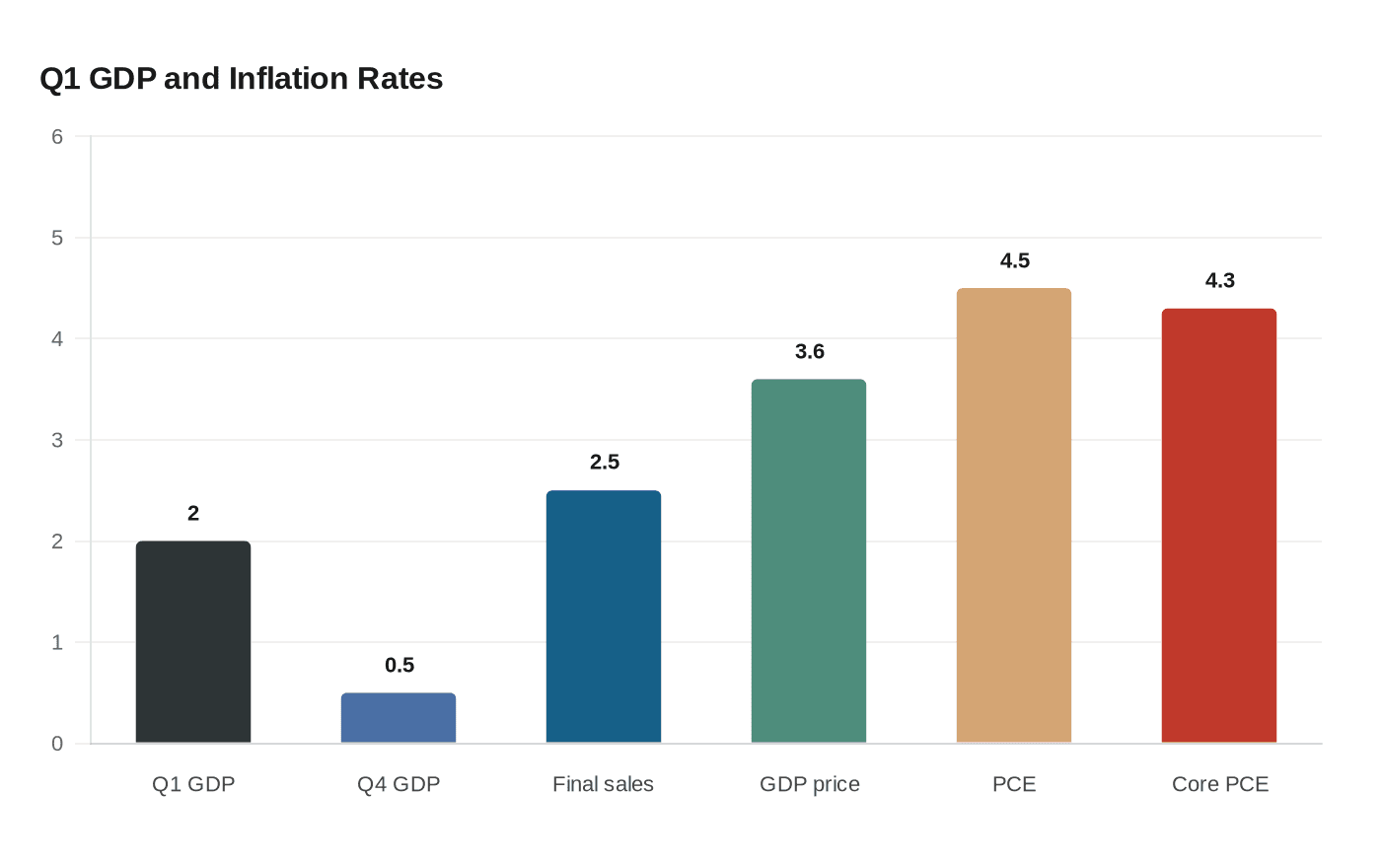
The Iran war is already reaching American wallets through energy prices, even as the U.S. economy managed a 2.0 percent annual growth rate in the first quarter. The Bureau of Economic Analysis said real GDP accelerated from a 0.5 percent increase in the fourth quarter of 2025, helped by investment, exports, consumer spending and government spending, but inflation stayed stubbornly elevated.
The first-quarter report showed an economy still expanding, but under strain. Real final sales to private domestic purchasers rose 2.5 percent, a sign of underlying domestic demand. At the same time, the GDP price index climbed 3.6 percent. The PCE price index, the Federal Reserve’s preferred broad gauge of inflation, rose 4.5 percent, while core PCE increased 4.3 percent. The BEA said its next GDP update would come on May 28.
The conflict in the Middle East was already pressuring markets before the GDP release. Federal Reserve Governor Christopher J. Waller said in an April 17 speech that the start of the war with Iran disrupted energy production and transportation in the Middle East and sent global energy prices soaring. He warned that if the disruption lasted, it could hit inflation and U.S. growth, with policymakers watching whether a cease-fire held and whether the Strait of Hormuz reopened.
Oil traders have been reacting fast. Reuters reported Brent crude at $108.23 a barrel and West Texas Intermediate at $96.37 on April 27 after peace talks stalled and shipments through the Strait of Hormuz remained limited. By April 30, oil prices had surged above $122 a barrel, a four-year high, as concerns grew that the conflict could widen and choke off supply further.
The stakes are especially high because the strait normally carries about 20 percent of global oil supplies. CBS News reported that eight weeks into the war, gas prices had moved above $4 a gallon, inflation had reached its highest level in nearly two years, and Brent crude was up 44 percent from before the war began. That is the channel through which a distant conflict turns into immediate household costs, from commuting and freight to heating and airline fares.
The broader outlook has darkened as well. The International Monetary Fund said in its April 2026 World Economic Outlook that the world economy faced renewed tests from war in the Middle East and projected global growth of 3.1 percent in 2026 under a limited-conflict assumption. The Federal Reserve’s April Beige Book echoed the concern, saying contacts were worried about escalating energy costs and uncertainty over hiring, pricing and investment. For the U.S. economy, the first-quarter GDP number showed resilience. The oil market is warning how quickly that resilience can be tested.
Know something we missed? Have a correction or additional information?
Submit a Tip