U.S. economy grows at 2.0% pace in first quarter of 2026
The economy grew 2.0% in the first quarter, but softer consumer spending and sticky prices kept the rebound from looking broad-based.

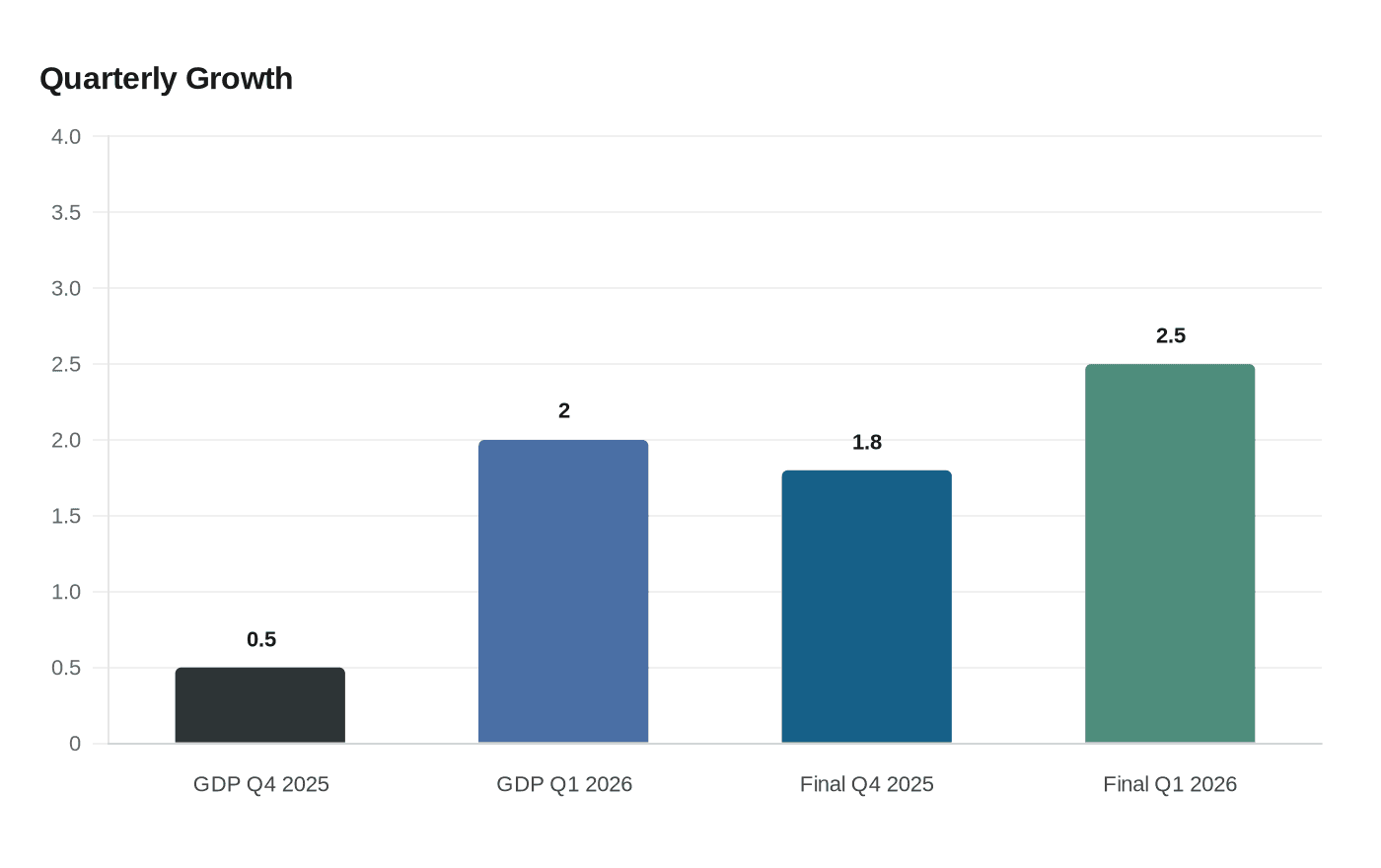
The U.S. economy regained some footing in the first three months of 2026, but the 2.0% annualized gain still looked more like a steadier pace than a surge. Real gross domestic product had grown only 0.5% in the fourth quarter of 2025, so the first-quarter pickup marked a clear improvement, yet the details showed an expansion built on several moving parts rather than a single powerful engine.
The increase was driven by investment, exports, consumer spending and government spending, while imports also rose and subtracted from GDP. A closer gauge of underlying demand, real final sales to private domestic purchasers, increased 2.5% after a 1.8% rise in the prior quarter. That suggests households and businesses were still spending, but consumer demand was slower than in late 2025, and the rebound owed a good deal to a stronger pace of investment, an upturn in government spending and a lift from exports.

That matters because the practical meaning of “solid growth” is limited when prices are still climbing quickly and consumers are already cautious. The GDP price index rose 3.6% in the first quarter, only slightly below the 3.7% increase in the fourth quarter. The PCE price index climbed 4.5%, and the core PCE index rose 4.3%. With unemployment at 4.3% and consumer sentiment at a record low in April, households were entering the spring with less confidence and more pressure on budgets, especially as higher gasoline prices threatened to squeeze spending power further.
Economists had expected a stronger 2.3% annualized gain, with forecasts ranging from a 0.2% contraction to 3.9% growth. Brian Bethune of Boston College said there was “no fire out there” in the economy, while Gus Faucher of PNC said the Federal Reserve did not need to act immediately to support the labor market. The next GDP release is scheduled for May 28, 2026, and it will show whether the first-quarter rebound was the start of a firmer stretch or just a temporary lift from government outlays and trade.
Know something we missed? Have a correction or additional information?
Submit a Tip