U.S. Economy Shows Strong Third Quarter, Momentum Fades into 2025
A delayed Commerce Department preliminary GDP estimate is scheduled for release today and economists expected solid growth in the third quarter, but broader indicators point to slowing momentum across 2025. The picture of decent job gains, rising unemployment, solid retail sales, and cooling yet still elevated inflation suggests resilience in the short term, and slower full year growth near 1.5 percent.

Economists surveyed ahead of the Commerce Department’s delayed preliminary GDP release expected the U.S. economy to register a solid expansion in the third quarter of 2025 when the figure is published today. Analysts identified consumer spending and business investment as the primary engines of the expected quarterly gain, a pattern that helped sustain activity through mid year even as underlying momentum appeared to weaken.
The anticipated brisk third quarter stands against a broader backdrop of slowing calendar year growth. Independent assessments of full year data suggest real gross domestic product will likely advance at roughly a 1.5 percent annual pace in 2025. That rate marks a deceleration from 2024 but remains inconsistent with a recession, underscoring a muddled economic state in which headline growth can be firm quarter to quarter even as trend growth declines.
Economic data released this month were delayed by a prolonged government shutdown and only resumed in the previous week. The resumed data stream was affected by technical quirks that complicate immediate interpretation and add uncertainty to early readings. Still, the newly available indicators portray an economy in an uneasy steady state. Job growth for November was described as decent while the unemployment rate rose in the same month. Retail sales have been solid, but wage growth has slowed and inflation has cooled while remaining elevated.

For policymakers, the mixed signal is consequential. The Federal Reserve faces a tradeoff between labor market strength and persistent inflation. A strong third quarter could reinforce the view that demand is robust enough to tolerate higher policy rates for longer, but the slip in momentum through 2025 and easing wage gains reduce the urgency of further tightening. With inflation still above target, the Fed is likely to emphasize patience and data dependence as it weighs whether to change its stance in the months ahead.
Markets will parse the GDP print for evidence about the path of rates and corporate earnings. A robust quarterly outcome may sustain investor optimism about corporate profits in coming quarters, yet the broader slowdown implied by a roughly 1.5 percent annual pace for 2025 could temper those gains. Fixed income markets will watch for signs that growth is decelerating enough to prompt easier financial conditions, while equity markets will focus on the resilience of consumer demand and the outlook for business investment.
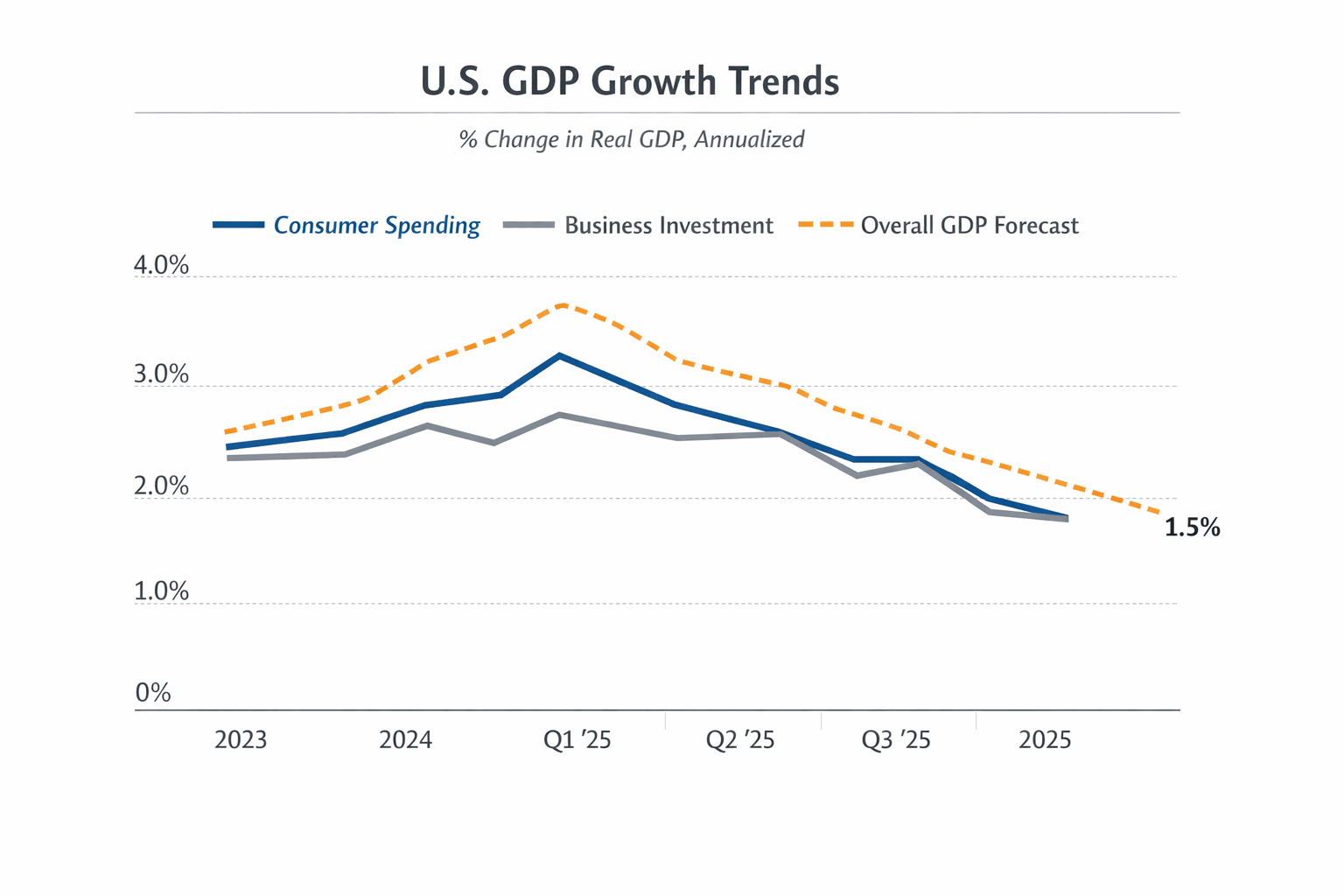
Longer term, the economy’s current pattern reflects several structural pressures that could keep trend growth muted. Elevated inflation erodes real incomes when wage gains slow, and labor market churn that produces simultaneous job creation and a rising unemployment rate points to reallocation rather than outright strength. Policy choices, external trade developments, and the resolution of data irregularities from the shutdown will shape the outlook, but the proximate takeaway is clear. The economy can deliver a strong quarter, yet the trajectory through 2025 appears to be toward slower growth and continued policy uncertainty.
This article was produced by Prism’s automated news system from verified source data, official records, and press releases, then run through automated quality and moderation checks before publishing. The system is built and supervised by the people who set the standards it runs under. Read our full AI policy.
Did this article answer your question?

