US expands sanctions on Prince Group over Southeast Asia scam network
Treasury hit nine people and 26 entities tied to Prince Group, targeting a scam pipeline officials say has drained at least $10 billion from Americans.
On June 23, the Treasury Department sanctioned nine people and 26 entities tied to the Prince Group transnational criminal organization and a Southeast Asia-based scam network that has drained American victims. The action also pushed the Financial Crimes Enforcement Network to broaden its October 2025 Huione Group final rule to cover H-Pay Service PLC and any successor entity.
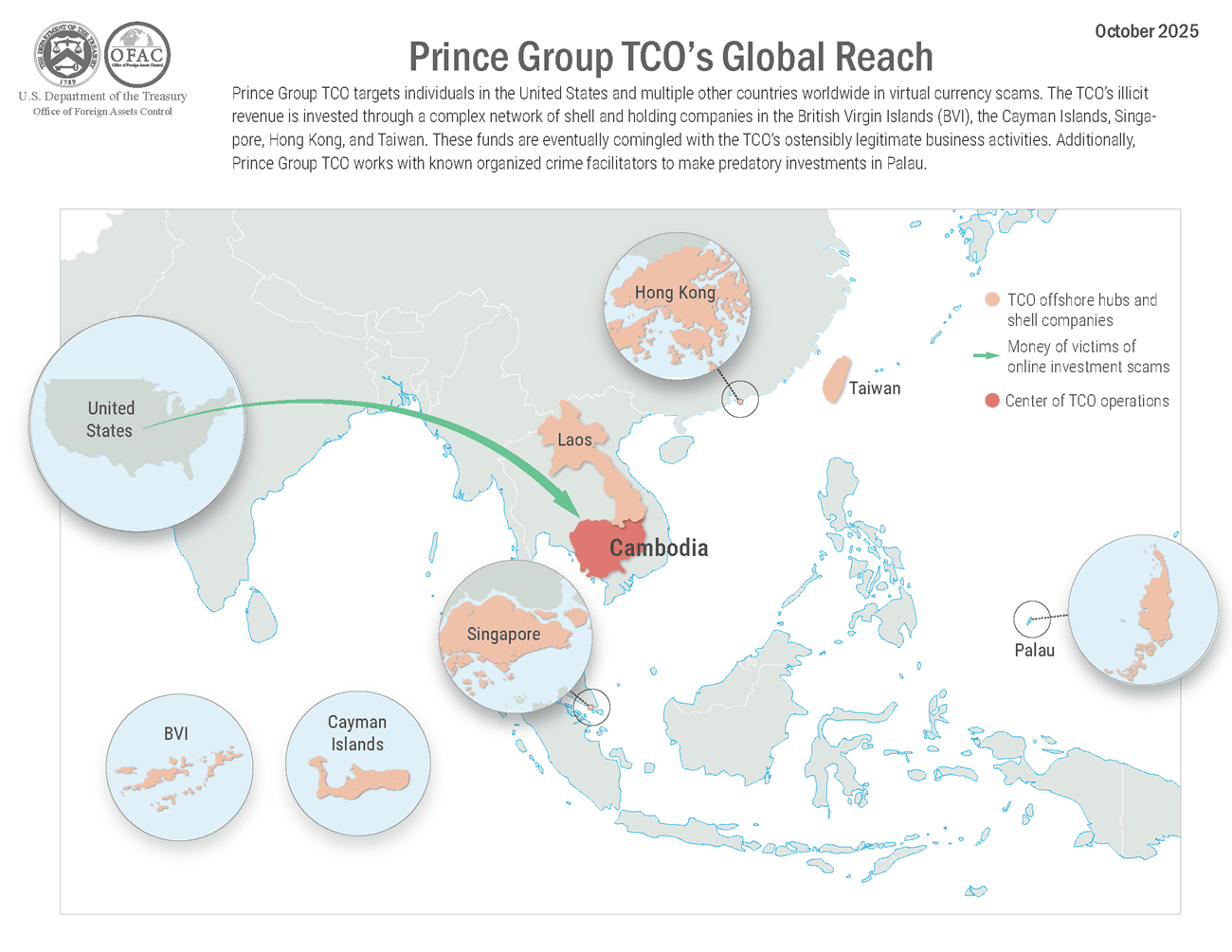
Prince Group's leadership, investors in scam compounds and front companies moved money from cyber heists and virtual-currency investment frauds. Prince Group members own and profit from scam compounds that target victims in the United States and around the world, while Huione Group, including Huione Pay and H-Pay, served as a channel for laundering scam assets.
Americans lost at least $10 billion in 2024 to Southeast Asia-based scam operations, a 66% jump from the year before, Treasury said. Treasury imposed sanctions in September 2025 against online scam centers in Southeast Asia and in April 2026 against Cambodian Senator Kok An and a scam-center network. Treasury designated Prince Group in October 2025 as a transnational criminal organization and said the group invested criminal proceeds in real estate, aviation and luxury cigars. Countries around the world have responded with seizures, arrests and asset freezes worth billions.

The Justice Department widened the criminal case in October 2025, unsealing an indictment in Brooklyn that charged Chen Zhi, identified by Treasury as Prince Group's leader, with wire-fraud conspiracy and money-laundering conspiracy. The indictment says Prince Group trafficked hundreds of workers into Cambodian compounds and forced them to run scams under threat of violence in dormitory-like facilities with high walls and barbed wire. Cambodian authorities arrested Chen Zhi on January 6, 2026, later revoked his Cambodian citizenship and extradited him to China.
Amnesty International said it interviewed 73 people released from the compounds and determined that all were victims of human trafficking.
This article was produced by Prism’s automated news system from verified source data, official records, and press releases, then run through automated quality and moderation checks before publishing. The system is built and supervised by the people who set the standards it runs under. Read our full AI policy.
Know something we missed? Have a correction or additional information?
Submit a Tip