U.S. fans welcome World Cup hosting, nonfans remain unconvinced
Soccer fans are eager for the 2026 World Cup, but a June CBS poll found most nonfans still see little reason to care.
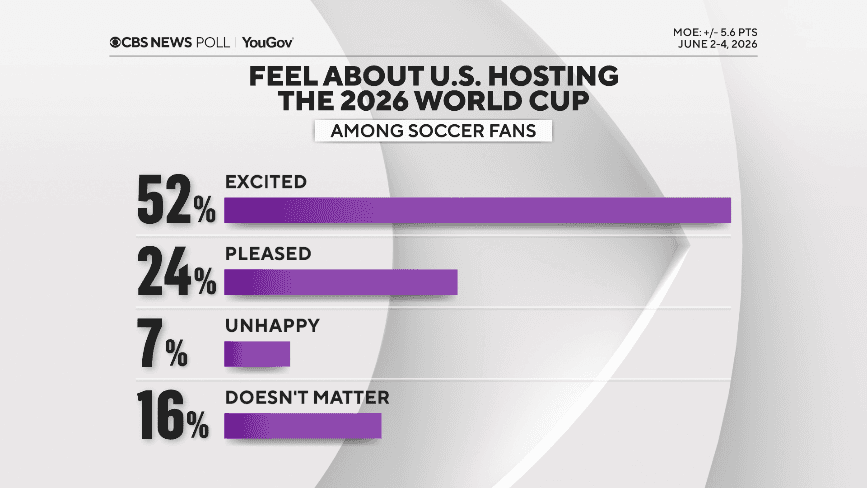
American soccer fans are ready for the World Cup to land on home soil, but the wider public is far less convinced. A CBS News/YouGov poll of 2,023 U.S. adults found three in four U.S. soccer fans felt positive about the United States hosting, and more than half said they were excited.
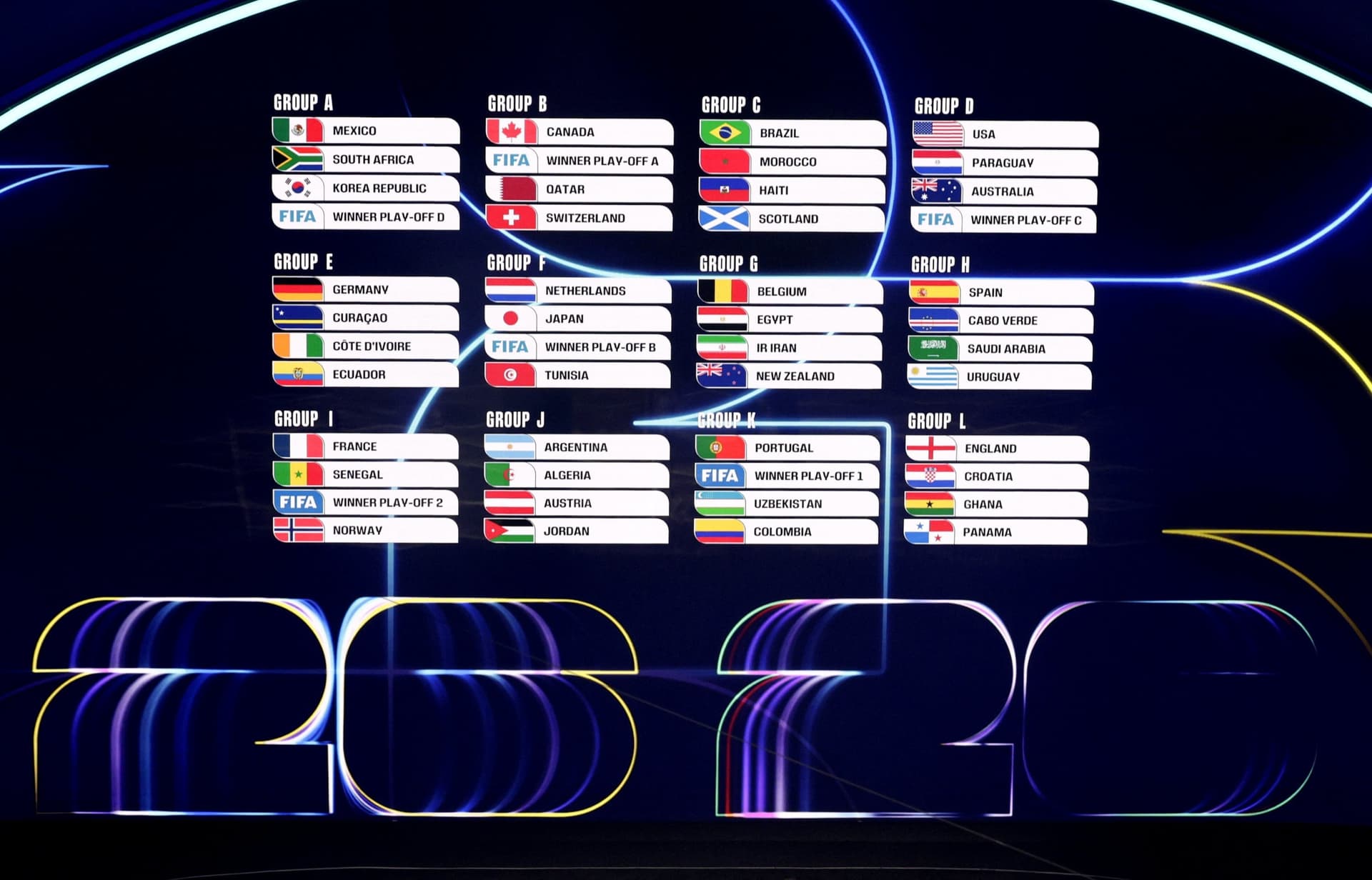
The split matters because the 2026 FIFA World Cup is being pitched as far more than a sports tournament. It will be the first men’s World Cup co-hosted by three nations, the first to feature 48 teams, and the biggest ever, with 104 matches spread across 16 host cities in Canada, Mexico and the United States. In the U.S., matches will be played in 11 metro areas: Atlanta, Boston, Dallas, Houston, Kansas City, Missouri, Los Angeles, Miami, New York/New Jersey, Philadelphia, the San Francisco Bay Area and Seattle.
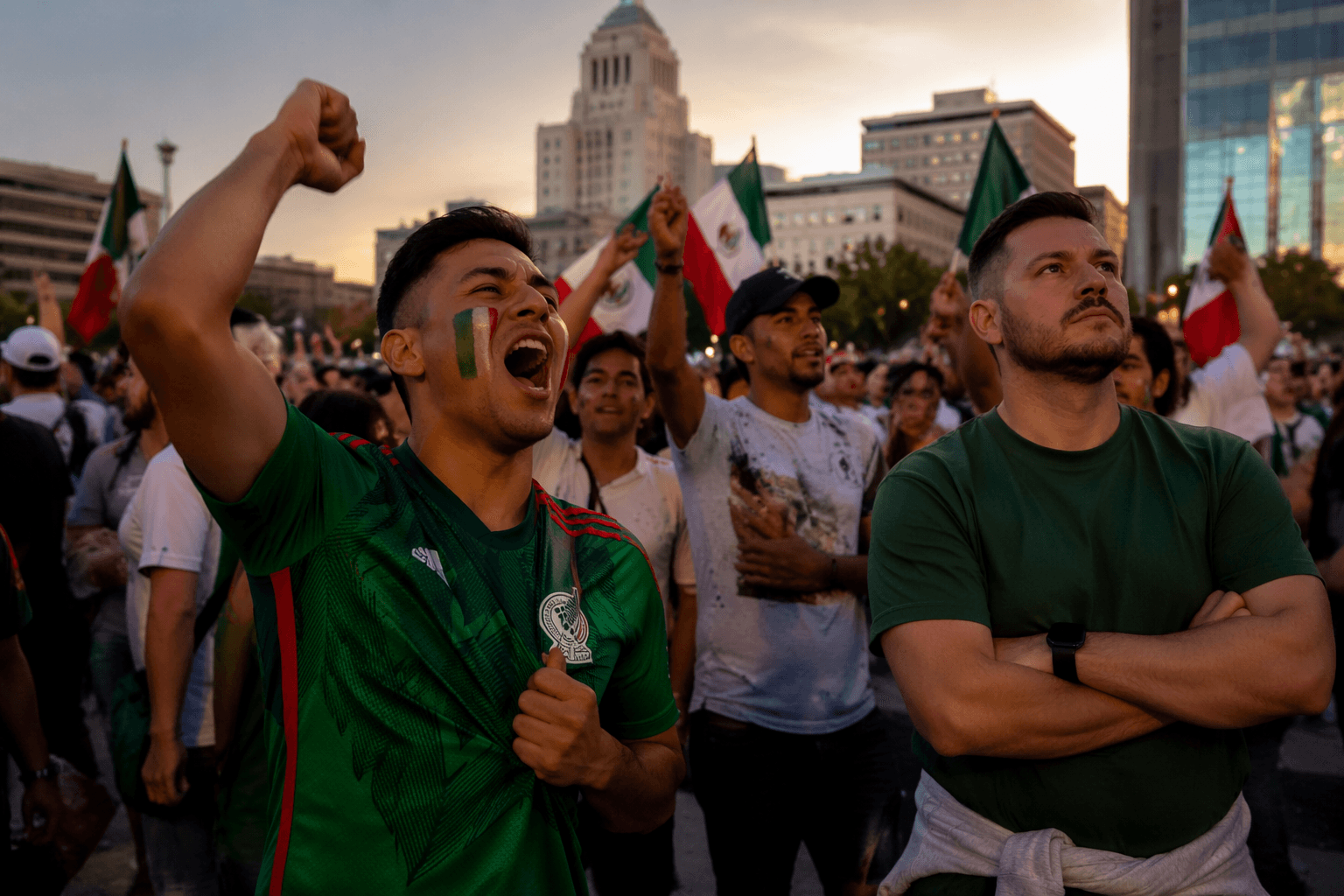
The poll suggests the strongest enthusiasm is concentrated in groups already close to the sport. More than a quarter of Americans now describe themselves as either a big fan or a casual fan of professional soccer, and adults ages 18 to 29 were the age group most likely to say they felt pleased or excited about U.S. hosting. Parents whose kids play soccer were also more likely to react positively and to say the tournament made them more interested.
For everyone else, the event’s promise was harder to sell. Relatively few non-soccer fans said hosting the World Cup made them more interested, a reminder that the tournament’s cultural reach may not match the scale of the spectacle. That gap could shape how much political and economic payoff the country actually gets from hosting, especially as local governments and host cities brace for the costs of staging matches and managing the crowds around them.
The financial stakes are still enormous. Tourism Economics expects the tournament to draw 1.2 million international visitors and give host-city economies a substantial boost. FIFA and the World Trade Organization expect billions of dollars in economic activity across hospitality, transportation and retail, while Bookies.com predicts Americans will wager $3.1 billion on World Cup games through legal online betting and another $2.4 billion through prediction markets.
Ticket prices are already testing goodwill. FIFA’s ticketing platform has drawn backlash over high prices and fees, including the cost of seats for the final, even as the tournament is being framed as a possible turning point for soccer’s popularity in the United States. The poll suggests that turning point may still be limited to the people already paying attention.
This article was produced by Prism’s automated news system from verified source data, official records, and press releases, then run through automated quality and moderation checks before publishing. The system is built and supervised by the people who set the standards it runs under. Read our full AI policy.
Know something we missed? Have a correction or additional information?
Submit a Tip