U.S. forces board Iranian-linked tanker Veronica III after long chase
U.S. forces boarded the Panamanian-flagged tanker Veronica III in the Indian Ocean after tracking it from the Caribbean; the move intensifies enforcement of oil sanctions and raises market and legal questions.
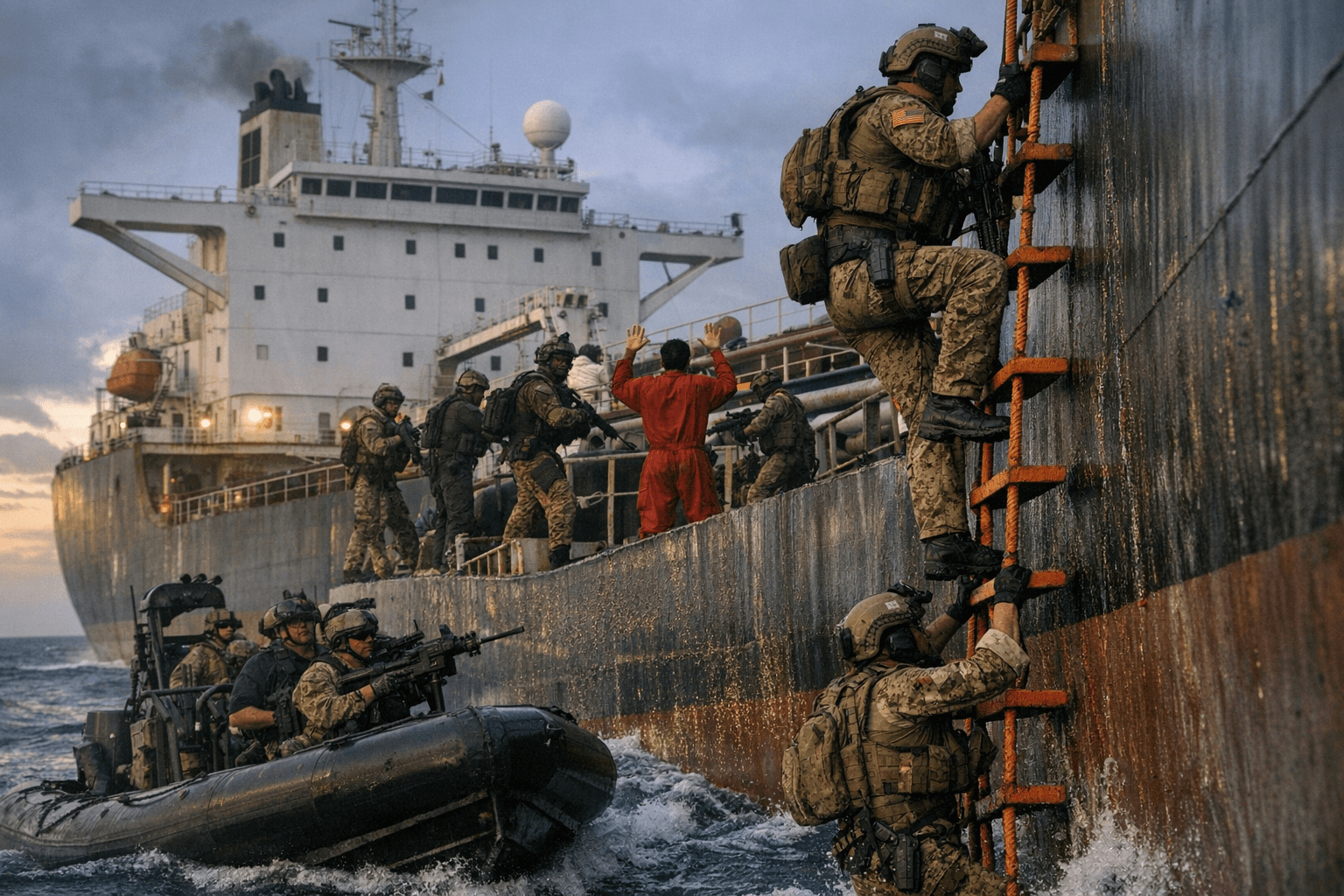
U.S. military forces intercepted and boarded the oil tanker Veronica III in the Indian Ocean after tracking the vessel from the Caribbean, the Pentagon said, in a high-profile action aimed at curbing illicit oil shipments. The Pentagon posted on X that the operation was a “right-of-visit, maritime interdiction and boarding” conducted at night in the INDOPACOM area of responsibility and said the vessel “tried to defy President Trump’s quarantine, hoping to slip away. We tracked it from the Caribbean to the Indian Ocean, closed the distance, and shut it down.”
Video released by the Defense Department shows U.S. forces deploying by helicopter and boarding the ship. Officials described the boarding as carried out “without incident,” but the Pentagon did not specify whether Veronica III had been formally seized or placed under U.S. legal custody, leaving the vessel’s immediate legal status unresolved.
Veronica III flies the Panamanian flag and appears on the U.S. Treasury Department’s Office of Foreign Assets Control list of vessels tied to Iran-related sanctions, according to Treasury listings. U.S. authorities say the ship was carrying Venezuelan crude bound for Southeast Asia at the time of the operation. Ship-tracking databases and sanctions researchers have linked the vessel and others to networks that move sanctioned cargoes through falsified registries and altered vessel identities, a tactic often called the shadow fleet.
The seizure comes amid an intensified campaign to enforce energy sanctions. The administration ordered a quarantine of sanctioned tankers in December to increase pressure on Venezuela’s oil trade, and Treasury actions in late 2024 targeted dozens of ships and entities implicated in moving illicit Iranian and Venezuelan oil. Records and investigators cite a package of designations that included the Veronica III and roughly 35 other entities and vessels; ship-tracking groups have also documented clusters of departures from Venezuelan ports in recent weeks, with one tracker saying at least 16 tankers left the Venezuelan coast after U.S. forces captured President Nicolás Maduro in a separate January operation.
Market implications are immediate and nuanced. Physically interrupting shipments bound for Asia can tighten local crude balances and raise freight and insurance premiums for routes linked to sanctioned cargoes. Analysts say the greatest near-term effect may be a rise in risk premia for tankers and cargoes associated with Venezuela and Iran, as operators reroute, reflag, or otherwise obscure movements to avoid interdiction. Longer term, sustained enforcement could compress the economic viability of the shadow fleet and push illicit flows onto more complex, costlier routes.
The operation also highlights legal and diplomatic frictions that accompany maritime interdictions. International-waters boardings by U.S. forces raise questions about authority, flag-state responses and the evidentiary basis needed to transfer custody or bring vessels to U.S. ports for prosecution. The Pentagon’s public post included forceful language about denying illicit actors maritime freedom, stating in a government X account that “International waters are not sanctuary. By land, air, or sea, we will find you and deliver justice. The Department of War will deny illicit actors and their proxies freedom of movement in the maritime domain.”
Key details remain unresolved: whether Veronica III has been formally seized, where it will be directed, the exact cargo manifest and the identities of the vessel’s ultimate owners and managers. Treasury records, ship registries and naval commands will be central to clarifying legal custody and the enforcement precedent this operation establishes for future sanctions policing at sea.
This article was produced by Prism’s automated news system from verified source data, official records, and press releases, then run through automated quality and moderation checks before publishing. The system is built and supervised by the people who set the standards it runs under. Read our full AI policy.
Did this article answer your question?

