U.S. GDP slows to 1.4% in fourth quarter, well below forecasts
The BEA's advance estimate shows 1.4% annualized Q4 growth, undercutting forecasts and raising questions for Fed policy, tariffs and post-shutdown recovery.

“U.S. gross domestic product grew at an annualized rate of 1.4% in the fourth quarter of 2025, according to advance estimates released Friday by the Bureau of Economic Analysis.” The result marks a sharp slowdown from the prior quarter’s outsized expansion and fell short of many economists' expectations, complicating the policy debate over interest rates, fiscal choices and trade policy.
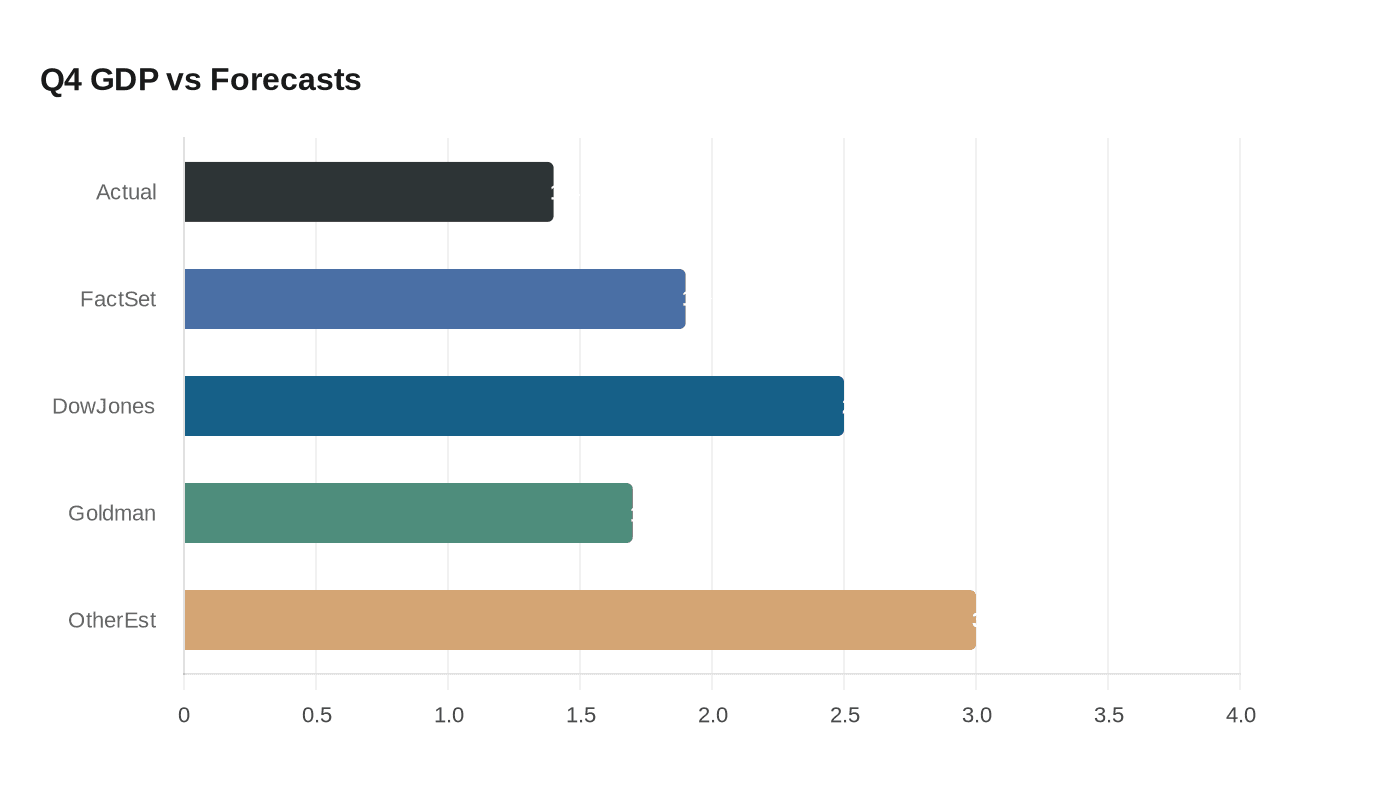
Most major outlets reported the third quarter at a revised 4.4% annualized gain, though one data aggregator cited an earlier 3.8% estimate and noted the BEA had revised Q3 upward from its initial report. The advance Q4 print underperformed a range of forecasts: a FactSet consensus of 1.9%, a Dow Jones median forecast of roughly 2.5, and other estimates as high as 3%. Goldman Sachs had trimmed its own projection in March to roughly 1.7 after weighing tariff effects.
The slowdown reflected a broad set of drags, according to reporting synthesizing the BEA tables. Analysts flagged reduced government outlays, weaker exports and cooling consumer spending as the principal headwinds, offset only partly by continued business investment and pockets of strength in technology spending. “Real final sales to private domestic purchasers… rose 2.4% in the fourth quarter. That compares with a 2.9% increase in the third quarter, signaling softer domestic demand,” a BEA-derived measure showed.
Inflation measures in the advance report added a separate concern for policymakers. Headline personal consumption expenditures rose 0.4% in December and stood at 2.9% year over year. Excluding food and energy, “core PCE, the Federal Reserve's preferred inflation gauge, advanced to 3% from 2.8%,” a faster pace than many forecasters expected. The price index for gross domestic purchases climbed 3.7% in Q4, up from 3.4% the quarter before.
The timing and measurement of the release were themselves affected by last year’s political turmoil. “The US economy grew at a much slower pace in the final months of 2025 as the historic government shutdown weighed on growth,” the Commerce Department noted in contextual language accompanying the BEA release; the shutdown also delayed the advance estimate by about a month. Policymakers and legislators will now face scrutiny over how the funding impasse and contested trade policy choices such as expanded tariffs influenced growth and real incomes.
On markets, stock futures nudged lower on the print. Early moves tracked by news outlets showed Dow futures down roughly 111 points, S&P 500 futures off about 0.3% and Nasdaq-related futures falling close to 0.5%. Currency markets showed a slight uptick in the dollar amid renewed uncertainty over the Fed’s next steps.
For the year, the United States still recorded real GDP growth of 2.2% in 2025, down from 2.8% in 2024. Nominal output hit a record quarter-of $31.49 trillion in Q4, underscoring that slower growth occurred against the largest economy in history.
The BEA will publish revised second and third estimates in the coming months. Policymakers in Washington and the Federal Reserve must now weigh whether the combination of slowed activity and sticky core inflation argues for renewed accommodation, fiscal stimulus, or fresh attention to trade and budget stability as drivers of near-term growth.
This article was produced by Prism’s automated news system from verified source data, official records, and press releases, then run through automated quality and moderation checks before publishing. The system is built and supervised by the people who set the standards it runs under. Read our full AI policy.
Did this article answer your question?