U.S. growth likely picked up in first quarter, but consumers remain squeezed
Growth likely rebounded to 2.3% in the first quarter, but households were already slowing before higher gasoline prices hit budgets.
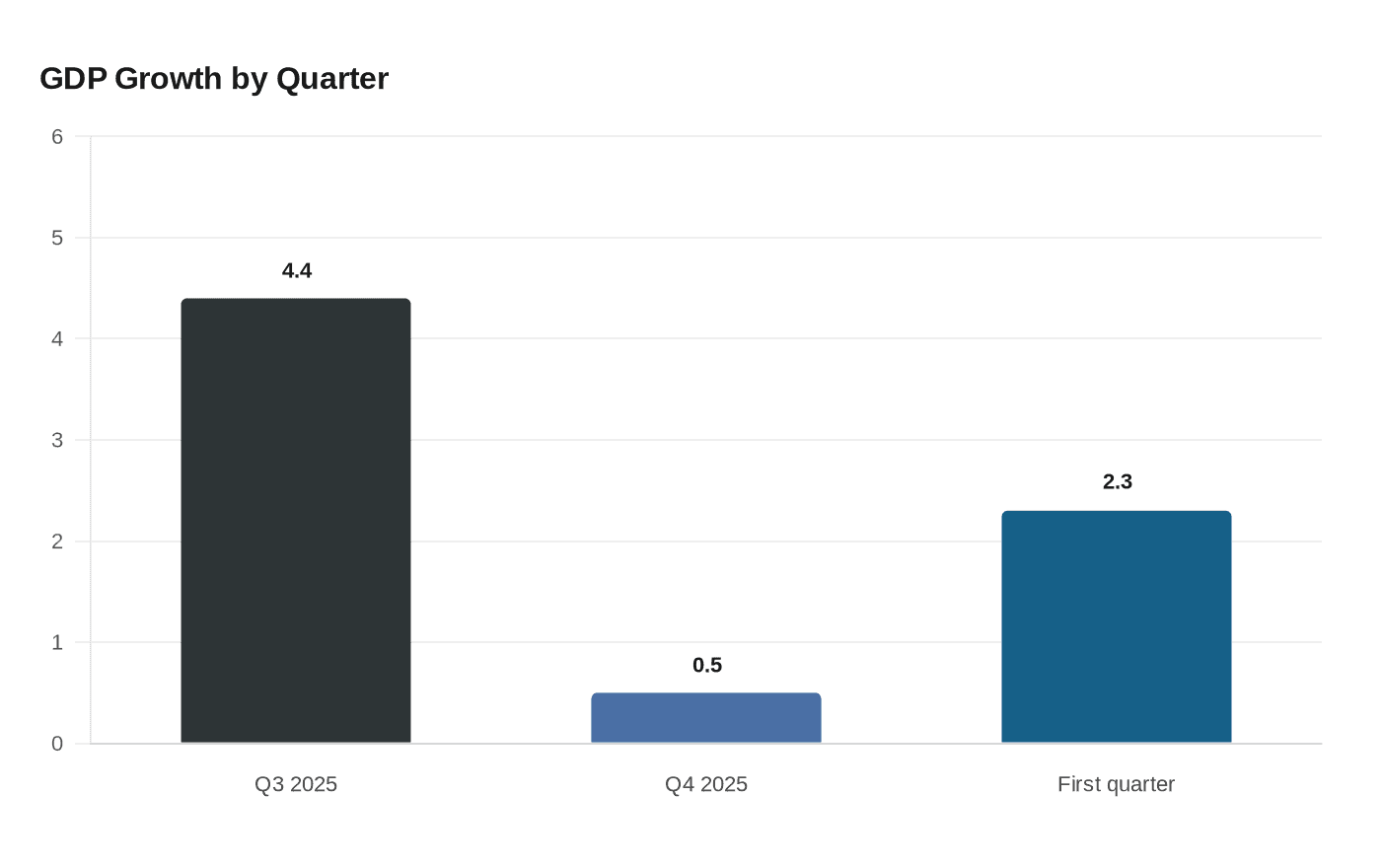
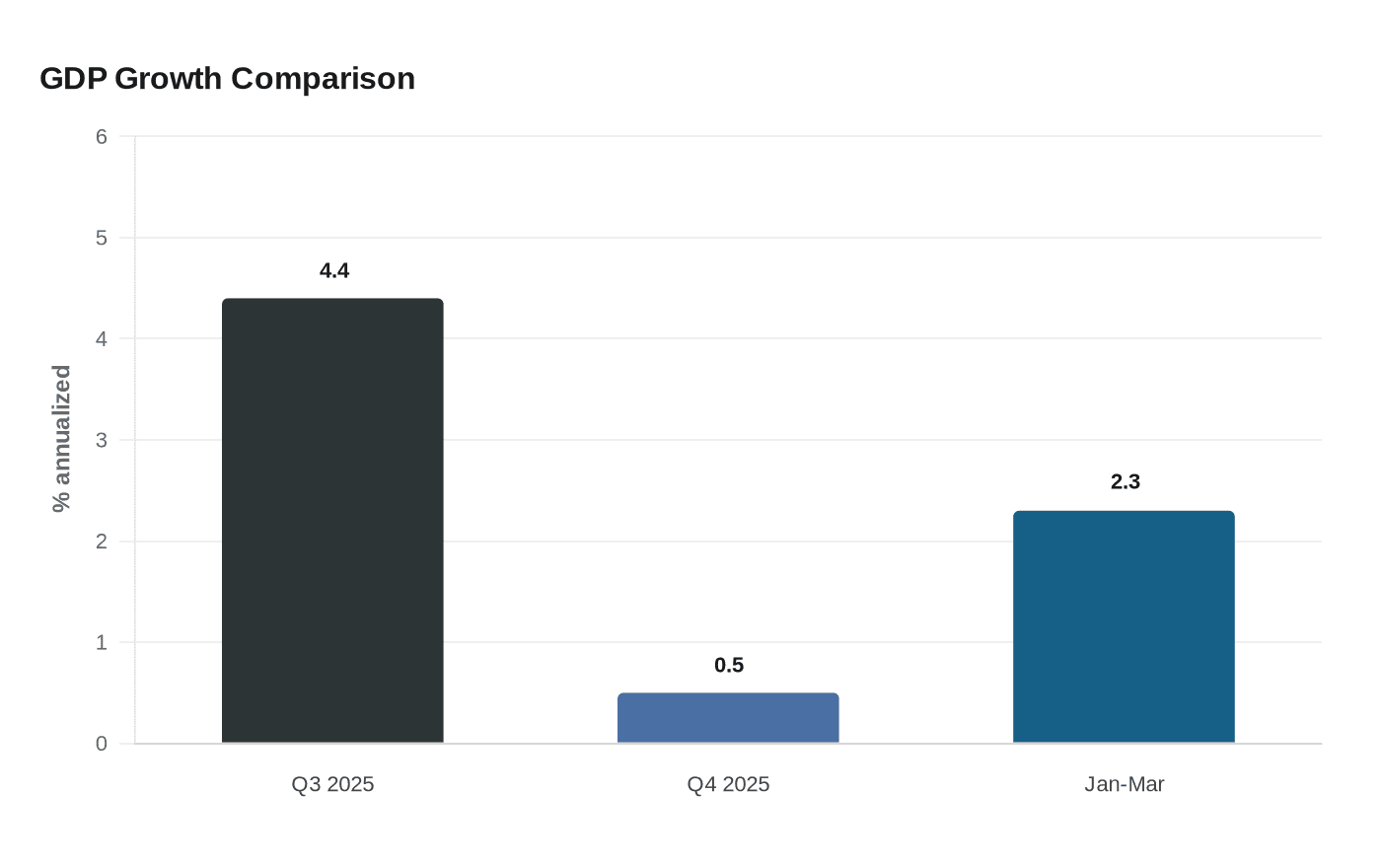
U.S. growth likely picked up in the first quarter as government spending rebounded from the shutdown, but the economy still looked far less convincing at the household level. Economists expected gross domestic product to rise at a 2.3% annualized pace for January through March, up sharply from 0.5% in the final quarter of 2025, yet that improvement rested on a narrow set of supports rather than a broad-based surge.
The biggest lift came from public spending returning after the disruption caused by the shutdown, alongside stronger business investment in equipment and the buildout of data centers. That investment backdrop tied the quarter to the artificial intelligence spending boom that has been reshaping corporate capital plans across the United States. Even so, consumer spending appeared to have lost momentum before the latest jump in gasoline prices, a warning sign that families were already feeling pressure.
Brian Bethune put the mood bluntly: “We remain in relatively slow growth mode, nothing exciting.” He added, “There’s nothing really to get a good fire going. There are some warm embers, but there is no fire out there.” That description fits an economy still growing, but not with enough force to ease inflation worries or restore confidence that demand is strengthening across the board.
The Bureau of Economic Analysis was set to release its advance estimate for first-quarter GDP on April 30 at 8:30 a.m. Eastern. Its previous data showed real GDP rose just 0.5% annualized in the fourth quarter of 2025 after 4.4% growth in the third quarter, underscoring how quickly momentum had cooled before the expected first-quarter rebound.
Fresh data outside the GDP report pointed to a mixed economy. The Census Bureau said March durable goods orders rose 0.8% to $318.9 billion, while orders excluding defense fell 0.3%. A key measure of business spending, non-defense capital goods orders excluding aircraft, increased 3.3%. At the same time, consumer demand was uneven: personal consumption expenditures rose 0.5% in February and 0.3% in January, while March retail and food services sales climbed 1.7% from February to $752.1 billion.
The Federal Reserve added to the cautious tone on April 29, holding its benchmark rate at 3.5% to 3.75% and saying activity had been expanding at a solid pace. Officials also said inflation was elevated in part because of the recent increase in global energy prices. Four Fed officials dissented, the most in almost 34 years, as policymakers weighed growth against persistent price pressure. The IMF, for its part, said the U.S. economy grew 2% in 2025 despite the shutdown and warned in April that higher energy prices pose upside inflation risks, a reminder that war-driven gasoline costs could keep squeezing consumers even if headline growth improves.
This article was produced by Prism’s automated news system from verified source data, official records, and press releases, then run through automated quality and moderation checks before publishing. The system is built and supervised by the people who set the standards it runs under. Read our full AI policy.
Did this article answer your question?
%3Amax_bytes(150000)%3Astrip_icc()%2FCertificate-of-deposit-2301f2164ceb4e91b100cb92aa6f868a.jpg&w=1920&q=75)