US Hiring Tops Expectations as April Payrolls Rise 115,000
April payrolls rose 115,000, far above forecasts, but rising part-time work and a 4.3 percent jobless rate pointed to a labor market that is cooling, not cracking.
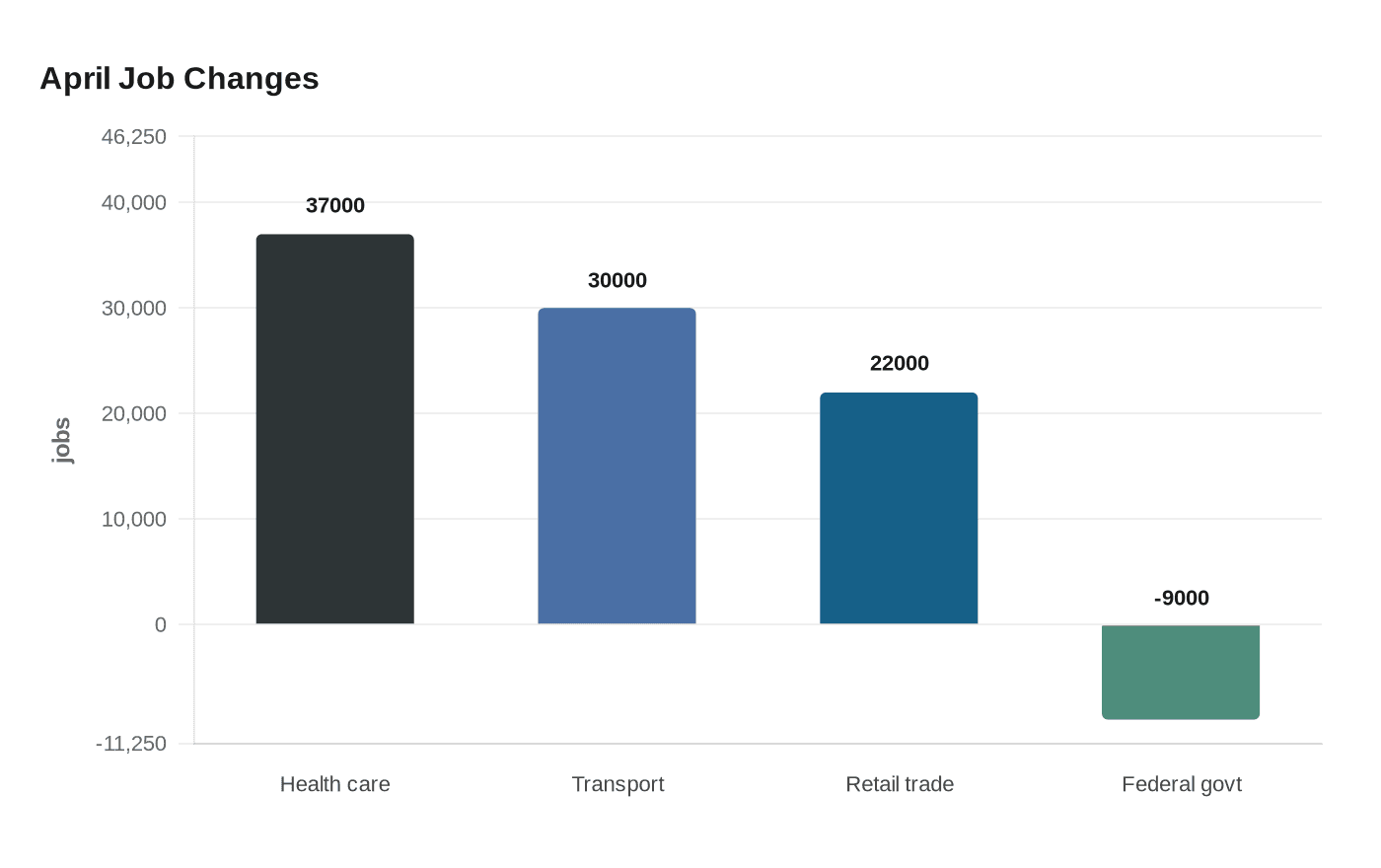
Hiring in the United States beat expectations in April, but the details suggested a labor market that is still holding up rather than powering ahead. Total nonfarm payroll employment increased by 115,000, according to the U.S. Bureau of Labor Statistics, more than double the 55,000 to 65,000 jobs economists had expected. The unemployment rate was unchanged at 4.3 percent, with 7.4 million people counted as unemployed.
The gains were concentrated in a few corners of the economy. Health care added 37,000 jobs, transportation and warehousing gained 30,000, and retail trade added 22,000. Federal government employment fell by 9,000 in April, leaving federal payrolls 348,000 below their peak in October 2024. The April report also came after a sizable revision to March, which was lifted to 185,000 jobs, while February was marked down by 23,000 to a loss of 156,000.
Taken together, the numbers pointed to an economy that is still generating jobs, but in a more selective way. The labor force participation rate held at 61.8 percent, and the employment-population ratio was unchanged at 59.1 percent. A more troubling sign was the rise in people employed part time for economic reasons, which jumped by 445,000 to 4.9 million. That kind of increase can signal that employers are trimming hours or that workers are taking less-than-ideal jobs to stay attached to the labor market.
The report arrived after another supportive labor reading, including a March job openings report showing about 6.9 million vacancies. Some economists said that combination still showed resilience, though not the broad, rapid hiring seen earlier in the recovery. Jerry Tempelman said, “The addition of 115,000 jobs in April continues to highlight the resilience of the U.S. labor market.” Others noted that it was still too early to judge the full effect of the Iran war and higher gas prices on consumer demand and business hiring.
For the Federal Reserve, the stronger-than-expected payrolls report made an immediate rate cut look less likely. With unemployment steady, layoffs still limited and payrolls coming in above forecast, policymakers can point to a labor market that is cooling only gradually. The bigger question now is whether that moderation can continue without turning into a sharper slowdown later in the year.
This article was produced by Prism’s automated news system from verified source data, official records, and press releases, then run through automated quality and moderation checks before publishing. The system is built and supervised by the people who set the standards it runs under. Read our full AI policy.
Did this article answer your question?

