U.S., Iran talks could resume this weekend after failed round
Pakistan was holding the line between Washington and Tehran as both sides kept Friday through Sunday open for a possible second round after marathon talks failed.
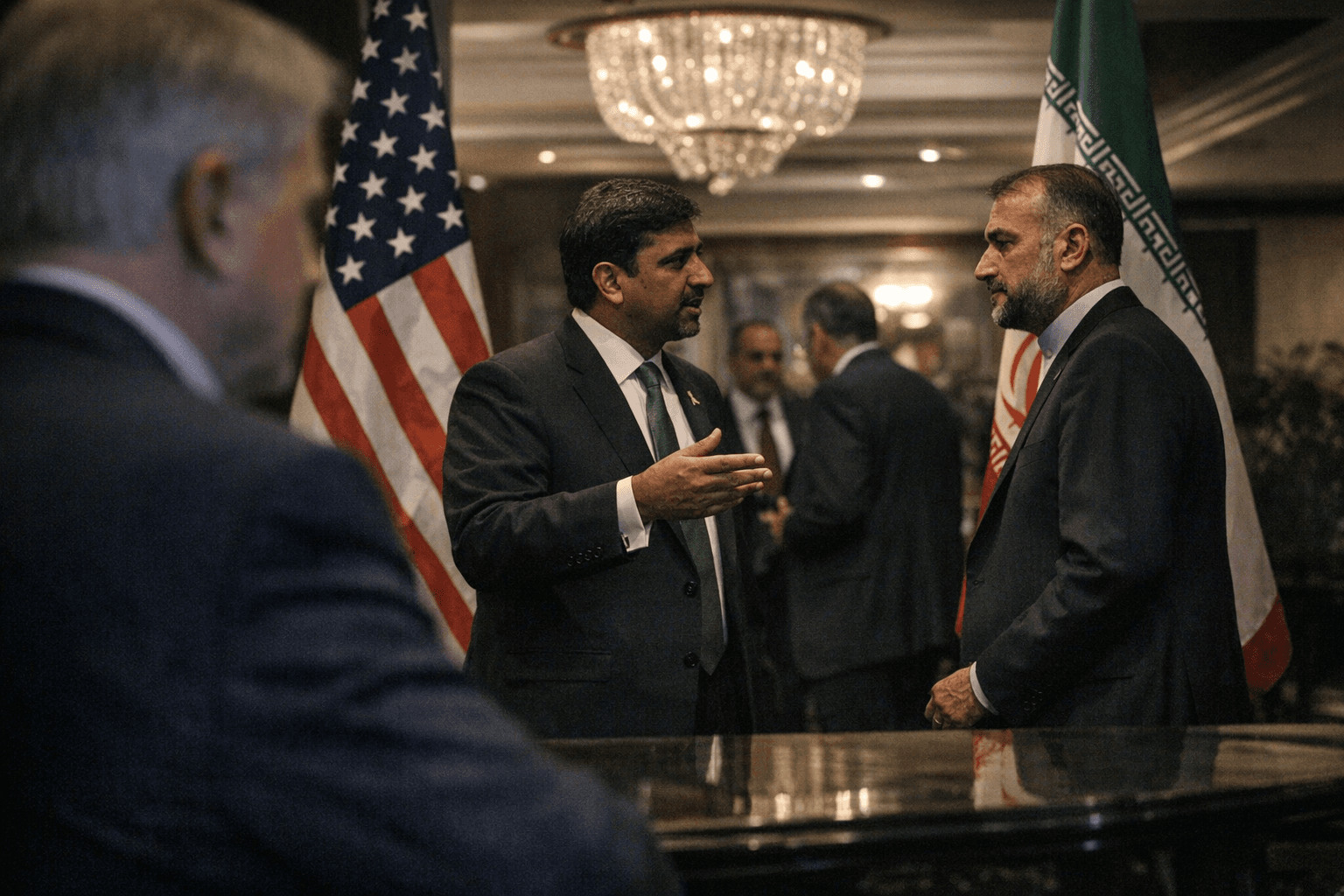
Pakistan has emerged as the central conduit in a fraught U.S.-Iran negotiation, with officials keeping Friday through Sunday open for a possible second round after more than 20 hours of talks in Islamabad ended without a breakthrough.
The first round, held on April 11 and 12 in Pakistan’s capital, was the most senior direct U.S.-Iran engagement since Iran’s 1979 Islamic Revolution. It brought together U.S. Vice President JD Vance and Iranian Parliamentary Speaker Mohammad Baqer Qalibaf, but the talks ended without a deal. A senior Iranian source said no firm date had been set for the next meeting, while a Pakistani official said Islamabad had reached out to Tehran and received a positive response that both sides would be open to another round.
The concrete question now is not whether diplomacy is happening, but whether it is advancing beyond managed optics. Donald Trump said on April 16 that a second round could take place this weekend and repeated that Iran cannot be allowed to obtain a nuclear weapon. That keeps the central issue unchanged: verified limits on Iran’s enrichment program and the removal of highly enriched uranium stockpiles remain the core sticking points, not the scheduling of the next round.
Pakistan’s role has given the process a narrow but real channel. Prime Minister Shehbaz Sharif has been working regional lines to keep the discussions alive, and officials have said Islamabad has been in contact with both sides over timing. The talks are also tied to efforts to extend a fragile ceasefire that was reported to expire on either April 21 or April 22, depending on the outlet, leaving little room for delay.
The diplomatic push is unfolding against sharper regional pressure. The U.S. began enforcing a blockade of Iranian maritime traffic through the Strait of Hormuz, a choke point that typically carries about 20% of the world’s oil, adding to volatility in global energy markets. At the same time, the conflict’s diplomatic spillover has widened: Israel and Lebanon opened their first direct talks in decades in Washington on April 15, underscoring how quickly the Iran crisis is reshaping regional channels beyond the original negotiating table.
For now, the evidence points to active diplomacy rather than a breakthrough. The delegations are still in contact, Pakistan is still mediating, and the next round is still possible. What remains missing is the kind of substantive agreement that would turn a temporary lull into an actual de-escalation.
This article was produced by Prism’s automated news system from verified source data, official records, and press releases, then run through automated quality and moderation checks before publishing. The system is built and supervised by the people who set the standards it runs under. Read our full AI policy.
Did this article answer your question?