U.S. Jobless Claims Drop to Seven Month Low, 216,000
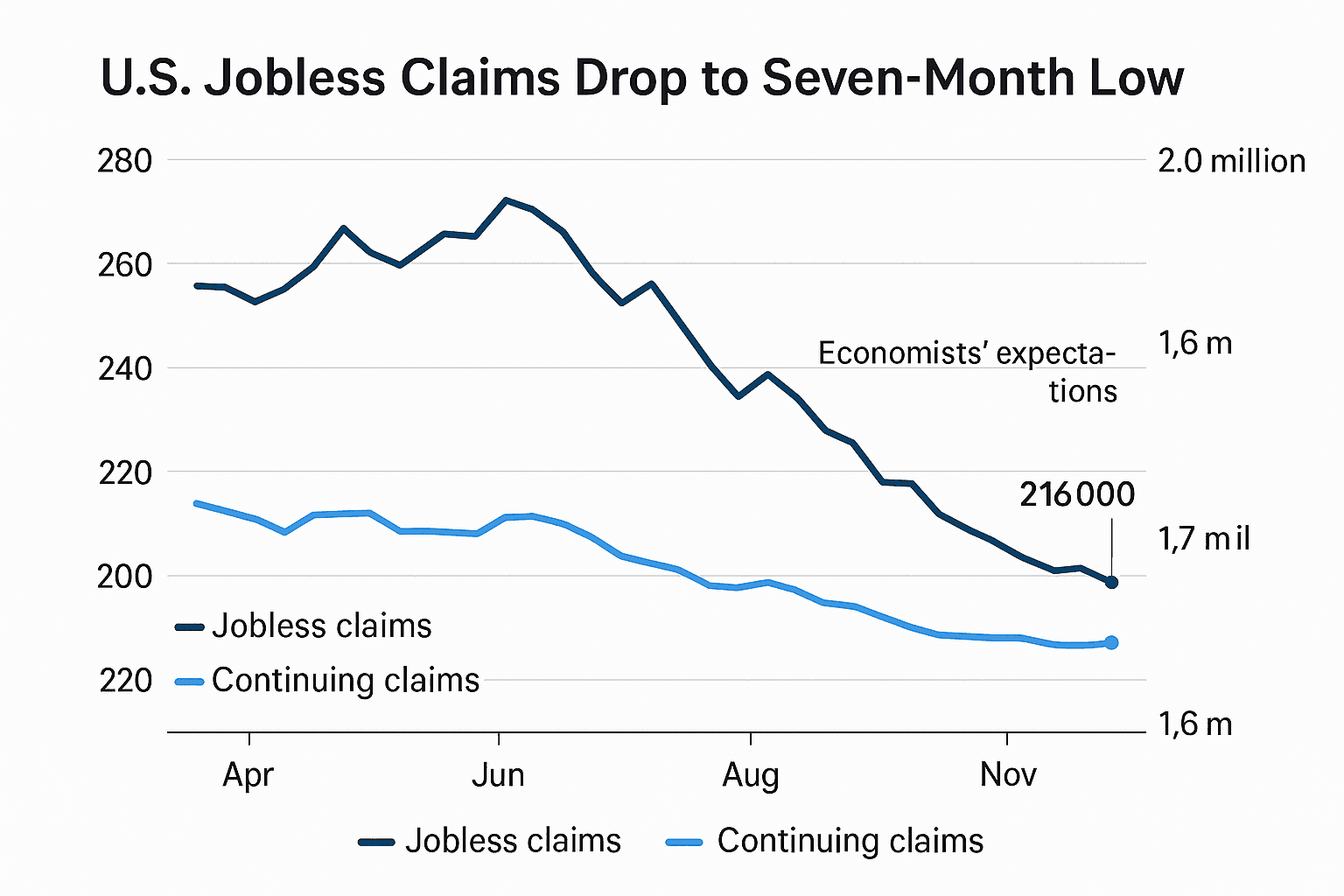
Weekly initial claims for unemployment benefits fell by 6,000 to a seasonally adjusted 216,000 for the week ending November 22, 2025, marking the lowest reading in seven months. The data reinforces low layoffs even as hiring has softened in places, a mix that complicates the Federal Reserve's decisions on interest rates and keeps markets weighing a possible December cut.

The Labor Department reported that initial claims for state unemployment benefits declined by 6,000 to a seasonally adjusted 216,000 for the week ending November 22, 2025, the lowest weekly count in seven months. Economists had expected roughly 225,000 claims, making the outturn a modest upside surprise for the labor market. The weekly report was released a day early because of the Thanksgiving holiday.
Continuing claims, which measure the number of people receiving state unemployment benefits after an initial week, rose modestly to about 1.96 million. That slight increase suggested some ongoing churn in the jobs market even as new layoffs remained limited. Together the two series paint a picture of restrained separations rather than a broad deterioration in employment.
The data arrived against a backdrop of uneven labor demand. Multiple indicators this year showed hiring softening in sectors including technology and parts of retail, while other areas remained resilient. The low level of initial claims underlines that employers, on balance, have not widely resorted to layoffs. For policymakers at the Federal Reserve that distinction matters more than headline hiring totals. A labor market with few layoffs reduces the risk of a sudden jump in unemployment, which in turn lessens immediate pressure to ease monetary policy aggressively.
Analysts said the still resilient initial claims argue against an immediate, aggressive pivot by the Fed on interest rates. Policy makers have been closely watching labor market signal so they can balance the central bank mission of tamping inflation with the need to avoid pushing the economy into recession. At the same time markets continued to price in some odds of a rate cut in December, reflecting uncertainty about the trajectory of inflation and growth entering next year.
The weekly claims series is volatile and seasonally adjusted every year around the holidays, which can complicate interpretation. Even so the seven month low in initial claims is a meaningful data point, aligning with other measures that have shown the labor market cooling from pandemic era tightness but remaining tighter than historical norms. That persistence has helped sustain consumer spending, which in turn has supported growth even as business investment has softened.
Longer term the interplay between still low layoffs and slower hiring suggests a gradual rebalancing of the labor market rather than a sharp correction. For businesses, policymakers and investors the key question is whether wage growth and job openings will erode enough to allow sustained easing of interest rates without elevating unemployment. With initial claims at 216,000 and continuing claims near 1.96 million, the latest report keeps the Fed in a cautious posture and markets in a state of watchful uncertainty as the year ends.
This article was produced by Prism’s automated news system from verified source data, official records, and press releases, then run through automated quality and moderation checks before publishing. The system is built and supervised by the people who set the standards it runs under. Read our full AI policy.
Did this article answer your question?

